By Staff Reporter
ISLAMABAD: Pakistan extended its airspace ban on Indian aircraft by another month, prolonging a restriction that has forced Indian airlines onto longer routes to the west since the nuclear-armed neighbours’ military confrontation last year.
The Pakistan Airports Authority said in a notice to airmen issued on Thursday that the closure will remain in force until 4:59 a.m. local time on Dec. 24, or 11:59 p.m. UTC on Dec. 23. “Indian-registered aircraft and aircraft operated, owned or leased by Indian airlines will not be able to use Pakistani airspace,” the authority said. The restriction also covers Indian military flights.
The date is the expiry of the current notice, not an announced timetable for reopening. Islamabad has renewed the ban roughly every month this year, most recently pushing it past the summer in successive one-month extensions. India has kept a reciprocal ban on Pakistani-registered aircraft, airlines and military flights. New Delhi’s closure has been in place since April 30, 2025, and was renewed in April this year.
The restrictions date to April 2025, after gunmen killed 26 people, mostly tourists, near Pahalgam in Indian-occupied Kashmir. India blamed Pakistan for the attack. Islamabad denied involvement and called for an independent and transparent investigation. The two governments sharply downgraded relations, restricting visas, border crossings and diplomatic representation.
India said it was holding the Indus Waters Treaty, which governs the sharing of rivers between the neighbors, in abeyance. Pakistan rejected that move, closed its airspace to Indian aircraft and suspended trade. The crisis escalated into several days of strikes and counterstrikes in May, beginning with Indian attacks on Pakistani cities on May 6 and 7. Pakistan retaliated against Indian military installations and said it shot down eight Indian fighter jets, including three Rafales, along with dozens of drones. The two sides agreed to a ceasefire on May 10, but it did not restore their wider diplomatic or economic ties.
Kashmir has been disputed since both countries gained independence from Britain in 1947. Each administers part of the region and claims all of it, and they have fought wars over it. The Pahalgam attack set off their most serious military confrontation in years.
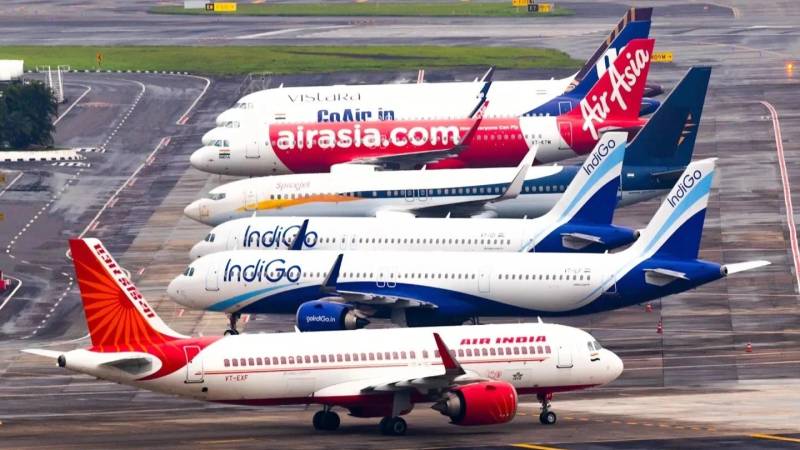
The cost has fallen mainly on Indian carriers flying west from northern India, where diversions add flight time and fuel burn. Air India estimated last year that the ban could add about $600 million in costs over 12 months, and asked the Indian government for compensation. The airline also lobbied New Delhi to persuade China to let it use a sensitive military airspace zone in Xinjiang to shorten routes.
IndiGo, India’s largest airline, has felt the strain too. Willie Walsh, who became chief executive in August, said earlier this month the airline might move capacity into some international markets sooner than planned, because the Pakistan ban and Middle East disruption have interrupted westbound flights. He said the closure affected flights from Delhi. IndiGo has also cut about 30 flights a day because of the security situation in Saudi Arabia.
The airline has already trimmed its Europe network. It suspended Delhi-Copenhagen service from Feb. 17 and reduced frequencies on some Delhi-UK routes, citing operational constraints tied to geopolitical tensions. It also said it would stop flying to Manchester from Aug. 31, pointing to airspace constraints that lengthened flight times and a difficult cost environment.
Indian carriers are contending with other pressures. Tensions around Iran have led airlines to avoid another key corridor to the West. At a parliamentary panel meeting on Monday, IndiGo and Air India officials told lawmakers that surging jet fuel costs and the Pakistan closure were pushing up their operating costs, while members raised concern about high airfares.
Pakistan has imposed similar restrictions before, including during the 1999 Kargil conflict and the 2019 Pulwama crisis, and those episodes also weighed more heavily on Indian carriers. After Pakistan closed its airspace in 2019, most flights by Indian airlines lasted at least 70 to 80 minutes longer, and Air India’s Delhi-Chicago service had to stop in Europe to refuel. Pakistan’s own aviation industry has faced limited disruption, though the Pakistan Airports Authority reported a shortfall of 4.1 billion rupees in August 2025, just over two months after the closure began.
Copyright © 2021 Independent Pakistan | All rights reserved