By Staff Reporter
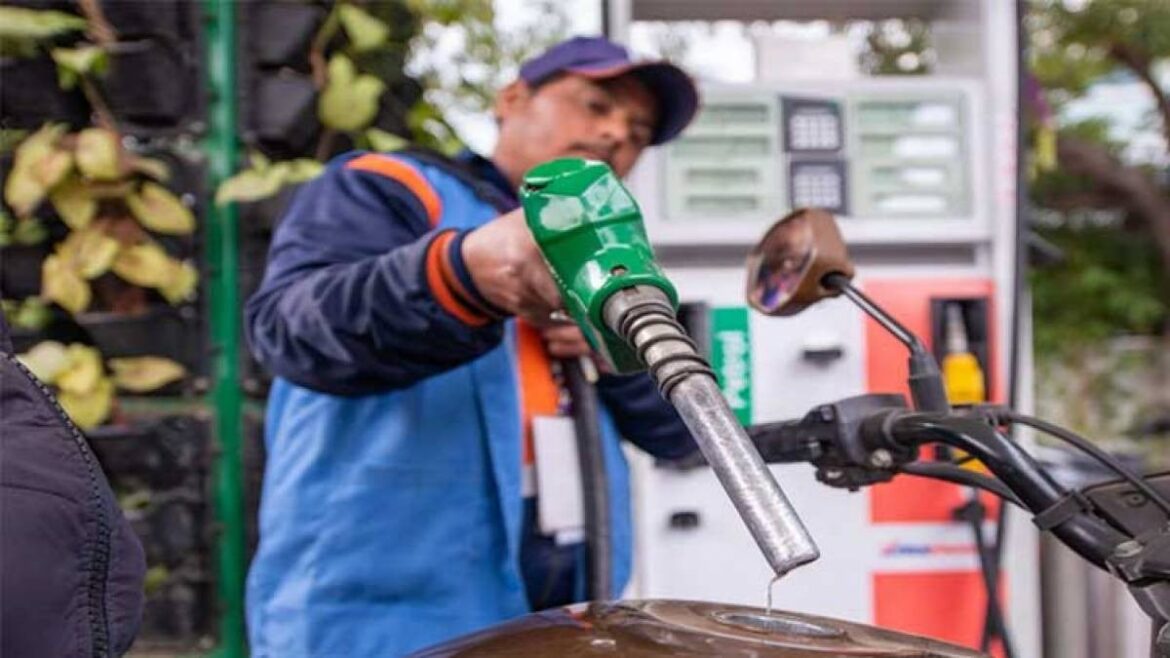
ISLAMABAD: Pakistan raised the price of petrol for the first time in almost two weeks, adding one rupee a liter and ending a 12-day run of cuts that had pulled pump prices about 30% below their April peak.
Petrol will retail at 323 rupees a liter on Friday, the Oil and Gas Regulatory Authority said in a notification on Thursday. Diesel was left unchanged at 355 rupees. The increase recovers a third of the 3-rupee cut announced Wednesday, and came as oil prices rose on Thursday on attacks on shipping in the Strait of Hormuz, which outweighed expectations of a market surplus.
Petrol has fallen almost every day this month. It was at 377.91 rupees on Nov. 1 and 2, so the fuel is still about 15% cheaper than at the start of November. After Tuesday’s reduction to 325 rupees, Deputy Prime Minister and Foreign Minister Ishaq Dar credited policy changes and structural reforms in petroleum policy for bringing prices down from the April 3 peak, and said the government would make all possible efforts “to ease the financial burden on the common man.”
The relief has not erased the damage from the war. Petrol peaked at 458.41 rupees on April 3, up from 266 rupees in the first week of March. Diesel reached 520.35 rupees that day, having started rising from 281 rupees after the US-Iran war broke out on Feb. 28. At 323 rupees, petrol is still about 21% above its pre-rally level, and diesel at 355 rupees is about 26% above.
The government continues to levy 114 rupees a liter in taxes and duties on petrol and 100 rupees on diesel. Under an arrangement announced Nov. 2, refineries will bear a cumulative impact of 15 billion rupees over 30 days, which allows a 14.71-rupee reduction in the consumer price of petrol. The arrangement is due to expire in early December.
Crude has eased from its highs but remains volatile. Brent traded above $107 a barrel on Nov. 2 after a 5% drop, having earlier reached four-year highs on fears that Washington could resume strikes on Iran after the US midterm elections. It was trading around $92 a barrel this week. Attacks on tankers and stalled diplomacy between Washington and Tehran continue to put a risk premium into prices.
The levy has become a political issue. The government told Jamaat-e-Islami in talks this month that it is drawing up a plan to replace the revenue, and would share a framework for gradually reducing the levy after consulting the International Monetary Fund. The party had threatened a march on Islamabad if the levy was not addressed. Its leader, Hafiz Naeem, said Wednesday that his party’s protests had prevented the government from raising the petrol price. The IMF, for its part, warned in April against blanket fuel relief and called for the removal of pricing distortions.
On Sept. 17 the government rolled out the Prime Minister’s Fuel Relief Scheme, which covers owners of motorcycles, rickshaws and vehicles of up to 800cc. It has also reintroduced austerity measures, requiring markets to close by 9 p.m. and cutting fuel allocations for official vehicles by 50% for three months.
The pricing system itself is also changing. Since July 17, the government has revised fuel prices almost daily, after weekly revisions that began in early March. The petroleum minister has said the cabinet and the prime minister decided to give Ogra responsibility for setting prices each day based on international market trends. The government decided in July to prepare a roadmap for phased deregulation of the sector, and a Petroleum Pricing Committee chaired by Petroleum Minister Ali Pervaiz Malik took up the subject again this month.
Petrol and diesel are the main fuels in the economy. Petrol is used mainly in private transport, small vehicles, rickshaws and two-wheelers, so its price hits the middle and lower-middle classes. Diesel powers heavy transport, power plants and large generators, so its price feeds through to the economy more broadly. Monthly sales of the two fuels run to about 700,000 to 800,000 tonnes, compared with about 10,000 tonnes of demand for kerosene.
Copyright © 2021 Independent Pakistan | All rights reserved