By Staff Reporter
KARACHI: Pakistan is targeting a 2027 start for offshore oil and gas drilling after a Turkish research vessel surveys two areas off its coast and the data are analyzed, Petroleum Minister Ali Pervaiz Malik said on Friday.
The plan is Pakistan’s most concrete attempt in years to find domestic hydrocarbons, and it comes at a costly moment for a country that imports most of its fuel. The last major offshore effort, in 2019, failed to find commercially viable oil or gas. The war in Iran, which began on Feb. 28 and disrupted shipping through the Strait of Hormuz, the main route out of the Gulf for oil and gas tankers, has since made that dependence more expensive. Interruptions to liquefied natural gas shipments from Qatar cut fuel to Pakistani power plants and worsened electricity outages.
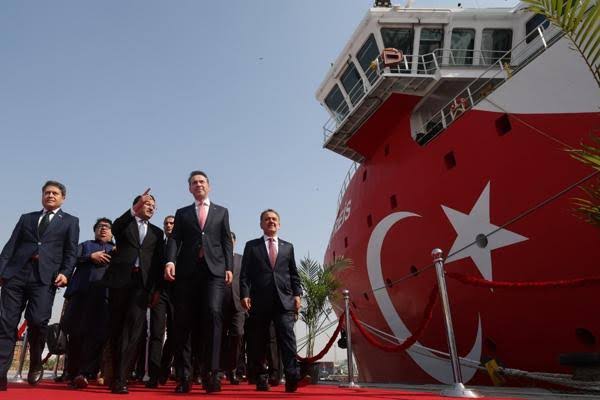
“We are hopeful that this data acquisition and interpretation exercise would be completed under the personal watch of His Excellency, the Energy Minister of Turkiye, in six months, leading to the start of the drilling operations early next year, inshallah,” Malik said at a welcome ceremony in Karachi for Turkey’s seismic research vessel Oruç Reis. Turkish Energy Minister Alparslan Bayraktar and Deputy Prime Minister Ishaq Dar also attended.
The vessel docked in Karachi on Thursday. It will first collect three-dimensional seismic data across 670 square kilometers in the Indus-C block, a phase Turkey’s energy ministry expects to take about 50 days once the ship reaches the survey area. It will then collect two-dimensional data along 2,353 kilometers of survey lines in the Makran blocks, which is expected to take 25 days. The work will map rock formations beneath the seabed to help identify where an exploratory well might be drilled.
“A seismic survey cannot guarantee a commercial discovery, but no discovery can be made without seismic exploration,” Dar said. He said three memorandums of understanding were signed at the ceremony, without specifying what each covered.
Malik tied the search for domestic supply directly to Pakistan’s exposure to the Gulf. “Pakistan entered this crisis on 28th of February with both deficient buffers and high exposure to the Hormuz,” he said. He added that Pakistan had avoided fuel stockouts since the war began and was working to expand strategic and commercial storage.
The survey follows Pakistan’s first offshore bidding round in nearly two decades, which drew bids for 23 blocks covering more than 50,000 square kilometers. Mari Energies took part in all 23 awarded blocks, operating 18 of them, while Oil and Gas Development Co. and Pakistan Petroleum Ltd. each received eight. Winning bidders committed roughly $80 million of work over the initial three-year license period, and the production-sharing agreements and exploration licenses were signed in May, formally reopening the offshore sector.
Malik said a subsidiary of Turkish Petroleum operates the Indus-C block and holds a 25% stake, alongside Pakistani partners Pakistan Petroleum, Oil and Gas Development and Mari Energies. He said Turkey’s exploration agreements with Pakistan cover three offshore and two onshore blocks.
The schedule has already slipped. In July, Malik said he expected Turkish Petroleum’s survey vessels to arrive in September or October, with drilling to follow about six months after the surveys were completed. Bayraktar said last month that the planned operations off Pakistan had been delayed by about six months because of the war in Iran.
Bayraktar said on X that the vessel would carry out two- and three-dimensional seismic surveys in the Indus and Makran basins to “uncover the potential there.” He called the step a “strong turning point” in energy cooperation between the two countries at a time of turbulence in global oil and gas markets, and said drilling was expected to start in 2027.
Turkey’s Communications Director Burhanettin Duran said the Oruç Reis was arriving for its second intercontinental mission, after operations off Somalia, where Turkey says the data helped prepare for a subsequent deepwater drilling operation. He said the ship, which measures about 285 feet long and 75 feet wide, carries a dynamic positioning system and advanced seismic equipment. The vessel drew international attention in 2020, when its work in the Eastern Mediterranean heightened tensions between Turkey and Greece over maritime jurisdiction.
Pakistan’s vulnerability to the Gulf is well documented. More than 90% of its imported LNG comes from Qatar, and Qatar halted exports at the world’s largest LNG plant after attacks in early March. By late April, about seven LNG-fired power plants with combined capacity of more than 5,500 megawatts were idle. Official trade data show Pakistan’s fuel import bill rose by about $1.3 billion in the March-July period, and domestic oil production meets only about 15% of demand.
The supply picture is improving only slowly. Bloomberg reported on Nov. 10 that Qatar’s LNG loadings had picked up in recent weeks but remained disrupted by conditions in Hormuz, and loadings in November are running at roughly half the pre-war pace. QatarEnergy has extended force majeure on LNG deliveries to Asia and Europe through the end of November.
Islamabad has also moved on storage. A government framework reviewed by Reuters in May proposed strategic petroleum reserves, bonded fuel storage and compulsory stockholding rules.
Offshore drilling in Pakistan has a poor record. The Kekra-1 well, about 280 kilometers southwest of Karachi in the Indus G block, was abandoned in 2019 after the target reservoir was found to hold only water. The consortium behind it included Eni, ExxonMobil, Oil and Gas Development and Pakistan Petroleum, and the project cost around $100 million. Shell’s 2005 campaign was the last offshore activity before then, and it also found no reserves.
Copyright © 2021 Independent Pakistan | All rights reserved