By Staff Reporter
ISLAMABAD: Pakistan did not invite Afghanistan to a regional foreign ministers’ meeting in Islamabad because it does not recognise the Taliban government, the Foreign Office said on Friday, while demanding that Kabul act against militants operating from its soil.
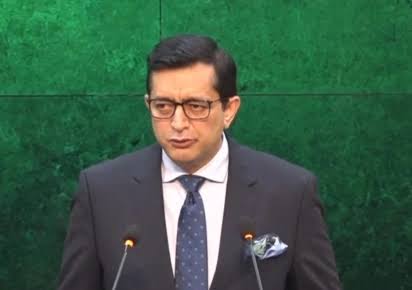
Foreign Office (FO) spokesperson Sajjad Haider Khan told his weekly press briefing that Afghanistan’s membership of the Economic Cooperation Organisation (ECO) had been suspended by the bloc’s secretariat. Attendance at ministerial-level ECO meetings, he said, was the prerogative of the host country under the organisation’s procedures.
“Afghanistan was not invited to join the ECO meeting in Islamabad as Pakistan has not recognised the incumbent regime,” he said.
Local media had reported before the meeting opened on 15 November that Afghanistan’s foreign minister had not been invited. Khan said the exclusion did not reflect any lack of interest in Afghanistan’s place in the region. “Pakistan attaches great importance to strong regional cooperation, connectivity and economic integration,” he said, adding that this informed Islamabad’s approach to Kabul.
Pakistan wanted to see Afghanistan as “a peaceful, prosperous and stable country, fully integrated within the ECO framework and at peace with itself as well as with all its neighbours”, he said.
But he set a condition. “We believe that meaningful progress requires the Afghan authorities to address the legitimate security concerns of neighbouring countries, particularly the threat of terrorism emanating from Afghan soil, in the interest of sustainable regional peace, stability and development.”
ECO chairmanship
Pakistan hosted the two-day meeting on 15 and 16 November under the theme “Reviving Regionalism for a Resilient ECO”, and now chairs the organisation for 2026-27. Khan said foreign ministers and heads of delegations had attended, and that the meeting adopted the Strategic Goals of Economic Cooperation 2035, which he described as an important step towards strengthening the bloc’s institutional and economic frameworks.
“The document builds on the achievements and guiding principles of the ECO Vision 2025 and provides a longer-term framework for regional integration, resilience, connectivity and sustainable prosperity,” he said.
The ECO has identified trade facilitation, transport and transit connectivity, energy cooperation, digital transformation, industrial development, food security, minerals and emerging technologies as practical priorities, he said.
“Our focus will remain on translating agreed objectives into implementable initiatives through regular ministerial meetings, effective coordination and stronger public- and private-sector participation.”
On the sidelines, Dar held bilateral meetings with foreign ministers and senior officials from Iran, Tajikistan, Turkey and Kyrgyzstan. He also met the secretaries-general of the ECO, the Organisation of Islamic Cooperation and the Conference on Interaction and Confidence-Building Measures in Asia. Foreign Secretary Asim Iftikhar Ahmed had earlier chaired a senior officials’ meeting to finalise the agenda and the draft Islamabad Communiqué.
Makkah alliance
Khan said Pakistan would host a meeting of the Makkah Alliance later this month, with details to be shared afterwards. It will be the third meeting of the alliance’s Strategic Political and Defence Committee, after earlier sessions in Turkey and Saudi Arabia. Dar has said he hopes it will take place by the end of the month without giving a date, though reports have suggested 27 and 28 November.
“This meeting follows the agreement reached among the three participating countries,” Khan said. “It will provide an opportunity to review progress under the agreement, strengthen institutional coordination, as the alliance architecture is still evolving, and discuss matters of mutual interest.”
Pakistan, Saudi Arabia and Turkey signed the Makkah Joint Defence Agreement in the holy city on 7 August. Mr Khan repeated that it was defensive in nature and not directed against any other country, and said Pakistan remained fully committed to it. “Its aim is to strengthen collective defence and deterrence and ensure regional stability,” he said.
US-Iran memorandum
Asked about the Islamabad Memorandum of Understanding signed between the US and Iran in June, Khan said its implementation “unfortunately remains impeded”.
Pakistan, he said, had “played its due role” by bringing the two sides together for negotiations and signing the memorandum electronically. He pointed to the ECO’s joint communiqué, which appreciated Pakistan’s mediation.
“We hope that the two sides find ways to resolve their issues based on the MoU’s ingredients,” he said. “We feel that the foundation for a peaceful region has already been established, and the signing of the MoU […] provides the roadmap for resolution of the dispute between the two sides, and de-escalation at this particular time is needed.”
On Saudi Arabia, Khan reiterated Pakistan’s condemnation of a Houthi attack on a tower in Riyadh’s King Abdullah Financial District, which he called a “grave violation” of the kingdom’s sovereignty and a threat to regional peace and security. Pakistan had also condemned an attempted Houthi attack on a Saudi Aramco administrative building in Riyadh on 9 November, in which no casualties were reported. It called for an “immediate and unconditional cessation” of attacks on Saudi Arabia and backed measures to protect the kingdom’s security and territorial integrity.
On Palestine, he said Pakistan had joined other foreign ministers in condemning an Israeli airstrike on the Nasr Medical Complex in Khan Younis and continued attacks on civilians. The joint statement called for the protection of civilians and medical facilities, unhindered humanitarian access and implementation of ceasefire arrangements. Pakistan and 14 other countries also welcomed UK and Australian sanctions against Israeli settlement activity, condemned continued expansion, particularly the E1 plan, and reaffirmed support for a two-state solution based on the 4 June 1967 lines, with East Jerusalem as the capital of Palestine.
Diplomatic calendar
Earlier in the briefing, Khan said Pakistan would continue to pursue a foreign policy “centred on national security, economic prosperity, constructive engagement, regional cooperation and the peaceful resolution of disputes”.
Prime Minister Shehbaz Sharif attended the COP31 climate summit in Antalya, Turkey, from 10 to 12 November. He met President Recep Tayyip Erdogan, and the two leaders reaffirmed their “fraternal” ties. Erdogan appreciated Pakistan’s “constructive role” in mediating the Islamabad memorandum, while Sharif highlighted efforts by members of the Makkah Accord to promote “de-escalation and dialogue”. At the summit he also pressed for “predictable, adequate and accessible climate finance” for developing countries and cited Pakistan’s rapid solarisation, renewable energy expansion and early warning systems.
Dar co-chaired the sixth Pakistan-Turkmenistan Joint Intergovernmental Commission with Turkmen Foreign Minister Rashid Meredov on 17 November. The two sides signed a protocol and a programme of cooperation between their foreign ministries for 2026-30 and exchanged a memorandum of understanding on tourism. On 19 November he held talks with ASEAN Secretary-General Dr Kao Kim Hourn on trade, connectivity, food security, climate resilience and digital innovation.
Iftikhar held the seventh round of political consultations with Italy and the 20th with Sweden, the latter in Islamabad on 19 November. He also received a Turkish delegation led by Farhat Pirinçci, deputy head of the Directorate of Communications, which included former defence minister Fikri Isik, to discuss strategic communications and countering disinformation.
Dar met former US Assistant Secretary of State Robin Raphel on 10 November and welcomed the “positive trajectory” of Pakistan-US relations. He spoke by telephone to the foreign ministers of Uzbekistan and Kyrgyzstan, and with Egypt’s Badr Abdelatty, who renewed an invitation for Mr Sharif to visit Cairo that Dar “positively received”. On Tuesday he met Lana Nusseibeh, a candidate for UN secretary-general, and David Miliband, head of the International Rescue Committee.
Climate Change Minister Musadik Malik will represent Pakistan at the Shanghai Cooperation Organisation’s Civilisation Dialogue Forum in New Delhi from 20 to 22 November. “Pakistan’s participation reflects its commitment to dialogue among civilisations, cultural exchanges and people-to-people contact,” Khan said.
Copyright © 2021 Independent Pakistan | All rights reserved