By Staff Reporter
ISLAMABAD: Pakistan has rejected as “undiplomatic and irresponsible” an Indian accusation at the United Nations that its military is plundering the country’s mineral wealth for personal gain.
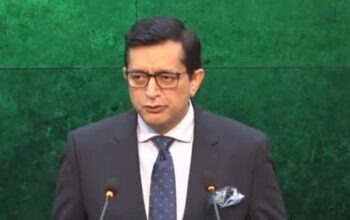
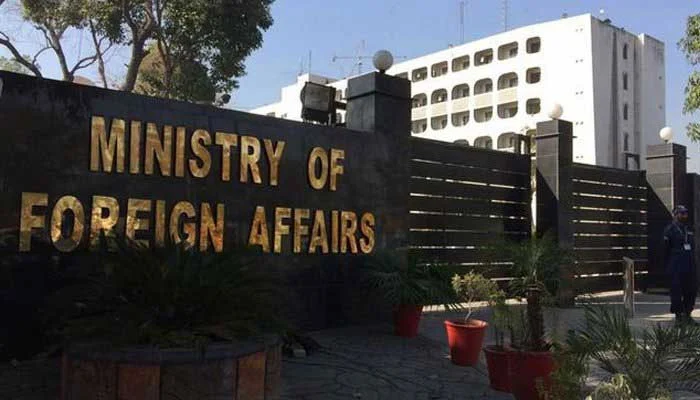
“Such diatribe, so typical of India, can only be rubbished,” Foreign Office said in a statement on Friday. “Such baseless accusations merit no attention and were immediately and effectively rebutted by Pakistan’s representative during the same meeting.”
The row began on Wednesday at an Arria-formula meeting of the Security Council, an informal format that allows members a frank and private exchange of views. The session, convened by Liberia, was on natural resources and conflict. Pakistan used it to raise the Indus Waters Treaty, which India has held in abeyance since the attack in Pahalgam, in Indian-occupied Kashmir, that killed 26 people in April 2025. Pakistan’s deputy ambassador, Usman Jadoon, told the meeting that India was weaponising shared water.
India’s ambassador to the UN, Parvathaneni Harish, said New Delhi had not meant to bring bilateral issues into the forum but was “compelled to respond”. According to the Indian news agency ANI, he “directly accused the Pakistan military of looting the country’s natural resources for personal gain and triggering domestic political turmoil to keep control over them”.
Without naming the US president, Harish pointed to Field Marshal Asim Munir, the army chief, who he said was seen last September showing foreign leaders a wooden box of mineral stones. The remark appeared to refer to the army chief and Prime Minister Shehbaz Sharif presenting rare earth samples to Donald Trump at the White House. Harish said the army’s role in exploiting the resources was also believed to be behind the recent dismissal of a provincial government in Pakistan and the imposition of a state of emergency there. Pakistanis would be better served, he said, if their “real rulers”, the military, used the resources for the population’s benefit.
The provincial government he referred to is in Khyber Pakhtunkhwa. President Asif Ali Zardari declared an emergency there on 11 October, ending the administration led by the party of the jailed former prime minister Imran Khan. The federal cabinet said the provincial government had deliberately disengaged from the fight against terrorism. Parliament endorsed the emergency on 14 October.
In the chamber, Pakistan’s first secretary, Ansar Shah, rejected the “frivolous and highly inappropriate remarks”.
The Foreign Office said India had turned to “unsubstantiated insinuations about Pakistan’s institutions and leadership” rather than address Pakistan’s “legitimate concerns with respect to India’s hydro-terrorism”. It said India’s hostility to Pakistan developing its minerals was “equally evident in its persistent efforts to undermine Pakistan’s stability”.
“Pakistan has repeatedly raised concerns, supported by evidence, regarding India’s sponsorship and support of terrorist activities in Balochistan and Khyber Pakhtunkhwa, aimed at disrupting development and depriving local populations of the benefits of their natural resources,” the statement said.
It also turned on the Indian government. “India’s continuing descent into a Hindutva-inspired extremism-fascist polity, led by a religious fundamentalist regime is well known,” it said. It described Indian accusations as “a futile attempt to hide its international isolation”, aimed at distracting attention “from India’s domestic situation and its weaponisation of shared resources”.
On the treaty, the Foreign Office pointed to the Court of Arbitration’s ruling that it remains binding and fully in force, with no legal basis for unilateral suspension or termination. The court issued the award on 31 August, and India rejected it the same day, calling the body “illegally constituted” and saying the treaty would stay in abeyance.
“India’s refusal to accept this ruling raises serious questions about its commitment to treaty obligations and international law,” the Foreign Office said.
It also urged India to implement UN Security Council resolutions on Jammu and Kashmir, where it said Indian forces had committed “gross violations of human rights for decades”. “A state that is a serial violator of UN Charter, UNSC resolutions, sovereignty of neighbouring states, and binding treaty obligations, that patronises systematic discrimination against its Muslim, Sikh, Christian, and Dalit minorities, engages in disinformation and terrorism as instruments of state policy and remains in forcible occupation of a territory whose people it denies the internationally guaranteed right to self-determination, has no standing whatsoever,” it said. “Instead of pointing fingers, India should introspect and change its behaviour,” the Foreign Office concluded.
Copyright © 2021 Independent Pakistan | All rights reserved