By Staff Reporter
ISLAMABAD: Support for a national referendum on creating new provinces spread across Pakistan’s government and opposition benches on Friday, deepening a rift in the ruling coalition over the future of Sindh and Karachi.
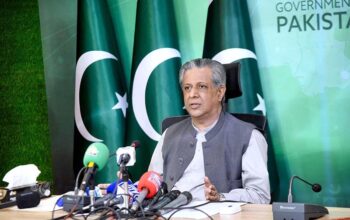
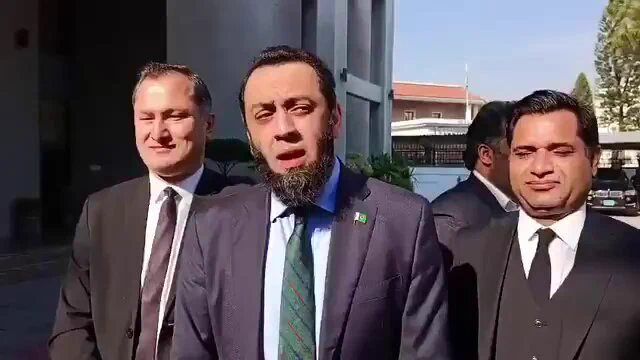
Information minister Attaullah Tarar told reporters outside the Election Commission of Pakistan (ECP) that “there is no harm in holding a referendum”, noting that the Constitution provides for one on matters of national importance or public interest. New provinces should go ahead only if people backed them, he said, and the idea should be dropped if they did not.
Aamir Dogar, the opposition chief whip in the National Assembly and a senior leader of the Pakistan Tehreek-e-Insaf (PTI), made a similar case outside Parliament House. “Whether it comes through a referendum or another means, the people’s opinion is a great solution,” he said. “The will and opinion of the people should prevail.”
The Pakistan Peoples Party (PPP), which governs Sindh and is a major partner in the federal coalition, takes the opposite view. Its chairman, Bilawal Bhutto-Zardari, said on Tuesday that the Constitution already sets out a procedure for creating provinces and that proposing a referendum amounted to seeking an “unconstitutional” route. He also warned that a forced division of Sindh would lead to bloodshed in Karachi.
Tarar first endorsed a referendum in a video statement on Tuesday. On Friday he said Prime Minister Shehbaz Sharif had met the president, Asif Ali Zardari, who is also the PPP’s co-chairman, and that the two had discussed the need to move forward through consensus. Neither the presidency nor the prime minister’s office has confirmed that new provinces were raised.
Health minister Mustafa Kamal, a leader of the Muttahida Qaumi Movement-Pakistan (MQM-P), said Tarar’s support and the prime minister’s willingness to consider a referendum showed the debate was already under way. Speaking on the sidelines of a startup-government dialogue in Karachi, he said his party, which backs new provinces, had been left with no alternative after Karachi and other urban centres were denied basic civic facilities and representation in line with their populations.
“If the 26th or 27th Constitutional Amendment had granted constitutional powers to local governments, we would have supported it,” he said. “However, we have been left with no option but to support the creation of new provinces.”
He accused the Sindh government of resisting any transfer of power to local administrations. “Local governments do not even have the authority to install manhole covers,” he said, adding that every attempt to raise the matter had been met with opposition and even threats of bloodshed. Earlier this week he warned that Bhutto-Zardari would be held responsible for any violence.
Kamal said the Constitution provided a mechanism for creating provinces, so discussing the subject could not be called unconstitutional. Citing Clause 4 of Article 239, he noted that the document had already been amended 27 times and could be amended again.
He said his party did not want a confrontation and would pull out of its planned rally if there was even a “slight risk” of a clash. “Our objective is not confrontation but to maintain peace in the city,” he said. “We do not want to give the rally a political or any other colour.” The 29 November event, he said, had not been postponed on anyone’s instructions. The MQM-P has said the march will head towards Sharae Faisal, while Karachi’s mayor, Murtaza Wahab, has urged it to use a park instead.
Kamal also used the row to criticise how parties treat the military. “It has become a political trend to declare the establishment’s support halal when it is favourable and haram when it is not,” he said, using the Arabic terms for permissible and forbidden. He alleged that parties that had sought the establishment’s backing complained when it turned against them, and that none had apologised or promised to stop. “Every political party wants the establishment to intervene in its favour,” he said. “Even those who object to the establishment’s interference want its support.” Asked about differences inside the MQM-P, he said: “Everyone has the right to express their views. We are doing what we believe is best. Differences within the party are our internal matter.”
For the PTI, Dogar said the party’s founder, Imran Khan, had consistently favoured smaller provinces, and that a South Punjab province had been in its 2018 manifesto. “I am from Multan, South Punjab,” he said. “In 2018, we made the creation of a South Punjab province part of our agenda. Not only did we include it in our agenda, but when our government came to power, we also worked towards it.” The proposal, he added, had given an identity to the Saraiki-speaking population.
Any new province should have public approval and follow constitutional and legal procedure, Dogar said, and the PTI would take no position until a draft was formally presented in parliament. Talk of a 28th Constitutional Amendment and new provinces, he said, remained confined to the media and social media. On whether the party’s backing for South Punjab extended to a separate province for Karachi, he said that would first go to its internal forums. “We have a parliamentary forum, a political committee and a core committee,” he said. “The recommendations of all three forums will be presented to Imran Khan, and the final decision will be his.”
He said it was too early for the opposition to settle its stance on the amendment because of divisions in the government. “There are cracks within the government itself,” he said. “You have seen the statements made by Bilawal Bhutto-Zardari, the biggest partner in the coalition, and even the government’s own ministers do not know what will happen.”
The row began on 30 July, when interior minister Mohsin Naqvi called for more provinces as part of an overhaul of governance, arguing that reform was needed to improve justice and create opportunities for young people. The PPP rejected the idea. Sindh’s chief minister, Murad Ali Shah, called it outdated and said no bloodshed would be allowed over it. The MQM-P backed new provinces in August and called for a national dialogue, which put it at odds with the PPP.
On 3 September the Sindh Assembly unanimously passed a resolution rejecting any division of the province, describing it as a “historic, civilisational and constitutional entity” and declaring that “Sindh is one and shall remain one”. Two days later Naqvi said he would keep backing new provinces whether or not he stayed in office, and that the public should first hear the “pros and cons” before deciding. On 12 November he suggested a referendum as a way out of the dispute.
The constitutional route is contested. Article 48(6) allows a matter of national importance to be put to a referendum after approval by a joint sitting of parliament, but a vote would not itself create a province. Under Article 239, an amendment that alters a province’s limits must also be passed by that province’s assembly with a two-thirds majority, which gives Sindh’s assembly a decisive say. Rana Sanaullah, the prime minister’s adviser on political affairs, said in September that a referendum would need the legislature’s approval.
No draft constitutional amendment, agreed number of provinces or timetable has been made public. Defence minister Khawaja Asif has said he expects the change by the new year. Planning minister Ahsan Iqbal has said the question must be settled before the Senate elections due in March 2027, so that any new provinces are not left under-represented in the upper house. T
Tariq Fazal Chaudhry, the parliamentary affairs minister, said a referendum on creating new provinces “will happen”, rejecting a warning from its main coalition partner that dividing Sindh by force would bring bloodshed to Karachi.
“The referendum will happen,” Chaudhry told a local television channel on Friday, adding that the ruling PML-N would make “every last effort” to persuade the PPP. He said the process of seeking the public’s opinion could not be stopped because a single party opposed it.
Chaudhry said the government regarded a vote as a lawful way to gauge opinion. “Referendum is neither non-constitutional nor undemocratic; the public’s opinion can be asked on any important matter,” he said. “National consensus is very important on the issue of new provinces,” he added, noting that the PTI-led opposition was also in favour.
He was more guarded on how far a referendum could take the government. He said parliament and the provincial assemblies could not be sidelined, that any move had to follow constitutional procedure, and that a referendum alone could not establish a new province. President Zardari and PM Sharif reportedly agreed in recent weeks that parliament could not be bypassed in deciding whether to hold a referendum and what question to put. Redrawing Sindh’s borders would also need two-thirds support in each house of parliament and in the Sindh Assembly.
Asked when a referendum might be held, Chaudhry said it was premature to say, but that “things will be clarified soon”. Local media have reported, citing unnamed parliamentary sources, that the government wants the matter settled before Senate elections expected in the first week of March.
Asked whether Nawaz Sharif, the PML-N supremo and the prime minister’s elder brother, backed the plan, the minister replied: “100 percent, the prime minister does not make any major decisions without his opinion.”
He played down the threat of a split in the coalition, saying the PPP included “mature and seasoned politicians” and that he hoped it would remain a partner. “I believe matters will not reach a point where they might have to exit the coalition, as we will make sure to onboard them on the decision and vice versa,” he said. Referring to Bhutto-Zardari’s comments about the prime minister completing his five-year term, he said: “It is clear that PPP will not exit the coalition.”
Chaudhry said Bhutto-Zardari had every right to present his party’s view on provinces, but should have taken the prime minister into confidence before speaking publicly. He criticised the PPP chairman for turning on the PML-N. “Attacking us (PML-N) or invoking other matters that have nothing to do with the debate related to the provinces was not worthy,” he said.
Copyright © 2021 Independent Pakistan | All rights reserved