By Staff Reporter
ISLAMABAD: The federal government has identified weaknesses that could allow corruption to take hold in ten state institutions, while insisting the findings are “not a charge sheet” against any of them.
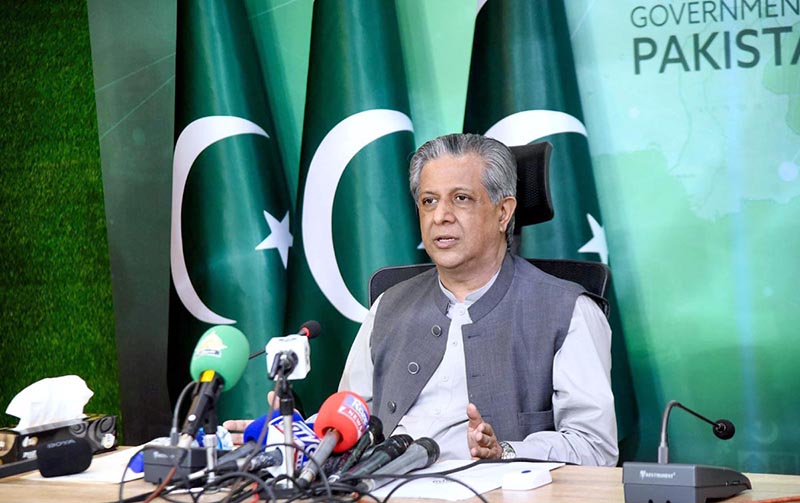
Law Minister Azam Nazeer Tarar, who joined a press conference by video link on Friday, said the National Risk Assessment of Corruption Vulnerabilities was meant to show where the system could be exploited so that reforms could be introduced to promote “merit and transparency”.
Prepared by the Ministry of Law and Justice with a range of agencies, the survey selected 25 federal institutions and measured them against more than 300 indicators. Ten were examined in depth because their work involves finance-related matters, which the minister said presented opportunities for corruption.
They were chosen for their financial links and include the Federal Board of Revenue (FBR), Pakistan Railways, Sui Northern, the National Highway Authority, the Benazir Income Support Programme (BISP) and the power distribution companies, known as discos. The report also considered the role of regulators and, the minister said, identified “checks and balances, misuse of authority” as areas needing attention to stop financial leakages.
“This has been done for the guidance of the federal institutions. Consider it a precautionary step,” Azam said.
The assessment sets out a strategy of 400 reform measures, grouped into 74 “reform blocks”, to be completed within two to five years. It will also be shared with international agencies, he said.
The minister said the aim was “self-accountability”, and he claimed that no previous government had attempted anything similar. “Instead of waiting around for others to point out our weaknesses, we should identify them ourselves and present them in front of the people, as this is part of the prime minister’s vision of good governance,” he said.
Azam used the briefing to set out the government’s record under Prime Minister Shehbaz Sharif. He said the FBR’s “good work” had lifted the number of taxpayers from 3.7 million to 7 million, and that more than 2.1 million smart meters had been installed in response to complaints of electricity theft at the discos. He also cited the digitisation of toll collection on motorways, pension reforms and the move to digital wallets at BISP.
Reforms in the power and energy sectors, he said, were expected to save the government Rs3,500 billion, or about Rs3.5 trillion. “As a result of these reforms, the government is expected to save Rs3,500 billion in the electricity and energy sectors,” he said.
On the privatisation of Pakistan International Airlines (PIA) last year, he said the sale had gone through an open auction and competitive bidding after earlier attempts failed. “You will see positive changes in that in the coming days,” he said.
The minister also pointed to the government’s plan to right-size departments it considers unnecessary, citing the closure of the Pakistan Public Works Department (PWD), which he said faced allegations of corruption and “wastage” of money. Staff had been offered a package, he said, though some legal amendments were still pending in the Assembly.
“Now this work will be executed through smaller institutions or provincial departments,” he said, adding that the closure had saved billions of rupees.
Information Minister Attaullah Tarar, who also spoke at the press conference, described the report as an effort to set “improved targets by identifying weaknesses in the system”. He said it continued earlier steps towards transparency, including the closure of Pak-PWD, the Pakistan Agricultural Storage and Services Corporation (PASSCO) and the Utility Stores Corporation. Minister of State for Finance Bilal Azhar Kayani was also present.
The assessment follows an IMF diagnostic published last November. The Fund’s Governance and Corruption Diagnostic Assessment said corruption in Pakistan was driven by systemic weaknesses across state institutions, and it proposed a 15-point reform plan to improve transparency, fairness and integrity. The government had delayed publication of the report since August, and its release was a precondition for the IMF’s executive board to approve a $1.2bn disbursement.
The IMF estimated that Pakistan could lift economic output by about 5 to 6.5 percent over five years if it began a package of governance reforms within three to six months.
It found that the country was exposed to corruption risk through weak budgeting and reporting of fiscal information, and through the management of public financial and non-financial resources. It singled out capital spending, public procurement and the oversight of state-owned enterprises. It also described a tax system that was overly complex and opaque, run by tax and customs authorities with insufficient capacity, management and oversight.
Copyright © 2021 Independent Pakistan | All rights reserved