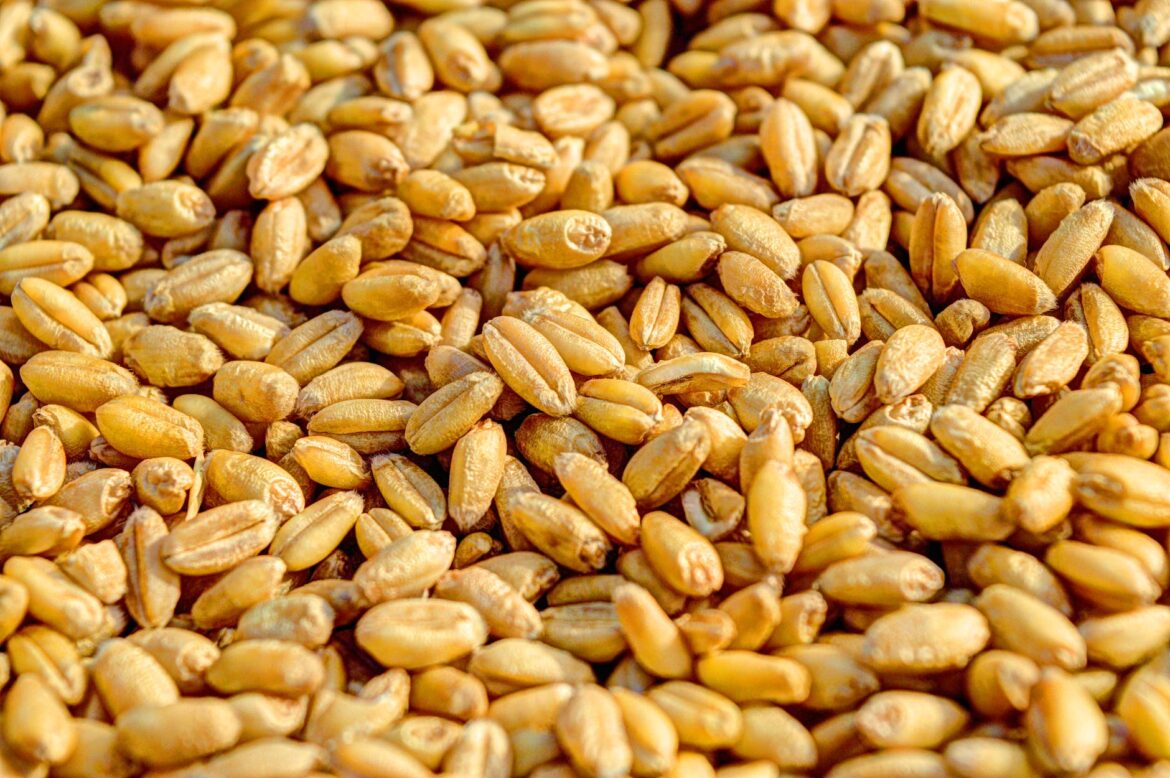
The province may have its reasons for setting a high MSP for the next wheat crop, but the federal government’s worries about inflation and smuggling are also valid.
By Muhammad Ali
ISLAMABAD: Sindh’s decision to set a wheat support price that is at least 33 percent higher than any other province has left the federal government in a quandary, with the provincial government maintaining radio silence over a federal request to bring the number in line with other provinces.
The Ministry of National Food Security and Research (NFS&R) has proposed an MSP in the range of PKR 3,000 to PKR 3,200/40kg for the next wheat crop for 2022-23. However, the provincial cabinet of Sindh has announced its MSP at PKR 4,000/40kg.
The provincial cabinets of Punjab and Khyber Pakhtunkhwa have endorsed the support price of wheat at PKR 3,000/40kg. The government of Balochistan has not announced it to date.
Wheat is Pakistan’s number one staple food grain with around 80 percent of the country’s farmers growing it on about 9 million hectares – or about 40 percent of the country’s total cultivated land.
This monsoon’s cataclysmic floods have damaged standing crops of rice, the second most important food grain of the country. This will likely increase reliance on wheat.
But the flooding has also rendered vast tracts of farmland uncultivable for now– including large wheat-growing areas of the Sindh province. According to the USDA, the recent floods are likely to negatively impact the 2023-24 wheat planted area in Pakistan.
Perhaps it was this unfortunate circumstance that prompted Sindh to set a higher MSP (Minimum Support Price) for wheat – PKR 4,000/40kg as against PKR 3,000/40kg set by Khyber-Pakhtunkhwa (KP) – with a view to incentivising early rehabilitation of farm activity, which can mitigate wheat import needs.
It has been reported that the federal government is eying an MSP of PKR 2,800-3,000/40kg. Farmer’s collectives, on the other hand, are now insisting that the price announced by Sindh should be applicable to all provinces.
This is problematic from the federal government’s point of view is that every PKR 100 increase in the price of a maund (40kg) of wheat adds 0.16 percent to the rate of inflation. Inflation for the month of August was 26.23 percent with the support price of wheat at PKR 2200/40kg.
This means that in the case of the proposed MSP of PKR 3,000 or PKR 3,200 and PKR 4,000/40kg, the estimated increase in CPI would, tentatively, be 1.27, 1.60 and 2.86 percent respectively.
A Cabinet Committee met with CM Sindh with a request to review the MSP. However, no feedback has been received.
If Sindh sticks with its high MSP, PASSCO may not be able to procure wheat from that province. while other provinces may impose a ban on the movement of wheat across borders.
Keeping an abnormally high MSP would also have an adverse impact on the finances and subsidies of Federal and provincial governments. Hence, a reasonably high-profit margin, keeping in view the flood situation would be the most prudent course of action to incentivize the next wheat crop.
One could argue for provinces maintaining their own and independent MSPs, but the problem is that a substantial discrepancy between provincial prices incentivises smuggling and black marketing.
Growers and middlemen use the price disparity to distort the market by hoarding and smuggling. This is why the federal government is gunning for lower and uniform prices across all provinces.
The MSP of wheat for 2022-23 was to be approved by the ECC this Monday before the Finance Minister’s departure for Washington to attend the World Bank Group annual meetings. However, this could not be achieved as no response arrived from Sindh to the request to reset a lower wheat MSP.
On a political level, it is difficult to see how Sindh can wriggle out of an apparently pro-farmer decision it has already announced. On the other hand, the federal government’s options on the matter are equally difficult. The price of inaction, however, can be a full-blown wheat crisis.
The issue of MSP was highlighted in the first meeting of the Wheat Board held on June 30 2022. The National Assembly’s Standing Committee on NFS&R recommended that the provinces finalise the support price of wheat for the next year.
Later on, the National Assembly Standing Committee on Commerce recommended that the Federal government may announce the MSP of wheat not less than PKR 3,000/40kg.
The estimated costs were shared with the provincial governments in a meeting chaired by the Minister for NFS&R. Their proposals ranged between PKR 2,600/40kg and PKR 3,000/40kg.
The Ministry of NFS&R recommended to the federal government to set the MSP for the wheat crop of 2022-23 at PKR 3,000/40kg. This would provide a profit margin of 20 percent to growers.
In its second proposal, the Ministry recommended the MSP at PKR 3,200/40kg. This would provide a profit margin of 28 percent to growers.
The Ministry is also urging provincial governments to enforce the Anti-Hoarding and Anti-Profiteering Act, 1977 in letter and spirit to keep a check on inflation.
Copyright © 2021 Independent Pakistan | All rights reserved