By Staff Reporter
ISLAMABAD: Pakistan plans a nationwide crackdown on tax evasion on Thursday, after revealing that a staggering 86 percent of companies operating in the country are not registered for sales tax, resulting in an estimated Rs3.4 trillion in lost revenue annually.
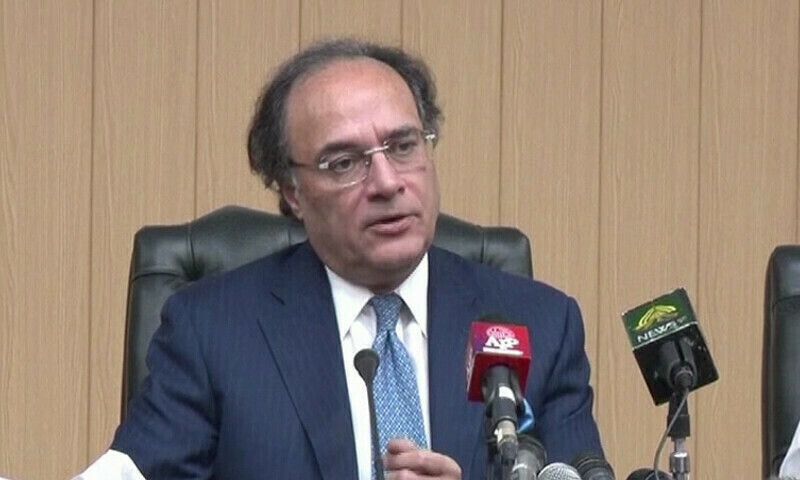
“Only 14 percent of (300,000 liable) the companies are registered for sales tax,” Finance Minister Muhammad Aurangzeb said in a televised news briefing in Islamabad. “I will not delve into the consequences of non-registration as I have already spoken about it earlier.”
Pakistan’s overall tax evasion totals around Rs7 trillion, with income tax evasion accounting for Rs1.3 trillion.
A press note shared after a press conference stated Aurangzeb has declared a “war against tax fraud” following a study revealing a staggering tax gap of Rs3,400 billion.
The study, conducted by the Federal Board of Revenue (FBR), exposed widespread malpractices across various sectors.
The minister identified misreporting of turnover and input claims as primary categories of tax fraud.
“Tax fraud can be divided into many categories, with the first and most important being the misreporting of turnover and input claims,” Aurangzeb said. “These companies claim a high ratio of input tax so that tax payments can be suppressed and mitigated.”
The minister said companies were abusing the system by issuing fake invoices for supplies and neglecting to report their agency function, thereby dodging taxes. “This constitutes a betrayal of trust and fiduciary duty,” Aurangzeb said.
“It is my appeal certainly to the management to these companies that you come to manage these companies that there should be a justification to all stakeholders including what you owe and what the companies owe to the government.”
The minister said 19 businesses in the cement sector that represented 100 percent of total reported sales owed around Rs18 billion to the government. Similarly, he added that the shortfall in the beverages sector due to tax evasion amounted to Rs15 billion where 16 businesses represented almost 100 percent of the total sales.
“It is important that we take you all on board and have a fact-based discussion,” he said. “This is not a 10,00 feet level discussion — this is not an emotional discussion.”
Aurangzeb emphasized the importance of a fair tax regime. “It is imperative to raise the tax-to-GDP ratio to 13-13.5 percent so that Pakistan can become a sustainable country… with strong remittances, exports, upgraded credit ratings, and a decreased policy rate due to declining inflation.”
FBR chairman Rashid Mahmood Langrial warned businesses involved in tax evasion face consequences.
“There is not a bigger fraud being conducted in this country than the input adjustment system,” Langrial said. “Professional classes, including CFOs and CEOs, will face criminal consequences for their signatures used in these frauds.”
Langrial urged companies to refrain from signing false sales tax returns. “The real appeal today is to professional classes who work as chief financial officers or chief executive officers. They are not the beneficiaries of the fraud amounting to billions of rupees but their signatures are being used which is a criminal act that will have criminal consequences.”
He said the businesses involved in tax evasion were the same ones whose owners would hold meetings with government officials and present plans on how to curb tax evasion.
The chairman FBR said the government will take action against such people and arrest them after due legal process. “There will be no forgiveness this time,” he said.
The press note added that the study revealed that many registered entities were involved in misreporting turnover, excess input tax claims, and using fake and flying invoices. The sales tax regime, based on Value-Added Tax (VAT) mode, has been breached on a massive scale,
In the iron and steel sector, 33 large businesses, accounting for over 50% of total reported sales, evaded sales tax by claiming excess input tax of Rs29 billion, mainly through fake claims on scrap metal and coal purchases.
Similar malpractices were found in the battery sector, with six active cases, representing 99% of total reported sales, claiming excess input tax adjustments of Rs11 billion. The cement sector study revealed 19 active cases had claimed excess input tax adjustments of Rs18 billion in FY23-24.
Other sectors, including beverages and textiles, also showed significant evasion. A study of 16 active cases in the beverages sector found excess input tax adjustments of Rs15 billion, while 228 textile sector cases claimed excess input tax adjustments of Rs169 billion.
Despite intensified enforcement measures last financial year, resulting in a significant decrease in fake input tax claims, “massive evasion still persists,” the note stated.
To counter evasion, the FBR has planned more stringent measures, identifying 11 battery sector cases, 897 iron and steel sector cases, and 253 beneficiaries of fake input claims on coal purchases for criminal proceedings. The total amount of sales tax fraud committed stands at Rs227 billion.
Copyright © 2021 Independent Pakistan | All rights reserved