By Staff Reporter
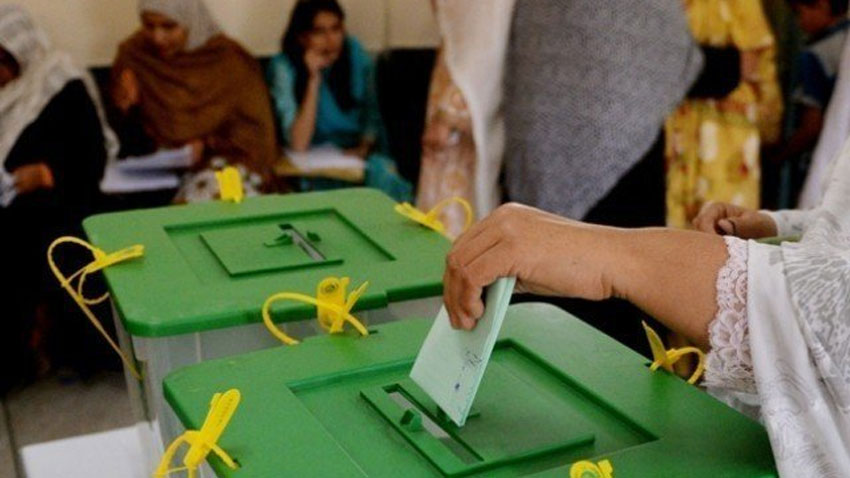
ISLAMABAD: Pakistanis began voting on Sunday in by-elections for six seats in the National Assembly and seven in the Punjab provincial assembly, contests that highlighted the lingering fallout from last year’s political upheavals and tested the ruling coalition’s grip amid accusations of electoral irregularities.
Polling opened at 8 am and was set to continue until 5 pm without interruption, concentrated in districts including Haripur, Faisalabad, Chak Jhumra, Muzaffargarh, Sargodha and Dera Ghazi Khan. The vacancies mostly stemmed from the disqualifications of lawmakers linked to the opposition Pakistan Tehreek-e-Insaf party in cases tied to the May 9, 2023, riots that followed the arrest of former Prime Minister Imran Khan.
According to the Election Commission, ballot papers and other materials had been securely delivered to polling stations, and authorities had been instructed to ensure free and fair balloting. But tensions ran high, particularly in Lahore’s NA-129 constituency, where PTI leaders alleged missing election forms and potential rigging by the governing Pakistan Muslim League-Nawaz.
In Haripur’s NA-18, a mountainous district in Khyber Pakhtunkhwa Province, nine candidates competed for the seat vacated by the disqualification of PTI leader Omar Ayub in a May 9 case. Among the front-runners was Shehrnaz Omar Ayub, a PTI-backed independent, facing Babar Nawaz Khan of the PML-N and Erum Fatima of the Pakistan People’s Party. The constituency, with more than 753,000 registered voters, featured 602 polling stations.
Faisalabad, an industrial hub in Punjab, emerged as a focal point with four seats at stake. In NA-96, 16 candidates vied for the position left empty by the unseating of PTI’s Rai Haider Ali Kharal, including PML-N’s Talal Badar Chaudhry and a slate of independents. The area has 587,124 voters and 345 polling stations.
Nearby NA-104 pitted PML-N’s Raja Daniyal against four independents in a constituency of about 557,000 voters and 375 polling stations. The seat had been held by Sahibzada Hamid Raza, chairman of the Sunni Ittehad Council, before his disqualification. In the provincial races, PP-116 saw PML-N’s Rana Shehryar competing against five independents for a seat vacated by Muhammad Ismail Sila’s disqualification in a May 9 case, with 190 polling stations serving roughly 276,000 voters. PP-115 featured PML-N’s Tahir Jamil as the primary party candidate among five contenders, following the disqualification of PTI’s Sheikh Shahid Javed. PP-98 drew 10 candidates, with a tight race anticipated between PML-N’s Azad Ali Tabbasum and independent Muhammad Ajmal Cheema. The constituency, with 171 polling stations and nearly 290,000 voters, opened after PTI’s Junaid Afzal Sahi was unseated and sentenced in a May 9 case.
Further south in Muzaffargarh’s PP-269, 17 candidates entered the fray, including PPP’s Alamdar Abbas Qureshi, independents Iqbal Khan and Abdul Hai Dasti. The seat became available after Qureshi resigned ahead of a recount request by Khan. Sargodha’s PP-73 had five candidates, led by PML-N’s Mian Sultan Ali Ranjha against four independents, following the disqualification and 10-year sentencing of PTI’s Ansar Iqbal Heral in a May 9 case.
In Dera Ghazi Khan’s NA-185, eight candidates contested, with a close battle expected between PML-N’s Mahmood Qadir Leghari and PPP’s Sardar Dost Muhammad Khosa. The seat, equipped with 226 polling stations including separate ones for men and women, fell vacant after the disqualification of Zartaj Gul Wazir.
Lahore’s NA-129 drew particular scrutiny as a direct clash between PTI and PML-N interests. The seat, with over 550,000 voters, became vacant in July after the death of former Punjab Governor Mian Muhammad Azhar, who had won it in 2024 as a PTI-backed independent before aligning with the Sunni Ittehad Council. Azhar’s nephew, Chaudhry Arsalan Ahmad, nominated by his son, PTI leader Hammad Azhar, ran as an independent on the “geyser” symbol, unable to use PTI’s traditional “bat” due to the party’s loss of its electoral emblem last year. His chief opponent was PML-N’s Hafiz Mian Nauman, who had lost to Mian Azhar by more than 30,000 votes in 2024.
Hammad Azhar, who is in hiding and wanted in various cases, accused the PML-N-led Punjab government of rigging tactics. On Saturday, he posted on X: “We are receiving reports that multiple presiding officers are missing Form 45s in the election materials they have received from ECP (Election Commission of Pakistan) for the by-elections of tomorrow. This is a serious violation of the electoral process.”
Earlier, Azhar issued instructions to PTI polling agents: “When the bags containing election materials are opened in the morning, make sure that the Forms 45 and Forms 46 in them are blank and shown to you. This is most important.” He emphasised that polling boxes “must not be out of sight at any moment” and that agents had the right to obtain filled Form-45s “as per the count,” warning that obstructing staff would face “strict legal punishment.” He directed PTI workers to remain at camps outside polling stations after voting ended and “peacefully follow the presiding officer to the returning officer’s (RO) office.”
To maintain order, the interior ministry on Friday approved deploying the Pakistan Army and civil armed forces across the 13 constituencies from Friday through Monday. Police would serve as first-tier responders, civil armed forces as second-tier in standby or quick-reaction mode, and the army as third-tier in quick-reaction force mode. Numbers would be set based on assessments by home departments and the Election Commission.
A code of conduct for the forces stipulated they act under Article 245 of the Constitution, focusing on providing a secure environment for voters. Personnel were to deploy outside highly sensitive polling stations, barring entry only to those with weapons, explosives or causing disturbances. They were prohibited from handling election materials, assuming polling staff duties or interfering in counting.
The Election Commission also issued media guidelines, barring broadcasts of unofficial results from polling stations until at least one hour after voting ends, and requiring such reports to be labeled as unofficial and partial. Violations could prompt the commission to seek disciplinary action. Only returning officers could release official results. Under Article 220 of the Constitution and sections of the Elections Act, the commission requisitioned armed forces’ services, empowering designated officers to exercise magistrate powers for offences under the act and the Anti-Terrorism Act, including conducting summary trials.
By Staff Reporter
Copyright © 2021 Independent Pakistan | All rights reserved