By Staff Reporter
ISLAMABAD: Pakistan’s former foreign minister has seized on an interview given by Malaysia’s prime minister to an Indian broadcaster, casting it as vindication of Islamabad’s long-standing rejection of accusations that it orchestrated last year’s attack on tourists in Kashmir.
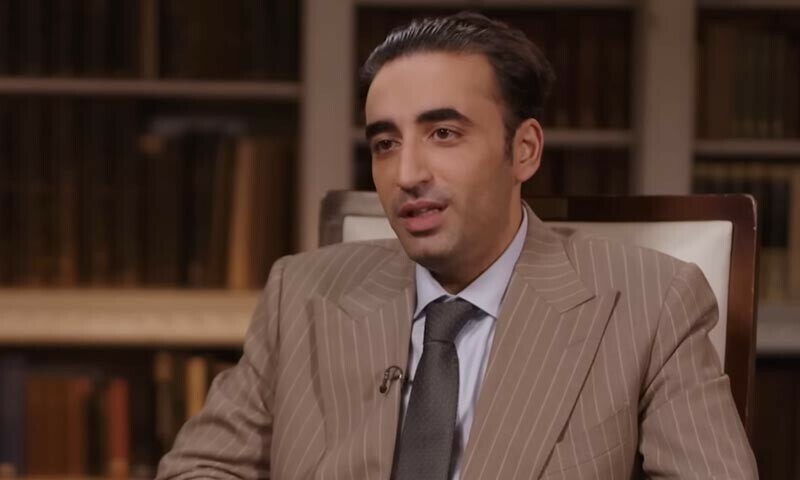
Bilawal Bhutto-Zardari, who chairs the Pakistan Peoples Party, wrote on X that Anwar Ibrahim had gone some way toward undercutting an Indian propaganda campaign — delivered, pointedly, from inside an Indian television studio.
“The truth is India started a war based on a lie and lost miserably,” Bhutto-Zardari wrote, adding that India now “stands exposed internationally”.
The remarks followed an interview Ibrahim gave to NDTV’s Vishnu Som while in New Delhi for the weekend’s Brics summit. Questioned on where he stood on the killing of 26 people, most of them tourists, at Pahalgam in Indian-occupied Kashmir in April last year, the Malaysian leader stopped well short of the position New Delhi has spent more than a year trying to establish internationally.
“I would not go to that extent,” Ibrahim told his interviewer, when asked whether he regarded what he called “Pakistan has done against India and in Pahalgam” as terrorism, on the same terms he had just applied to Israel’s conduct in Gaza. “I know it is very sensitive to say that in India. I’m a close friend of Modi ji, and we engage with the Pakistanis.”
Pressed on why he was not willing to be “as direct in criticising Pakistan for terrorism”, Ibrahim said the matter would first “have to be established”. He went on: “None of my intelligence establishment … would come back and tell me, ‘Anwar, yes, there was state-sponsored terrorism.’ Therefore, I, as the prime minister of Malaysia, would then refer to this fact.”
It was a markedly different answer to the one he had given moments earlier on Gaza, where he described Israel’s campaign against Hamas without hesitation as terrorism, and, elsewhere in the same interview, as state terrorism.
For Bhutto-Zardari, the contrast was the story. His post framed Ibrahim as “exposing Indian propaganda, in India on Indian TV” — a formulation designed to underline that the rebuff, such as it was, had come not from Islamabad but from a foreign leader on Indian soil, put to him by an Indian journalist.
He used the moment to renew a demand that has become a fixture of Pakistani statements since the two countries’ four-day conflict in May last year: that New Delhi honour the terms of the ceasefire that ended it. “India must live up to its commitments made at the time of the ceasefire; to discuss all friction points with Pakistan,” he wrote. “So we can together bring peace, prosperity and stability to our region.”
The exchange reopens a dispute rooted in the events of 22 April last year, when gunmen attacked tourists at Pahalgam, in the picturesque Baisaran meadow area of occupied Kashmir. India blamed Pakistan for the killings within days, though it has yet to publish evidence supporting that assessment. Islamabad denied any involvement from the outset and called for an independent investigation, a call New Delhi did not take up.
The diplomatic standoff escalated fast. On 7 May, Indian forces struck targets in Pakistani Punjab and Azad Kashmir in what New Delhi described as retaliation for Pahalgam. Pakistan said its air force shot down five Indian aircraft in the exchanges that followed, later revising the figure to eight, including, it said, French-built Rafale jets. Strikes and counter-strikes on military installations on both sides continued for four days, pulling the two nuclear-armed neighbours closer to full-scale war than at any point in recent memory, before Washington brokered a ceasefire on 10 May.
The anniversary of the Pahalgam attack in April this year brought a fresh round of recrimination, with Islamabad accusing India of reviving its “false narrative” about Pakistani involvement at a moment when both countries were also being drawn into the regional fallout from the United States and Israel’s war against Iran.
Bhutto-Zardari, who served as Pakistan’s foreign minister in 2022, has positioned himself as one of the government’s most visible voices on the Pahalgam dispute and its aftermath, frequently using international media appearances and social media to contest India’s account of the conflict. Sunday’s post continued that pattern, treating a single answer in a wide-ranging television interview as evidence that Pakistan’s version of events was gaining ground abroad.
Copyright © 2021 Independent Pakistan | All rights reserved