By Staff Reporter
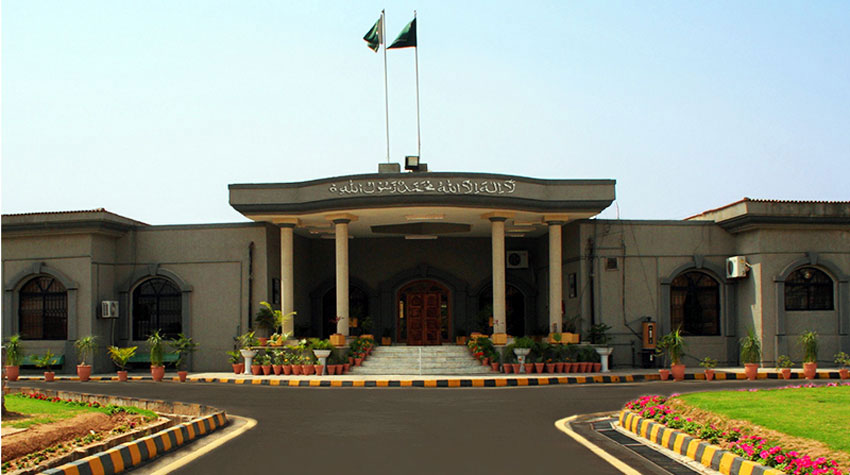
ISLAMABAD: Islamabad High Court has ordered the country’s four provincial governments to keep public resources and government machinery out of a mass protest planned for later this month by the party of jailed former prime minister Imran Khan.
A three-judge bench ruled on Monday that no political party or its leaders had any lawful right to occupy roads, highways, interchanges, toll plazas or buildings in the capital in a way that blocked access to schools, universities or hospitals.
The order came as the Pakistan Tehreek-e-Insaf, the party Khan founded, prepares for a nationwide day of protest on 27 September, including a long march on Islamabad, demanding his release from prison and what it calls the restoration of constitutional government.
Khan, the cricketer-turned-politician who led Pakistan between 2018 and 2022, has been in jail since August 2023 on charges including corruption and inciting violence, which he and his party say are politically motivated.
The petition that prompted Monday’s ruling was brought by a private citizen, Waqas Ahmed, who argued the demonstration would disrupt ordinary life, traffic and business in the capital.
Handing down its order, the bench, led by Chief Justice Sardar Muhammad Sarfraz Dogar and sitting with Justices Muhammad Azam Khan and Muhammad Asif, said provincial chief ministers must ensure that no government funds, officials, vehicles or equipment were used to facilitate any march, procession or rally. No public servant should be compelled to take part in a demonstration, the judges added, warning that any office holder who breached the order would be considered to have acted against the constitution.
The court also directed the Islamabad administration and the interior ministry to safeguard citizens’ constitutional rights during the protest, and told provincial chief secretaries and police chiefs, along with the federal interior secretary and the capital’s chief commissioner and inspector general, to ensure the ruling was carried out.
Video evidence from past unrest
The judgment followed a lengthy hearing at which government lawyers were granted permission, after initial resistance from the bench, to screen footage of PTI demonstrations from 2022 and last November.
Naveed Hayat Malik, the Islamabad advocate general, told the court the footage showed the marches had not been peaceful, despite the party’s assurances. He alleged that barriers erected by the Islamabad administration during the 2022 protest were pulled down with cranes, that property near D-Chowk, in the heart of the capital, was set alight, and that a police officer died in the violence that followed. He described the more recent, 2024 demonstration as an assault on the city, alleging protesters had fired on police and that a vehicle had struck Rangers paramilitary personnel.
Chief Justice Dogar had initially been reluctant to allow the videos to be played, telling the court it was “not the practice of this court” to do so, even after the advocate general noted that footage was sometimes shown in Pakistan’s Supreme Court. He relented after a short break, on condition the material would be screened only once.
Malik went on to tell the court that anyone wishing to hold a protest in the capital was legally required to apply to the district magistrate, who could refuse permission if satisfied that security could not be guaranteed, and that the federal government retained the power to designate any part of the city a “red zone” and impose restrictions, including curfew-style orders under Section 144 of the criminal procedure code. He said PTI had submitted no such application for the 27 September march.
He argued the demonstration had, in effect, two goals — the release of a man convicted by the courts, and the removal of the government — both of which he described as unconstitutional. “If you are dissatisfied with the prime minister, go to parliament and move a vote of no confidence,” he told the bench. “If you want to topple the government in the streets and public squares, then do not speak of the rule of law.” He added that the administration had no realistic means of physically halting a crowd of the size PTI was promising, and could only take precautions such as imposing Section 144 and erecting shipping-container barricades. “We cannot fire upon our citizens,” he said. “We cannot take their lives.”
Petitioner cites Khyber Pakhtunkhwa chief minister’s rhetoric
Counsel for the petitioner, named in court records only as Chheena, rejected the suggestion — raised earlier by Khyber Pakhtunkhwa’s advocate general — that the case had been brought too early, before any protest had actually taken place. “My life and my children’s education are fundamental rights under the constitution,” he told the court, asking whether a citizen was expected to wait until a school had been “seized” or someone was “holding a gun to my head” before the courts would intervene.
He pointed to public remarks by Sohail Afridi, the chief minister of Khyber Pakhtunkhwa province and a PTI figure, who he said had pledged to bring millions of people to the capital. Such mobilisation, the lawyer argued, was being carried out in pursuit of a prisoner’s release, and he asked the court what would become of judicial independence if the government felt pressured by the size of a crowd. Pakistan’s attorney general, Mansoor Usman Awan, and the Khyber Pakhtunkhwa chief secretary, Shahab Ali Shah, were among the senior officials who appeared before the bench during the hearing.
The bench also summoned Khyber Pakhtunkhwa’s police chief, Zulfiqar Hameed, to the rostrum, where Chief Justice Dogar pressed him on what steps his force would take against an “illegal protest.” After some back and forth over the wording of a written undertaking submitted by the province, the inspector general gave a sworn assurance that any unlawful or unconstitutional gathering would be dispersed. “You should have also stated in the affidavit that you would prevent illegal and unconstitutional actions,” the chief justice told him, before dictating amended wording himself.
Despite that undertaking, Khyber Pakhtunkhwa’s advocate general, Shah Faisal Utmankhel, later distanced the provincial government from it, telling reporters he would “not own” the commitment and that the province was pursuing what he called the “restructuring of bureaucracy, free from the centre’s influence.”
The bench reserved its decision after the hearing before returning to dispose of the petition on Monday.
Copyright © 2021 Independent Pakistan | All rights reserved