By Staff Reporter
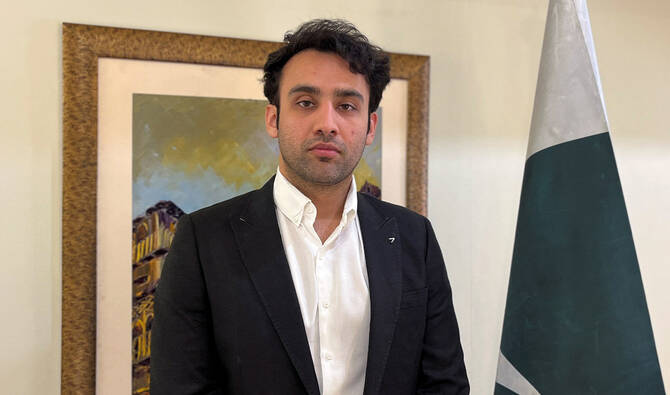
ISLAMABAD: Prime Minister Shehbaz Sharif has tapped Bilal Bin Saqib, the chief executive officer of the Pakistan Crypto Council (PCC), as his special assistant on blockchain and cryptocurrency, granting him the status of a minister of state.
Pakistan is pushing to carve out a significant role in the global digital asset landscape, leveraging its burgeoning crypto market and tech-savvy workforce.
At 29, Saqib is a Forbes ‘30 under 30’ alum and a 2023 Member of the Order of the British Empire (MBE) for his work with the UK’s National Health Service. As co-founder of Tayaba, a social enterprise addressing Pakistan’s water crisis, he’s shown a knack for merging innovation with public impact, skills now tasked with steering Pakistan’s digital agenda.
The appointment builds on groundwork laid earlier this year. On February 25, Pakistan’s finance ministry signaled its intent to establish a National Crypto Council to align with global trends in digital currency adoption, later naming Saqib as CEO of the PCC. Now, his elevation to a senior advisory role reflects a broader push to harness blockchain and cryptocurrency as engines of economic growth.
The government outlined Saqib’s mandate for crafting a comprehensive, Financial Action Task Force (FATF)-compliant regulatory framework for digital assets, spearheading Bitcoin mining initiatives, and driving blockchain integration across critical sectors like governance, finance, and land records. Saqib will also oversee the licensing and supervision of virtual asset service providers (VASPs) while championing investor protection and the growth of the Web3 ecosystem.
“Pakistan’s unique demographic and digital landscape offers an unprecedented opportunity to leapfrog into the future of technology—where blockchain and crypto will drive economic growth, innovation, and global competitiveness,” Saqib last week said in the statement.
Pakistan is no stranger to the crypto boom. The country ranks among the top 10 globally for cryptocurrency adoption, according to the 2023 Chainalysis Global Crypto Adoption Index, with 40 million users and an annual trading volume surpassing $300 billion. That’s a market too big to ignore—and one that demands robust oversight to curb risks like money laundering while unlocking economic potential.
The government sees Saqib’s FATF-compliant regulatory framework as a linchpin for legitimizing and scaling this activity. By aligning with international standards, Pakistan aims to attract global investment while ensuring stability in its digital asset ecosystem.
Bitcoin mining, another pillar of Saqib’s agenda, could tap into Pakistan’s energy resources to create jobs and bolster foreign exchange reserves. Meanwhile, blockchain integration promises to streamline governance—think transparent land registries—and modernize financial systems, areas long plagued by inefficiency.
Pakistan’s digital ambitions rest on a solid foundation. The country churns out roughly 40,000 IT graduates each year and boasts the world’s fourth-largest freelancer market, according to the press release. This talent pool, paired with Saqib’s vision for Web3 growth, could position Pakistan as a hub for blockchain innovation.
The government framed the appointment as a parallel to moves in the United States, where figures like David Sacks—named White House AI and Crypto Czar by former President Donald Trump—have been tapped to shape digital policy.
Copyright © 2021 Independent Pakistan | All rights reserved