By Staff Reporter
ISLAMABAD: Pakistan and Afghanistan agreed on Wednesday to a temporary 48-hour ceasefire amid escalating border clashes that have killed dozens on both sides and further strained relations between the two neighbors, the Pakistani Foreign Office announced.
The truce, effective from 6 pm local time, came at the request of the Taliban authorities in Kabul and was intended to allow for dialogue to resolve the hostilities, which have included Pakistani airstrikes inside Afghanistan and ground assaults along the frontier.
“A temporary ceasefire has been decided between the Pakistani government and the Afghan Taliban regime, with the mutual consent of both parties, for the next 48 hours from 6pm today, at the request of the Taliban,” the Foreign Office said in a statement. “During this period, both sides will make sincere efforts to find a positive solution to this complex but solvable issue through constructive dialogue.”
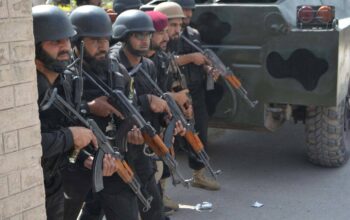
The announcement followed a day of intense fighting and retaliatory actions. Earlier, the military said its forces had repulsed coordinated attacks by Afghan Taliban fighters at multiple points along their shared border in the Balochistan and Khyber Pakhtunkhwa provinces. The clashes, which Pakistan accused Kabul’s forces of initiating, resulted in the destruction of a key trade gate and endangered civilians in border villages. “The Afghan Taliban resorted to cowardly attack at four locations in Spin Boldak area of Balochistan,” the Inter-Services Public Relations, the military’s media wing, said in a statement. “The attack was effectively repulsed by Pakistani Forces.”
The military reported that militants had destroyed the Pak-Afghan Friendship Gate on the Afghan side, a symbolic infrastructure built to facilitate bilateral trade and regulated crossings. The assaults penetrated villages split by the frontier, disregarding civilian safety, according to the statement.
Pakistan’s forces killed 15 to 20 Afghan Taliban fighters in the Spin Boldak area and another 25 to 30 in Kurram district, where troops destroyed eight Taliban posts and six tanks in what the military described as a “proportionate response.” The attacks were coordinated with members of “Fitna Al-Khawarij,” a term Pakistan uses for militants linked to the banned Tehreek-e-Taliban Pakistan (TTP), which Islamabad says are backed by Afghanistan and India.
In response, the Kabul government said 15 civilians were killed and dozens wounded in the clashes. Afghan authorities have accused Pakistan of initiating the violence, including airstrikes on their territory. “The insinuations that the attack was initiated by Pakistan are outrageous and blatant lies, just like the claims of capturing Pakistani posts or equipment,” the Inter-Services Public Relations said, calling the Taliban statements “propaganda … debunked with basic fact checks.” “The Armed Forces stand resolute and fully prepared to defend the sovereignty and territorial integrity of Pakistan. All acts of aggression against Pakistan will be responded to with full force,” it added.
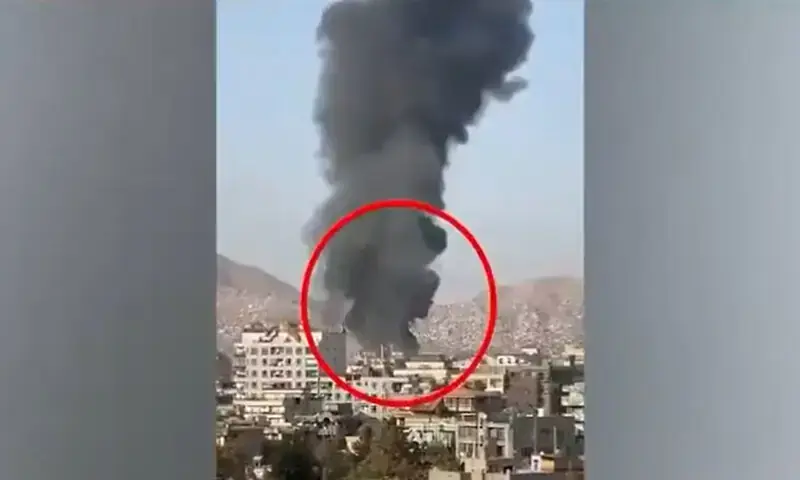
State broadcaster PTV News reported that Pakistan’s armed forces had conducted “precision strikes” in Afghanistan’s Kandahar province and the capital, Kabul. A statement uploaded on X, quoting security sources, said: “Pakistan Army’s retaliatory action against Afghan Taliban aggression, key hideouts destroyed. Key hideouts of Afghan Taliban successfully targeted by Pakistan Army.”
The strikes in Kandahar targeted Afghan Taliban Battalion Number 4 and Border Brigade Number 6, which were “completely destroyed,” with dozens of foreign and Afghan operatives killed, according to the statement. A subsequent update from PTV, citing security sources, added that strikes were also carried out in Kabul, targeting the “centre and leadership of Fitna al-Hindustan,” a term designated by the state for terrorist organizations in Balochistan.
The PTV post further quoted security sources as saying that the Pakistan Army had targeted Afghan Taliban Battalion Headquarters No. 4, Battalion 8, and Border Brigade No. 5 in Kandahar. “All these targets were meticulously selected, isolated from civilian populations, and successfully destroyed,” the post read. The Pakistan Army possesses the “full capability to give a strong and complete response to any external aggression,” the initial statement emphasized.
Cross-border trade remained suspended on Wednesday, with officials on both sides confirming that military reinforcements had been deployed around Chaman and Spin Boldak. Wednesday’s fighting marked the third major skirmish between Pakistan and Afghanistan within a week, following an incident in Kurram the previous night and earlier clashes that began on Saturday night and continued into Sunday morning at several locations.
According to the ISPR, 23 Pakistani troops were killed and 29 injured in the incident that began with Afghan Taliban attacking posts across the border. The military’s media wing also said that credible intelligence estimates and damage assessment showed that “more than 200 Taliban and affiliated terrorists have been neutralised, while the number of injured is much higher.”
Afghanistan claimed it carried out the attack as a “retaliatory” measure, accusing Islamabad of conducting airstrikes in its territory last week. For its part, Islamabad did not confirm whether it was behind the airstrikes but underscored Pakistan’s right and resolve to defend itself. The weekend clash took place against the backdrop of Pakistan suffering multiple casualties among security forces in intelligence-based operations against terrorists.
The escalation has strained already frayed ties between the two countries, coming as Afghanistan’s foreign minister visited archrival India. Pakistan views New Delhi’s growing influence in Afghanistan as a regional security threat, given their own long-standing rivalry. India’s deepening engagement with the Taliban, including reopening its Kabul embassy last week, has further heightened Islamabad’s concerns.
Relations between Islamabad and Kabul have deteriorated sharply since 2021, when the Taliban returned to power in Afghanistan. Hopes for cooperation soon gave way to distrust as cross-border militancy surged, particularly in Pakistan’s northwestern Khyber Pakhtunkhwa province. Pakistan says the Afghan Taliban are sheltering fighters from the banned Tehreek-e-Taliban Pakistan and allowing them to stage cross-border attacks from Afghanistan. Kabul denies the allegation, saying it does not permit its territory to be used against other countries.
Islamabad has repeatedly called on Kabul to bar terrorist groups from using its territory to attack Pakistan. The issue of terrorists using Afghan soil against Pakistan has long strained ties between the two countries, and the ties seem to have nose-dived with the recent increase in hostilities at the border. Tensions have also worsened since 2023, when Pakistan began deporting hundreds of thousands of undocumented Afghans, a move it said was necessary to curb terrorism and smuggling. By 2025, more than 800,000 Afghans had been repatriated or forced out, according to government figures.
Copyright © 2021 Independent Pakistan | All rights reserved