
By Staff Reporter
ISLAMABAD: The federal cabinet on Wednesday rolled out a trio of transformative policies, approving the Haj Policy for 2026, the National Artificial Intelligence (AI) Policy, and the Green Building Code of Pakistan.
In a separate move, Prime Minister Shehbaz Sharif tackled a nationwide sugar shortage by fixing the ex-mill price at Rs165 per kilogram and the retail price at Rs173, vowing strict enforcement to shield consumers from economic exploitation.
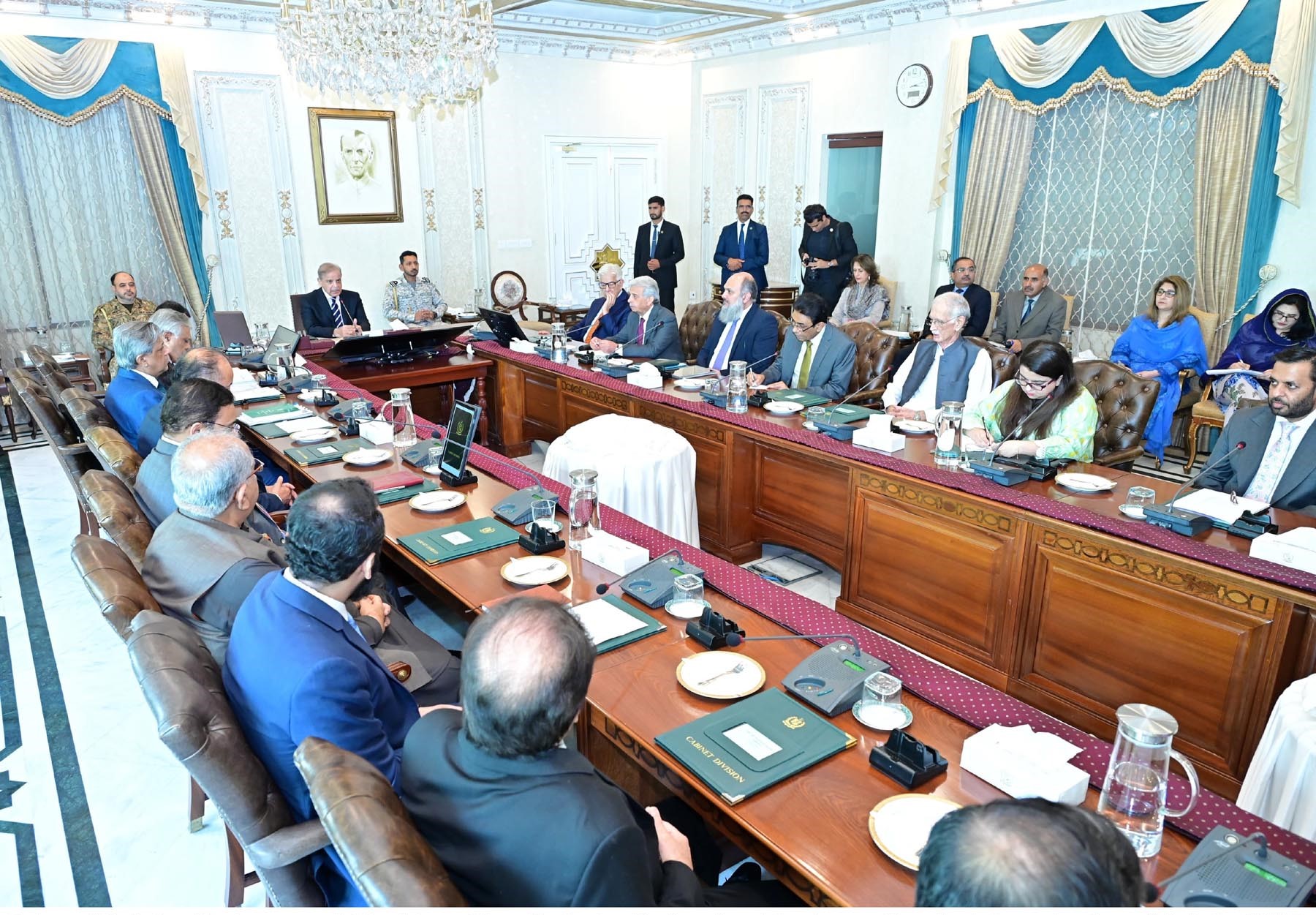
The decisions, made during a cabinet meeting chaired by Sharif, signal a broad push to address religious, technological, and environmental priorities while confronting immediate economic pressures.
Haj Policy 2026: The cabinet gave its nod to the Haj Policy for 2026, setting a 70 percent quota for the government scheme and reserving 30 percent for private operators. This year’s policy comes with a twist: private companies that dropped the ball last year must now accommodate affected pilgrims in 2026.
The goal is accountability, and the measures don’t stop there. Among the approved steps are third-party validation for all Haj operations, real-time monitoring of payments and applications under private operators, and a mandatory minimum of 2,000 pilgrims per private company.
The policy also reserves 1,000 seats for hardship cases and introduces enhanced digital tools—think the Pak Haj mobile app, digital wristbands, and mobile SIMs, to improve tracking and service delivery. Other upgrades include transparent selection of assistants through competitive testing, emergency compensation mechanisms, and better lodging and food arrangements.
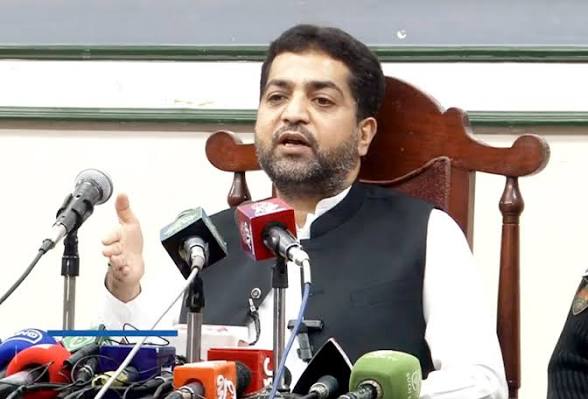
Later, Religious Affairs Minister Sardar Muhammad Yousaf took the stage at a news conference to flesh out the details. “Today, by the grace of Allah, the federal cabinet has approved the Hajj Policy 2026,” he said. “We will start to receive Hajj applications under the government scheme from the first week of August, from the fourth.”
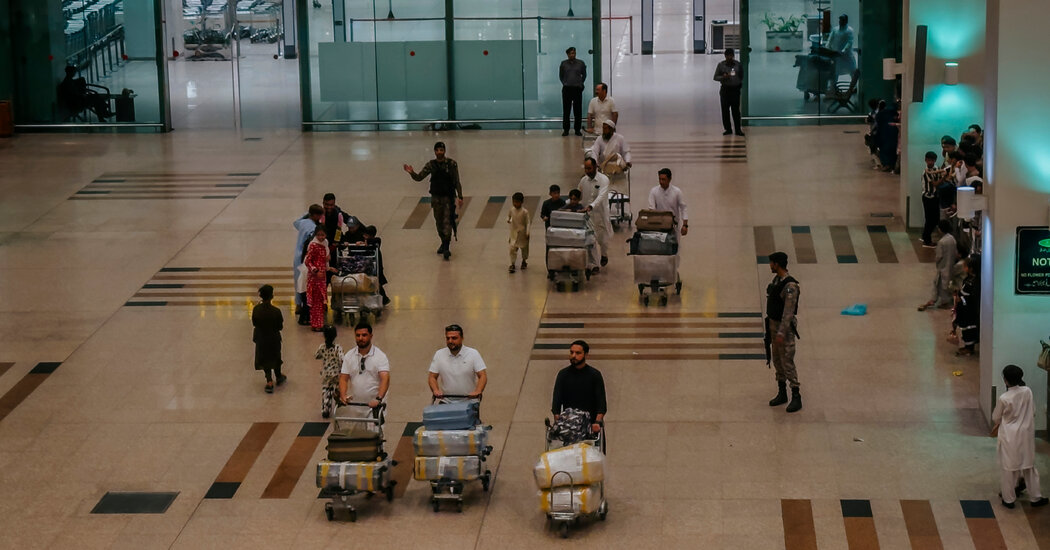
Pakistan’s current pilgrim quota stands at 179,210, pending Saudi confirmation, with 129,210 slots for the government scheme and the rest for private operators. Applicants must be Muslim Pakistani passport holders with documents valid until November 26, 2026. “Children under 12 will not be allowed to perform Hajj this year,” he added.
Pilgrims can choose between a 38-to-42-day long package or a 20-to-25-day short one, with costs estimated between 1,150,000 and 1,250,000 rupees ($4,049.93 to $4,236), payable in two installments starting August 4 at designated banks. “Due to Saudi Arabia’s timelines, selection will be on a first-come, first-serve basis,” Yousaf said, noting that a Ministry of Religious Affairs team will oversee operations to ensure quality. Last year, Saudi Arabia approved the same 179,210 quota. The government met its share, sending over 88,000 pilgrims, but private operators left a chunk of their allocation unused, blaming technical glitches like payment delays and communication breakdowns.
National AI Policy: Back in the cabinet room, the National AI Policy 2025 won unanimous approval, aiming to build a robust AI ecosystem. It’s a bold play to democratize technology, boost public services, and unlock jobs and innovation.
“Our youth are Pakistan’s greatest asset,” Sharif said. “Providing them with education, skills, and equal opportunities in AI is a top priority.”
The policy sets concrete targets: train 1 million AI professionals by 2030, launch an AI Innovation Fund and AI Venture Fund to spur private-sector growth, and roll out 50,000 AI-driven civic projects and 1,000 local AI products within five years.
It also promises 3,000 annual AI scholarships, 1,000 research projects, and a focus on inclusion—especially for women and people with disabilities—through accessible education and financing. Cybersecurity, data security, and global partnerships round out the plan, with an AI Council and a detailed action matrix tasked with making it happen.
Green Building Code: The cabinet also signed off on the Green Building Code of Pakistan (GBCP) and Rainwater Harvesting Provisions, new national standards to promote energy-efficient, water-smart construction.
The GBCP applies to all new buildings with four or more floors, pushing for solar design, green roofs, energy-efficient lighting, renewable energy integration, and eco-friendly materials. Building Information Modeling (BIM) is now mandatory to cut energy use and improve indoor air quality.
The Rainwater Harvesting Code, meanwhile, requires residential, commercial, and industrial buildings to install systems to collect, filter, and reuse rainwater. It’s a direct response to Pakistan’s worsening water scarcity, aiming to recharge groundwater and ease pressure on municipal supplies. Now enshrined as Pakistan Engineering Council Bye-Laws, these codes align with U.N. Sustainable Development Goals, marking a leap toward climate-resilient infrastructure.
Sugar Prices: On the economic front, Sharif moved to cap sugar prices amid a shortage that’s rattled markets. The ex-mill rate is now 165 rupees per kilogram, with retail capped at 173 rupees, per an agreement with the Pakistan Sugar Mills Association.
“Any violation of the agreed sugar prices will lead to severe action as no one would be allowed to exploit the public economically,” the prime minister warned, issuing strict enforcement orders. Officials briefed him on efforts to target hoarders and market manipulators, part of a broader government pledge to stabilize prices.