By Staff Reporter
ISLAMABAD: The federal cabinet approved imposing emergency rule in the opposition-run province of Khyber Pakhtunkhwa, and Prime Minister Shehbaz Sharif’s office said a summary has been sent to President Asif Ali Zardari for final approval.
The move, announced Sunday, sharply escalates a confrontation between Sharif’s government and Imran Khan’s Pakistan Tehreek-e-Insaf, which controls the northwestern province bordering Afghanistan. The president’s decision was still pending.
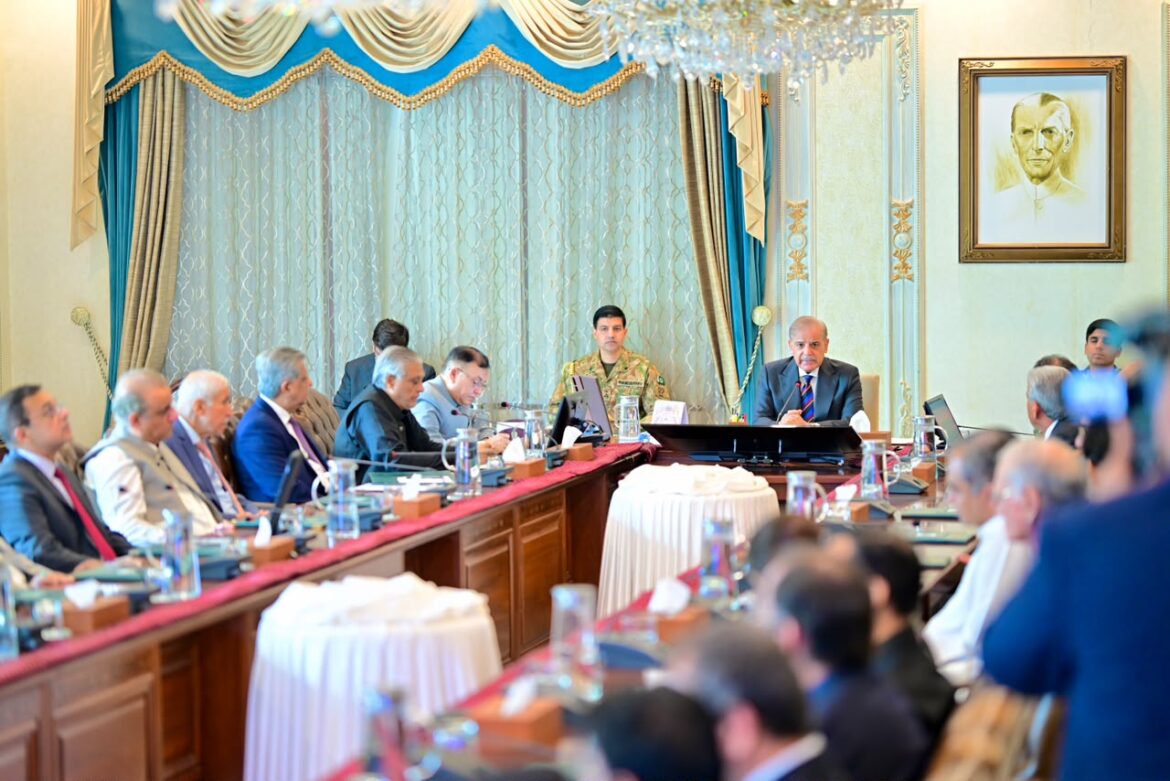
The cabinet, which met in emergency session, took note of the provincial government’s “deliberate disengagement from the fight against terrorism,” the Prime Minister’s Office said. Given the “gravity” of the situation, it recommended that the premier advise Zardari to use his constitutional powers under Articles 232 and 234.
Article 232 allows the president to proclaim an emergency if internal disturbance threatens the security of Pakistan beyond a provincial government’s power to control. If he acts on his own, parliament must approve the proclamation within 10 days. Article 234 covers governor’s rule when constitutional machinery fails in a province. It requires only a request from the provincial governor, who is a federal appointee. Governor Faisal Karim Kundi sent the prime minister a written explanation of the grounds for intervention about a week ago, according to people familiar with the matter.
Zardari and Sharif met at the presidency on Saturday and reached an understanding on the possibility of an emergency or governor’s rule, the people said. The presidency said the two agreed to convene separate sessions of the National Assembly and Senate on Oct. 13. Sources told Business Recorder the sessions were summoned to discuss the proposed emergency and seek approval for it.
Districts Targeted
The government is weighing an emergency in 12 districts, according to people familiar with the matter. They include the eight former tribal districts of Khyber, Kurram, Orakzai, Bajaur, Mohmand, North Waziristan, South Waziristan and Lower South Waziristan, plus Dera Ismail Khan, Tank, Bannu and Lakki Marwat. Another proposal would transfer some provincial powers to the federal government. The plans also reportedly include replacing the provincial chief secretary with a stronger administrator, and possibly transferring other senior officials.
Local media reported that two security reports prepared by provincial police and intelligence agencies were presented to the cabinet. One of them, it said, found that terrorist incidents in the province rose 195% between March 2024 and September 2026, and that more than 9,000 police posts are vacant. Bloomberg could not independently verify those figures.
Interior Minister Mohsin Naqvi, speaking informally to journalists, said the government’s options had narrowed. “What scope remains for not imposing an emergency?” he asked. “We have no room left now,” he said, adding that the government had made extensive efforts to find a solution.
Economic Backdrop
Sharif tied the decision to the economy. “I will not allow them to destabilise the economy,” he told the cabinet, referring to the PTI. He pointed to a recent staff-level agreement with the International Monetary Fund and said he hopes to unlock a $1.2 billion tranche within the year. He credited the political and military leadership with imposing fiscal discipline, and recalled meeting IMF Managing Director Kristalina Georgieva at the UN General Assembly last month and senior financial executives in London.
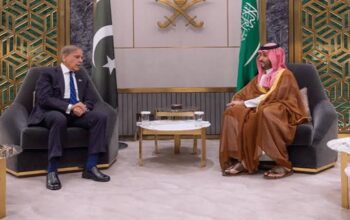
On security, Sharif said Pakistan has repeatedly urged Afghanistan to rein in militants, but “they still don’t understand it.” He also condemned a recent Houthi attack on Saudi Arabia, calling any aggression against the kingdom a “red line” for Pakistan.
Political Fallout
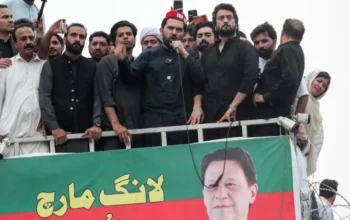
The PTI launched a long march from Lakki Marwat on Oct. 4. Chief Minister Sohail Afridi said last month he was not afraid of threats of governor’s rule or an emergency and would not retreat. The party has no immediate public response to Sunday’s decision in the material reviewed for this story.
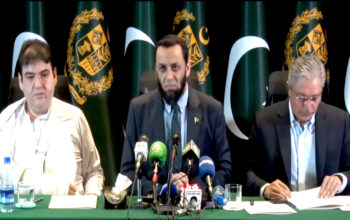
Information Minister Attaullah Tarar accused the provincial government on Saturday of neglecting governance in favor of efforts to free the jailed Khan. “The hours that should have been spent on governance have instead been spent plotting to secure the release of a prisoner,” he said in Islamabad. He alleged Afridi had devoted “virtually zero hours” to governance despite more than 13 years of PTI rule in the province.
Sharif also phoned Maulana Fazlur Rehman, head of the Jamiat Ulema-e-Islam-F party, and invited him to a meeting at the Prime Minister’s House, which Fazl accepted. People familiar with the matter said Fazl favors more time for negotiations and that the PTI has stayed in touch with him.
Copyright © 2021 Independent Pakistan | All rights reserved