By Staff Reporter
ISLAMABAD: Pakistan imposed an emergency and governor’s rule in Khyber Pakhtunkhwa on Sunday, a sharp escalation in the federal government’s standoff with the opposition party that runs the northwestern province, after President Asif Ali Zardari approved a recommendation from Prime Minister Shehbaz Sharif’s cabinet.
The measures were approved under Articles 232 and 234 of the Constitution, which cover the proclamation of an emergency and the imposition of governor’s rule, the President House said in a statement. In a post on X, the presidency said Zardari acted on the cabinet’s decision, the prime minister’s advice, reports from relevant institutions on the law-and-order situation, and the failure of negotiations with government delegations.
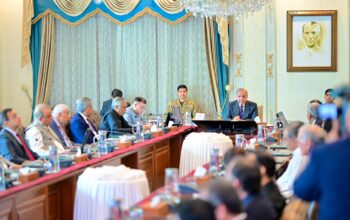
The decision came at an emergency cabinet meeting chaired by Sharif, who was briefed on the security situation in the province. The Prime Minister’s Office said ministers took note of the provincial government’s “deliberate disengagement from the fight against terrorism” and proposed that Sharif advise the president to use his constitutional authority given the “gravity” of the situation.
The federal government moved quickly on the administration. It named Dr. Muhammad Fakhr Alam Irfan, a Grade 22 officer of the Pakistan Administrative Service who had been secretary of the Power Division, as the province’s chief secretary, effective immediately and until further orders. In a separate notification, it placed Muhammad Yahya Akhunzada, a Grade 20 officer and additional secretary at the Prime Minister’s Office, at the provincial government’s disposal under Section 10 of the Civil Servants Act, 1973. Akhunzada has previously served as health, information and education secretary in the province and as commissioner of Dera Ismail Khan.
The move follows weeks of escalating rhetoric. Talks between Islamabad and Pakistan Tehreek-e-Insaf, which governs the province, collapsed before the party’s planned October 4 march toward the capital. Chief Minister Sohail Afridi launched the march from Lakki Marwat on Oct. 4. Afridi had earlier dismissed warnings of governor’s rule or an emergency, saying he would not be frightened off his ideology. Parliamentary Affairs Minister Tariq Fazal Chaudhry said last week that the chief minister’s conduct was paving the way for emergency rule, and claimed the provincial government had little or no administrative control in 12 districts.
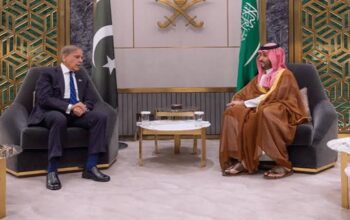
Sharif and Zardari met at Aiwan-e-Sadr on Saturday to review the political and security situation, with a focus on the province, where PTI began its long march on Oct. 4. The presidency’s media wing said the two agreed to convene separate sessions of the National Assembly and Senate on Oct. 13. People familiar with the matter said Governor Faisal Karim Kundi sent Sharif a written explanation of the grounds for emergency measures about a week ago.
Local media reported that the government was weighing an emergency in 12 districts, including eight former tribal districts: Khyber, Kurram, Orakzai, Bajaur, Mohmand, North Waziristan, South Waziristan and Lower South Waziristan. The other four are Dera Ismail Khan, Tank, Bannu and Lakki Marwat. Another proposal reportedly under consideration would transfer certain provincial powers to the federal government. The statements reviewed for this report did not spell out how the emergency would be administered or whether it covers the whole province.
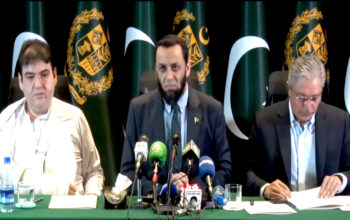
Interior Minister Mohsin Naqvi, speaking informally to journalists, suggested the government felt its options had narrowed. “We have no room left now,” he said.
The constitutional mechanics will matter in the coming weeks. Under Article 234, a governor’s rule proclamation must be laid before a joint sitting of parliament and lapses after two months unless approved, with extensions of up to two months at a time and a hard cap of six months. Article 232 provides that if the president acts on his own, the proclamation must go before both houses within 10 days. Using it over internal disturbance generally requires a resolution from the provincial assembly. Article 233, which lets the president suspend certain fundamental rights during an emergency, wasn’t mentioned in the summary Zardari signed.
PTI Chairman Gohar Ali Khan “completely rejected” the decision, calling it an “extremely alarming and grave political mistake and an undemocratic measure” in a post on X. He said there was no disagreement on eliminating terrorism, but the fight couldn’t justify limiting the province’s constitutional authority. He said the party would take the matter to every constitutional, legal and democratic forum.
Kundi, a member of Zardari’s Pakistan Peoples Party, said the decision aimed at establishing peace and development in the province. He urged residents to set aside political differences and “begin a new chapter.”
Sharif also framed the move in economic terms. He told the cabinet he wouldn’t allow PTI to destabilize the economy, and said Pakistan hopes to unlock a $1.2 billion International Monetary Fund tranche within the year following a recent staff-level agreement. He cited a meeting with IMF Managing Director Kristalina Georgieva on the sidelines of last month’s UN General Assembly, and credited the political and military leadership for fiscal discipline. He also said Pakistan has repeatedly urged Afghanistan to rein in militants, and condemned a recent Houthi attack on Saudi Arabia, calling any aggression against the kingdom a “red line.”
Copyright © 2021 Independent Pakistan | All rights reserved