By Staff Reporter
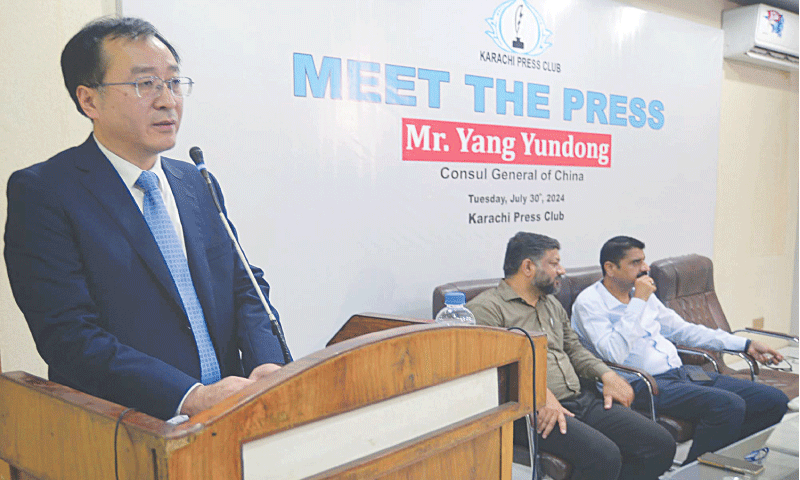
KARACHI: China’s top diplomat in Pakistan called on Tuesday for unity among political parties and rights groups in the restive Balochistan province, urging them to prioritize economic development and stability.
“We hope that all the political parties and social organizations take their overall national interest into account and set aside their differences to focus on construction and economic development,” Chinese Consul General Yang Yundong said at a meet-the-press in Karachi.
The appeal comes as thousands of people gathered in Gwadar, home to a key Chinese-built deep seaport, to demand rights and protest against alleged exploitation of the province’s resources.
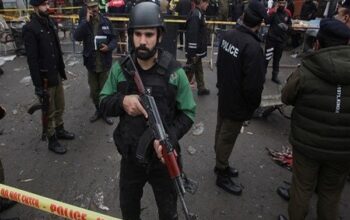
Tensions flared in the province on Saturday when security forces clashed with protesters in the Mastung district, leaving at least one dead and over a dozen injured, according to the Baloch Yakjehti Committee (BYC) group.
Yundong emphasized the importance of stability in Balochistan, citing its potential for growth and development.
“Some people said that ‘without the stability of Balochistan, there’s no stability of Pakistan.’ So, I agree with this and this view,” Yundong said. “We hope that all the political parties and social organizations take their overall national interest into account and set aside that difference and focus on construction and economic development and to take the people’s interest as a top priority.”
Gwadar, a strategic port city on the Arabian Sea, is a linchpin of the China-Pakistan Economic Corridor (CPEC), a cornerstone of Beijing’s Belt and Road Initiative. China has invested tens of billions of dollars in Pakistan’s transport, energy, and infrastructure sectors under CPEC.
However, the project’s progress has been hindered by Islamabad’s financial constraints and a spate of militant attacks targeting Chinese interests in Balochistan and other parts of Pakistan, posing a significant threat to the undertaking’s viability.
Yundong said Gwadar was central to CPEC and noted the completion of several projects, including the new Gwadar International Airport, in the southwestern Pakistani city
“Under Gwadar, Balochistan has great potential… We will put that and the cooperation in the mining sectors as a breakthrough of our industry corporations.”
The Chinese diplomat said the world was facing a new “period of turmoil and transformation,” with regional conflicts dragging on, and instability, uncertainty and unpredictability spreading globally.
“We want to build Balochistan into a more stable and prosperous province,” he said. “As all-weather strategic cooperative partners, China and Pakistan’s relationship has withstood the test of international changes and remains rock-solid and stable as Mount Himalayas.”
A low-level insurgency has simmered in Balochistan, a province bordering Iran and Afghanistan, for nearly two decades. Separatist militants claim they are fighting against the alleged unfair exploitation of the province’s resources by the federal government.
Islamabad denies these allegations, maintaining that it is working to uplift the impoverished region. However, authorities have repeatedly accused neighboring countries India, Afghanistan, and Iran of fueling tensions and backing the insurgency, claims that these nations have consistently denied.
Rights organisation Amnesty International on Tuesday also demanded “an end to the brutal crackdown on the Baloch protests” and said that the arrest of organisers was “extremely concerning and indicative of the continuing decline in civil and political rights in Pakistan”.
“Every time Baloch protests take place, their demands are met with violence by security forces and mass arrests. We saw it in December last year at the Baloch Long March. We see it now again with the Baloch Raji Machi protests in what is clearly a punitive attempt by the Pakistani authorities to deter, vilify and criminalize peaceful protesters,” Babu Ram Pant, Deputy Regional Director for South Asia at Amnesty International, said in a statement.
“The reports of three deaths and the arrest of organizers, including Sammi Deen Baloch, Sabghatullah Shah and Dr. Sabiha Baloch, are extremely concerning and indicative of the continuing decline in civil and political rights in Pakistan. Amnesty International calls for an end to the brutal crackdown on the Baloch protests and the immediate and unconditional release of all those arrested for exercising their right of peaceful assembly.”
Further, the roadblocks and shutdown of internet and mobile networks in districts across Balochistan province restrict movement and the flow of timely information. The Government of Pakistan is obligated under the Constitution of Pakistan and by international human rights law to uphold the rights to freedom of expression, access to information, movement, and peaceful assembly.
Meanwhile, lawmakers in Balochistan Tuesday urged the government and protest leaders in Gwadar to negotiate an end to days of unrest, as the situation remained tense with both sides trading blame for the violence.
The clashes, which erupted Saturday, have resulted in casualties among both protesters and security forces, with a soldier killed and 16 personnel injured, according to the military.
Protest leaders claim hundreds of their supporters have been arrested, while lawmakers condemned the use of force and violence against demonstrators.
During a debate in the Balochistan Assembly, lawmakers from across the political spectrum called for dialogue to address the underlying issues driving the protests.
They also demanded the release of arrested individuals as a goodwill gesture and proposed forming a committee of respected tribal elders to facilitate talks.
The assembly session was adjourned until Thursday afternoon, with lawmakers set to continue pressing for negotiations to resolve the crisis.
Copyright © 2021 Independent Pakistan | All rights reserved