By Staff Reporter
ISLAMABAD: The governing coalition showed rare public signs of strain on Wednesday as the chairman of the Pakistan Peoples Party demanded to know why a senior federal minister remained in his post after asserting that residents of the protest-hit Azad Jammu and Kashmir town of Rawalakot were not Kashmiris — remarks that also drew condemnation from a major religious party and a formal apology from a former prime minister on the minister’s behalf.
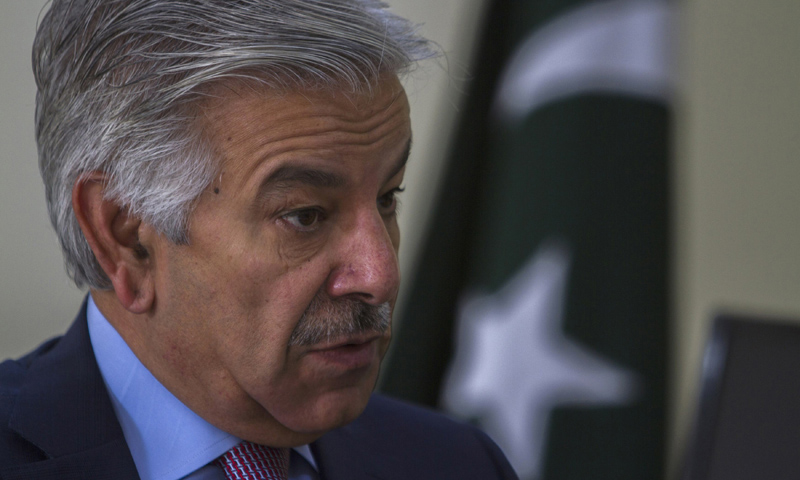
The row erupted in the National Assembly after Defence Minister Khawaja Asif, in a television interview, said that Rawalakot — the epicentre of protests organised by the Joint Awami Action Committee (JAAC) against the reservation of 12 seats for refugees in upcoming elections to the region’s legislative assembly — was “not Kashmir” and that he did not regard its people as Kashmiris. Asif later attempted to soften the remarks with a post on X, writing that “Kashmiriat is defined by the sacrifices and struggles waged over almost eight decades by Pakistanis, including Kashmiris and all others, not by birth certificates.”
The clarification failed to contain the political damage.
PPP chairman Bilawal Bhutto-Zardari, whose party sits in coalition with Asif’s Pakistan Muslim League-Nawaz at the federal level, delivered a pointed address in which he praised Prime Minister Shehbaz Sharif’s efforts to manage the coalition while publicly holding an unnamed minister responsible for making the situation in AJK significantly worse.
“Why do we have ministers who say that residents of Rawalakot are not Kashmiris?” Bhutto-Zardari demanded from the floor of the assembly. “One federal minister, instead of extinguishing the fire, poured more fuel on it.”
He did not name Asif directly but the target of his remarks was unmistakable. “How is it possible to tolerate these words when they are uttered by a defence minister, let alone a senior minister?” he asked. “How do we justify that the minister is still in the position and has not agreed to tender an apology?”
Bhutto-Zardari praised the prime minister’s approach, saying Shehbaz worked to bring the country through difficulties by engaging constructively with coalition and opposition members alike. “However, some ministers create issues for him. They always create hurdles in the work of the prime minister rather than helping him.”
He urged that space be given to Jamiat Ulema-i-Islam-Fazl chief Maulana Fazlur Rehman to play a mediating role. “In the capacity of a coalition partner, I suggest that we all should give space to Maulana for the position he has been holding on the issue, to bring the conflict to a resolution by engaging with the federal and AJK government.”
Bhutto-Zardari also called on the prime minister to assert clearer authority over his cabinet. “If the prime minister can’t direct his minister to follow his policy, and every minister is speaking in a different direction, it will create more difficulties for the government instead of helping the situation.”
A formal apology — without one
Raja Pervaiz Ashraf, a former prime minister and senior PPP lawmaker, told the assembly that the remarks had wounded the feelings of many people and that Azad Kashmir was a “sensitive area” requiring care and restraint. He tendered an apology to the people of Rawalakot on Asif’s behalf — an unusual parliamentary manoeuvre that underscored the PPP’s discomfort with its coalition partner’s position.
Asif, for his part, stood by the substance of his argument. He pointed to his X post, telling the house he had simply made the case that Kashmiri identity was not conferred by geography or a birth certificate.
Rehman steps in as mediator
Rehman, whose JUI-F party has emerged as a potential broker in the AJK dispute, told the assembly he had received a formal letter from the JAAC inviting him to mediate and had responded to it by video message, informing the government accordingly.
He took direct aim at Asif’s conduct, saying it was not befitting of a defence minister and would only deepen tensions. “You have left the peace to Ishaq Dar and the fighting to Khawaja Asif,” he told the government.
Rehman urged that politicians — not security forces — take the lead in resolving the crisis. “Violence should not be used on the basis of speeches by protesters,” he said. He also welcomed a decision by the JAAC to postpone a planned march on Muzaffarabad.
When Prime Minister Sharif entered the chamber during Rehman’s address and crossed the floor to greet opposition members, Rehman acknowledged the gesture warmly — setting the stage for a brief exchange that drew laughter from MPs on both sides. Rehman said that conversations he had held with Rehman in private “will go with me to my grave.” Rehman shot back that he was welcome to speak openly about them. Rehman declined, saying “matters will go far then.”
Government pushes back
PML-N Senator Rana Sanaullah, speaking for the government, argued that the JAAC’s real objective was not to resolve grievances but to block elections scheduled for July 27, and accused the group of rejecting every option offered to it, including participation in an all-parties conference on the refugee seat question.
He said the JAAC currently had eight demands outstanding, one of which was the removal from nomination papers of a clause affirming that Kashmir would join Pakistan after the success of its freedom movement. “Depriving refugees of voting rights is a deviation from the very purpose of the freedom movement,” he said.
Sanaullah acknowledged that Rehman’s standing on the Kashmir issue carried genuine weight. “Kashmir is Pakistan’s jugular vein and no room should be given to any misunderstanding,” he said, adding that the government would welcome whatever mediating role Fazl chose to play. He insisted, however, that the seat dispute would not be resolved through rallies or sit-ins.
The unrest in AJK predates the current parliamentary row. Protests erupted ahead of a June 9 strike called by the JAAC against the reservation of 12 seats for refugees — people displaced from Indian-administered Jammu and Kashmir — in elections to the 45-seat regional assembly. The protests, centred on Rawalakot, have since become a broader expression of discontent over the region’s economic conditions, including electricity tariffs and wheat subsidies.
Sanaullah told the assembly that AJK residents continued to receive electricity at 3.50 rupees per unit despite significantly higher rates elsewhere in Pakistan, and that 10 billion rupees had been allocated to address power-related grievances.
Copyright © 2021 Independent Pakistan | All rights reserved