By Staff Reporter
ISLAMABAD: An international observer group has concluded that Pakistan’s 2024 general elections were undermined by conditions that limited fundamental political rights, particularly affecting one major party’s ability to compete fairly, and by a nationwide shutdown of cellular services on election day that eroded transparency and efficiency in tallying results.
The findings, detailed in a final report released by the Commonwealth Observer Group, highlight a series of institutional decisions that collectively “impinged on the credibility, transparency and inclusiveness of the electoral process.”
The report, which builds on an interim statement issued shortly after the Feb. 8 vote, offers a sobering assessment of the country’s democratic practices while commending efforts to boost voter inclusion and noting the enormous potential of Pakistan’s vibrant media, engaged youth and civil society.
The report paints a complex picture of an election held amid severe security challenges, including attacks that claimed lives before and after the vote—especially in restive provinces like Balochistan and Khyber Pakhtunkhwa. The political environment leading up to the election was marked by deep tensions, extending from years of instability where no prime minister has completed a full term since Pakistan’s return to multiparty democracy.
“The administration of an election represents one of the largest peacetime resource mobilisation efforts that any democratic country will undertake. Yet few countries confront security challenges of such breadth and severity as those that face Pakistan,” the report said, commending the ECP, workers, security services and voters for peaceful conduct despite losses of life.
“The Group considers that the fraught political environment leading into the elections was, in many ways, a continuation of the tensions that have characterised Pakistani politics since its return to multi-party democracy. A continuing track record of prime ministers failing to complete full electoral cycles provided an inauspicious backdrop to these elections.”
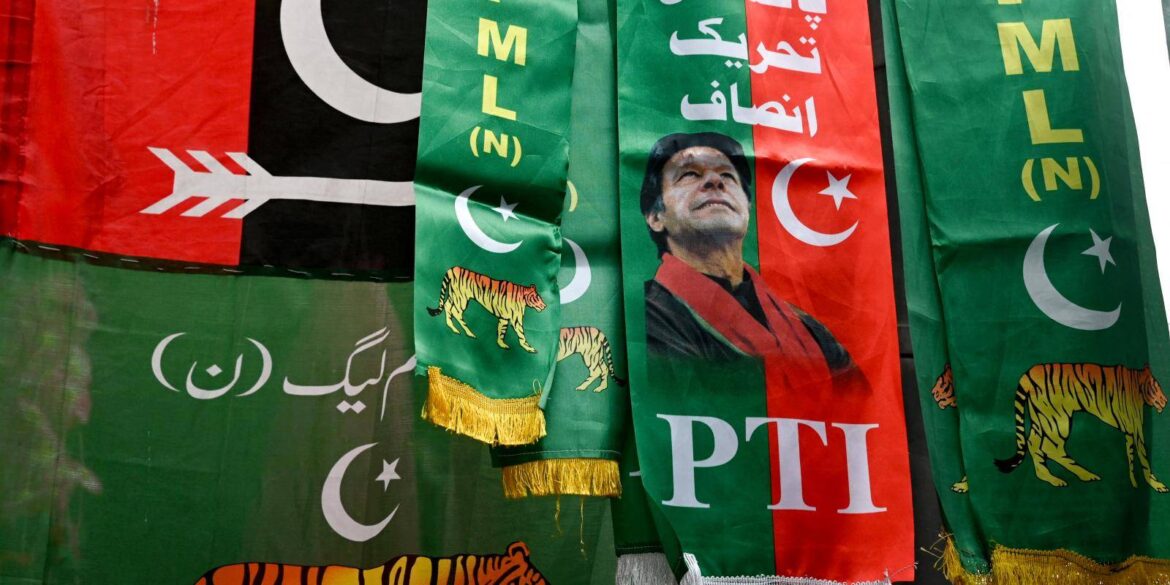
The group cited the economic fallout from the COVID-19 pandemic and the war in Ukraine as challenges for the previous government led by the Pakistan Tehreek-e-Insaf (PTI) party but noted reports that disputes over key appointments fueled a no-confidence vote that ousted Prime Minister Imran Khan in 2022. His May 2023 arrest triggered protests and amendments allowing military trials for civilians. “The prevailing political and security environment had negative impacts on the ability of all political parties to campaign freely, and to an equal degree,” with reports of PTI arrests, detentions, disappearances, office closures and raids affecting association and assembly rights.
Internet interruptions coincided with PTI events, restricting fundamental rights. Legally, the Constitution and Elections Act support credible elections, but concerns focused on interpretation and external influences on the judiciary. “The Group is deeply concerned about a number of the legal challenges brought against former Prime Minister Imran Khan that prevented his participation in the election,” noting court concerns over evidence and inconsistencies. The timing of convictions “naturally raises suspicions regarding a political substrate to these convictions.”
The Supreme Court’s bail grant in the cipher case warned of consequences from incarcerating politicians under the “contrive[d] doctrine of necessity,” implying military influence. The report praised some pro-enfranchisement decisions but criticized inconsistencies in reversing lifetime bans — reviving Sharif’s career — and denying PTI’s bat symbol, deeming the latter “highly disproportionate.”
Post-election allegations by six high court judges of intimidation, abductions and surveillance prompted calls for rigorous Supreme Court investigation.
On election day, voters generally cast ballots freely and secretly, but the cellular shutdown — attributed to security threats but outside ECP control — crippled the Election Management System, forcing manual result transmission and causing delays. This reduced transparency and opened doors to potential manipulation of result forms, the report said, citing discrepancies in copies held by party agents and those published online, plus implausibly high turnouts in some areas. Such shutdowns violate international law, the group noted, urging better support for ECP technologies.
Post-election, delays in resolving petitions affect the legislature’s makeup, while retroactive amendments to the Elections Act — allowing retired judges on tribunals and attempting to overturn a Supreme Court ruling on reserved seats — flout good practices against changing laws near or after elections.
The census and boundary delimitation drew criticism for delays that pushed back the election beyond constitutional limits and for a lack of transparency, including a 9 million population drop in final figures, mostly in Balochistan. The group noted civil society concerns over constituency sizes violating legal variances, potentially undermining vote equality, and suggested another delimitation might be needed before the next cycle.
Efforts to promote inclusion were a bright spot. The ECP’s expanded Gender and Social Inclusion Wing helped narrow the voter registration gender gap from 12 percent in 2013 to 7.7 percent in 2024, the report said. Youth turnout reached national averages for the first time, and a new gender hotline addressed harassment and intimidation. No constituency saw turnout below 10 percent, though the group called this a low threshold to raise.
Still, more work is needed for women’s representation, including enforcing quotas for female candidates and aiming for 30 percent parliamentary seats per international standards. The report flagged ongoing barriers for the Ahmadiyya community, such as separate voter rolls, as inconsistent with constitutional and international commitments.
Media freedoms faced curbs through laws like the Pakistan Electronic Media Regulatory Authority Ordinance, with directives seemingly targeting individuals and a lack of prosecutions for violence against journalists, including killings.
The 13-member group, led by former Nigerian president Goodluck Jonathan and convened by the Commonwealth’s former secretary-general, Patricia Scotland, was invited by Pakistan’s Election Commission to monitor the national and provincial assembly elections. Its members, drawn from across the Commonwealth and including parliamentarians, election officials, civil society experts, media representatives, gender specialists, youth leaders and former judges, deployed observers nationwide to evaluate the pre-election environment, polling day activities and post-election period.
Commonwealth Secretary-General Shirley Botchwey praised the observers’ work in a statement, emphasising the organization’s commitment to democratic values. “I note that some of the report’s findings were previously shared in the Commonwealth Observer Group’s interim statement, which was released two days after the 2024 election,” she said. “I also take this opportunity to reiterate my full commitment, as Secretary-General, to Commonwealth values as we support Member Countries to strengthen democracy and good governance.”
Botchwey added that the Secretariat has contacted Pakistani authorities and urged them to create domestic mechanisms, per revised Commonwealth guidelines, to convene electoral stakeholders and address the report’s recommendations. “The Secretariat will support this initiative to strengthen democracy in Pakistan for the benefit of all its people,” she said.
Copyright © 2021 Independent Pakistan | All rights reserved