By Staff Reporter
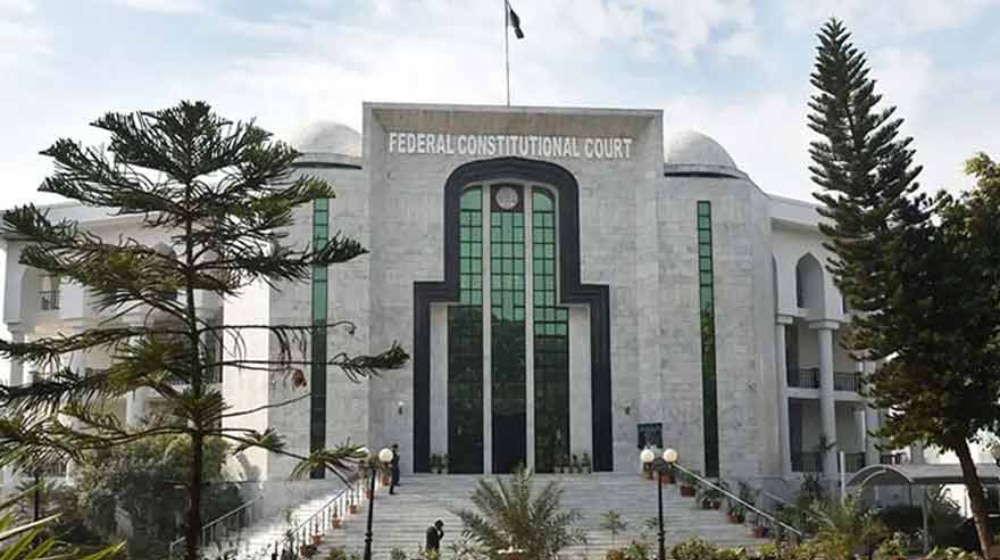
ISLAMABAD: The Federal Constitutional Court has barred the Peshawar High Court from hearing challenges to the detention of Imran Khan’s supporters in Khyber Pakhtunkhwa, where the army was deployed under emergency rule last month.
A two-judge bench headed by Chief Justice Aminuddin Khan and including Justice Aamer Farooq ruled on Thursday that all petitions filed before the high court under Article 199 of the constitution on or after 12 October must remain suspended while troops are acting in support of civil authorities.
“Since the armed forces have been called to act in aid of civil power in the entire province of KP pursuant to the Oct 11 order … the proceedings before the PHC instituted under Article 199 on or after Oct 12 shall, in terms of clause 4 of Article 245, remain suspended,” the bench said.
The order halts the high court’s handling of cases brought by Pakistan Tehreek-e-Insaf (PTI) workers and activists held under the Maintenance of Public Order Ordinance (MPO), a 1960 law that allows preventive detention.
The federal government imposed emergency and governor’s rule in the province on 11 October, saying the PTI-led provincial administration had shown a “deliberate disengagement” from the fight against terrorism. Scores of PTI workers and leaders, including lawmakers, were detained in the days that followed.
The Peshawar court had released many of them at the outset, granting interim bail against surety bonds of 100,000 rupees each. It also ordered that they should not be arrested while their cases were pending. The judges acted without a report from the provincial government explaining why the detentions had been ordered.
The Khyber Pakhtunkhwa government challenged those orders before the Federal Constitutional Court. More than 60 appeals, filed by the provincial home and tribal affairs department’s additional chief secretary, have been fixed for hearing.
Appearing for the province, Advocate General Sanaullah Khan argued that a high court cannot exercise its Article 199 powers in any area where the armed forces are acting in aid of civil power.
Justice Farooq pressed him on the breadth of that claim, noting that high courts receive many petitions under the article every day. “Does this mean the high court should not hear such cases?” he asked.
The advocate general replied that matters such as tenancy disputes could still be heard, because the high court is approached in those cases only after they have been referred to the competent forums.
Shah Faisal Ilyas, a former additional advocate general who represented one of the parties, objected to the court issuing any injunctive order without first hearing the other side, and described the province’s arguments as untenable. The chief justice told him to submit his formal objections after studying the order, and said notices were being issued to the respondents.
The court also directed the advocate general to report within seven days on the areas of the province where the army is no longer required to act in aid of civil power. It said it may modify its order after examining that report.
Because the case raises important questions about interpreting the constitution, the bench also ordered that notice be sent to the attorney general of Pakistan.
In its order, the court said the points raised needed serious consideration. It said the Peshawar court’s 2024 judgment in the case of Aftab Alam, on which the impugned orders were based, required careful examination to decide whether the high court’s reading of Article 245 was constitutionally correct.
Clause 3 of Article 245 bars a high court from exercising its Article 199 jurisdiction in any area where the armed forces are acting in aid of civil power. Clause 4 suspends any proceedings begun on or after the day the army starts acting, for as long as it does.
The bench observed that, on the face of it, clause 3 is not an ouster clause of the kind found elsewhere in the constitution, such as Article 236(2), where courts have still examined the constitutionality of proclamations issued under emergency provisions. It described the clause as dealing with an emergent but temporary situation, meaning the bar on jurisdiction lasts only as long as troops are deployed.
The order set out the sequence of events. The president issued the proclamation on 11 October under Articles 232 and 234, after which the federal government assumed control of the province through the governor. The same day, it authorised the army’s deployment under Article 245. The interior ministry requisitioned troops on 12 October, and the defence ministry deployed them across the province that day.
The advocate general said the framers of the constitution had protected provisions on preventive custody under Article 10, which sets out safeguards on arrest and detention. He said the MPO had been invoked on the “subjective analysis” of government functionaries seeking to prevent action prejudicial to public safety and order.
The ruling comes less than a month after the emergency was imposed. Jamiat Ulema-i-Islam-Fazl chief Maulana Fazlur Rehman, National Assembly opposition leader Mehmood Khan Achakzai and Senate opposition leader Raja Nasir Abbas have all criticised the move.
Tensions had been high since the PTI announced a march on Islamabad to demand the release of Khan, the jailed former prime minister. Negotiations a week before the emergency produced no agreement.
Sohail Afridi, who was leading the march and has been rendered non-functional as chief minister since governor’s rule began, has also been detained. His party said at the time that it did not know where he was being held.
The Peshawar High Court is still seized of petitions against the detentions, including one over Afridi’s. It had been due to hear the matter next on 12 November.
Copyright © 2021 Independent Pakistan | All rights reserved