By Staff Reporter
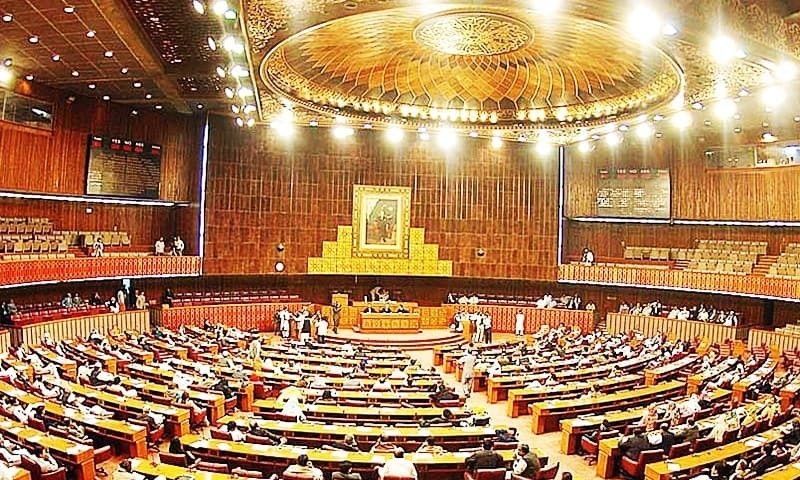
ISLAMABAD: The National Assembly convened on Tuesday for a session expected to push forward a contentious constitutional amendment that would reshape the judiciary and extend protections to military leaders, following the government’s success in steering the bill through the Senate a day earlier despite fierce opposition protests.
The 27th Constitutional Amendment proposes alterations to various articles chiefly concerning the judiciary and military hierarchy. Per the day’s agenda, Law Minister Azam Nazeer Tarar was slated to propose a motion for the lower house to review the bill, already approved by the upper chamber, and another to enact it there.
Speaker Ayaz Sadiq oversaw the session, which commenced with a prayer for Senator Irfan Siddiqui of the Pakistan Muslim League-Nawaz, who had passed away the day before.
Approval in the 336-seat Assembly demands a two-thirds majority, which the governing coalition seems assured of achieving with its robust bloc: 125 seats for the Pakistan Muslim League-Nawaz, 74 for the Pakistan Peoples Party, 22 for the Muttahida Qaumi Movement-Pakistan, five for the Pakistan Muslim League-Quaid, four for the Istehkam-i-Pakistan Party, and one apiece for the Pakistan Muslim League-Z, the Balochistan Awami Party and the National Peoples Party. The opposition controls 103 seats.
This push built on a turbulent Senate vote on Monday, where the bill clinched a two-thirds majority in the 96-member body with 64 votes, thanks to the surprise crossover of two opposition senators who defied their parties. Disorder broke out in the upper house the moment Senate Chairman Yousuf Raza Gilani initiated a clause-by-clause tally. Lawmakers from the Pakistan Tehreek-i-Insaf and the Jamiat Ulema-i-Islam-Fazl converged at his podium, shouting anti-government chants. Some shredded copies of the bill and agenda, flinging them at the law minister. Sergeants-at-arms created a human shield along the aisle separating the treasury and opposition sides to head off any scuffle. The demonstrators shortly exited in protest, enabling the government to wrap up the vote unhindered.
Prior to the ballot, Senator Farooq Naek of the Pakistan Peoples Party delivered the concluding report from the joint standing committees on law and justice, detailing key tweaks to the draft. He detailed that the Federal Constitutional Court would feature balanced representation from every province, alongside one from the Islamabad High Court. Eligibility for court nomination was trimmed from seven years of high court tenure to five.
Regarding seniority, Naek said an incumbent Supreme Court judge appointed to the new body would retain their existing rank. For fresh nominees from lawyers or high court judges, it would start upon taking office; for those sworn in together, age would decide precedence. The panels revised the selection for the revamped Judicial Commission of Pakistan. While the 26th Amendment permitted the speaker to pick a woman or a non-Muslim, the update calls for a technocrat. Naek stressed that judges’ suo motu authority remains intact, but now necessitates a petition. “The case will be taken up for hearing after the FCC decides whether the application for exercising suo motu powers is valid and needed,” he said. On Article 199 revenue issues, he pointed out that interim stays once lingered until resolution, fueling delays. The change would dissolve them after a year sans verdict.
For judge transfers, Naek noted the earlier protocol — needing consent and chief justices’ input — has shifted. “Now, a judge refusing his transfer would be allowed to present his reasons for the decline before the JCP. And if the JCP finds the reasons invalid, he would have to retire,” he said.
The legislation broadens Article 248’s lifelong immunity, barring the president from criminal proceedings or detention. Naek explained this safeguard would pause if the ex-president assumes another public post but would be reinstated afterwards. An amendment to Article 243 would confer comparable immunity on the field marshal, marshal of the air force and admiral of the navy. These revisions unfold against ongoing disputes over judicial autonomy and military sway in Pakistani politics, with critics assailing them as a dilution of democratic safeguards. Supporters cast them as vital steps to expedite justice and foster steadiness.
Copyright © 2021 Independent Pakistan | All rights reserved