By Staff Reporter
ISLAMABAD: An anti-terrorism court in Islamabad sentenced seven critics of the government and military, including journalists, a YouTuber and a former army official, to life imprisonment on Friday for their alleged roles in inciting riots that erupted after the arrest of former Prime Minister Imran Khan in May 2023.
The verdicts, delivered by Judge Tahir Abbas Sipra, came in two separate cases stemming from what prosecutors described as “digital terrorism against state institutions.” The defendants, most of whom are living abroad, were tried in absentia after being declared proclaimed offenders when they failed to appear.
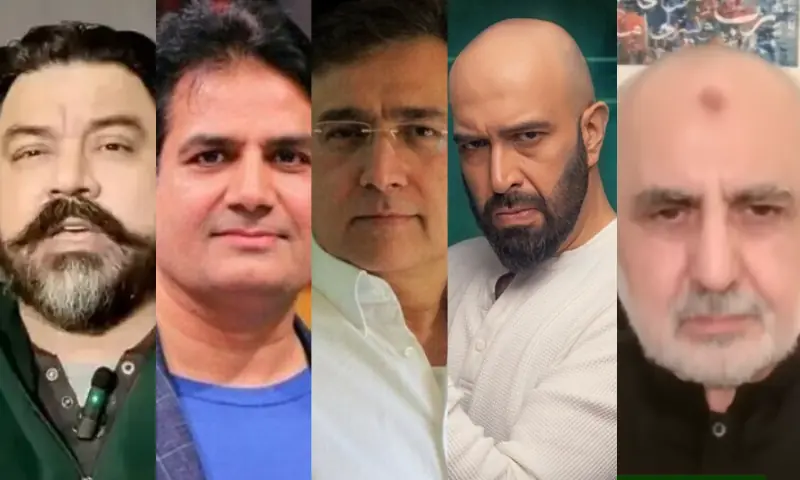
The convicted individuals, YouTuber Adil Raja, journalists Wajahat Saeed Khan, Sabir Shakir, Shaheen Sehbai and Moeed Pirzada, anchorperson Haider Raza Mehdi and former army official Akbar Hussain, were accused of using social media platforms to incite attacks on government and military installations during the unrest. Mobs vandalised buildings, including military sites, in protests that swept the country following Khan’s detention in a graft case.
In court orders, Judge Sipra imposed two life sentences each for waging or attempting to wage war against Pakistan and for criminal conspiracy, along with fines of Rs500,000 per offence. Additional penalties included 10 years’ rigorous imprisonment and Rs200,000 fines under sections of the Pakistan Penal Code dealing with conspiracy and abetting mutiny. Three more five-year sentences were handed down under the Anti-Terrorism Act of 1997, each carrying a Rs200,000 fine. Failure to pay any fine would extend imprisonment by six months, the orders said, though the sentences are to run concurrently. The court extended the benefit of crediting any prior detention time toward the terms and noted that appeals could be filed within seven days in the Islamabad High Court.
Prosecutors argued that the defendants’ vlogs, tweets and posts fueled the violence. In a 23-page verdict for one case, registered at Ramna police station against Raja, Khan, Sehbai and Mehdi, the court said the accused “incited the public against the government and the Pakistan Army officers.” It cited unedited footage of the riots and specific actions: Shakir sent messages demanding a political figure be brought to court and accused a military officer of killings and kidnappings; Pirzada urged attacks on buildings, claiming protests were essential to free a leader; Raja alleged blackmail involving courts and the army; Saeed promoted “terrorism and civil disobedience” by hinting at assaults on institutions. “According to evidence, the accused conspired to incite the public in the incidents of May 9 and 10,” the verdict stated. “Not only the public but also government officers were incited in vlogs and tweets. Video evidence is sufficient to convict the accused.”
A separate 22-page ruling covered the case at Aabpara police station against Shakir, Pirzada and Hussain. The prosecution presented 24 witnesses in total across both trials, represented by Raja Naveed Hussain Kayani. The defence was handled by Gulfam Ashraf Goraiya, appointed by the court. The sentences add to a broader crackdown on dissent following the May 9 events, which authorities have blamed on supporters of Khan’s Pakistan Tehreek-e-Insaf party.
Raja, a former army major based in Britain, and Mehdi, a retired captain, were previously convicted under the Army Act for violating the Official Secrets Act through field general court-martials in 2023. The federal cabinet recently declared Raja a proscribed person under anti-terrorism laws. The other journalists — Shakir, Pirzada, Saeed and Sehbai — are also abroad, evading arrest warrants issued after they were charged with sedition, terrorism and abetting mutiny for allegedly encouraging attacks on military sites.
International rights groups condemned the initial charges in June 2023. Amnesty International highlighted “the crackdown on voices critical of the state and military,” stating: “At least seven journalists and commentators have been charged with offences against the state and anti-terror laws in the past four days.” It added, “The use of these laws to silence commentators and journalists is a violation of the right to freedom of expression.”
Reporters Without Borders echoed those concerns, urging Pakistani authorities to halt the pursuit of critics. The trials underscore tensions between Pakistan’s powerful military and civilian voices amplified on social media. A detailed judgment elaborating on the evidence is expected soon. In the meantime, the court has directed police to arrest the convicts upon their availability and send them to jail.
Copyright © 2021 Independent Pakistan | All rights reserved