By Staff Reporter
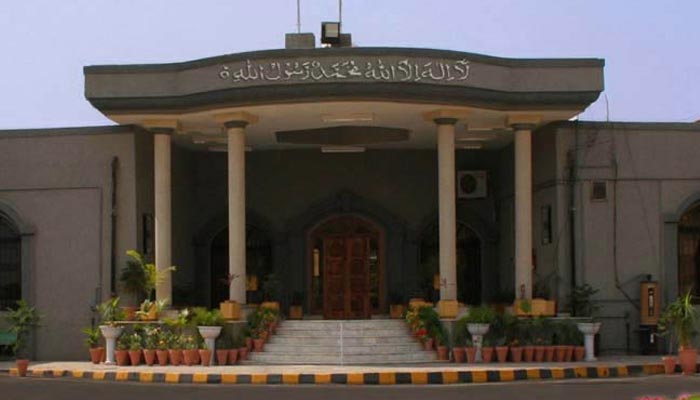
ISLAMABAD: Pakistan’s judiciary moved to confront police over an escalating crackdown on the country’s main opposition party on Tuesday, as courts in both Islamabad and Lahore heard a cluster of urgent petitions alleging illegal raids, unlawful detentions and the disappearance of a sitting member of parliament, days before a planned march on the capital.
The Islamabad High Court ordered the city’s senior superintendent of police for operations to appear in person on 24 September, after PTI leaders told the court that officers had been raiding party members’ homes without legal authority. The party, founded by the jailed former prime minister Imran Khan, is preparing to bring thousands of supporters into Islamabad on 27 September to demand his release, and the authorities have responded with a widest sweep of arrests the party has faced since the deadly protests of November 2024.
Justice Raja Inaam Ameen Minhas was hearing a petition brought by two senior PTI figures, Malik Aamir Dogar and Shoaib Shaheen, when their counsel told the court that police searches of party leaders’ homes had no proper legal basis. The lawyers asked the judge to stop Islamabad police from violating the sanctity of private homes, and the court’s written order reflected that request directly, instructing the police chief to answer the allegations when he appears later this week.
The hearing took place against a backdrop of heavy security preparation across the capital. More than 2,000 shipping containers have already been positioned at junctions around Islamabad and at Attock Bridge, the main crossing point into Punjab from Khyber Pakhtunkhwa, PTI’s political stronghold. A rival march planned by the religious party Jamaat-i-Islami has been postponed at the government’s request, leaving PTI’s demonstration as the immediate focus of the security operation.
A missing MP and a family scattered across two prisons
The scale of the crackdown came into sharper focus through a separate petition filed at the Islamabad High Court on Tuesday, seeking the recovery of Sanaullah Mastikhel, a PTI member of the National Assembly whom the party says was taken from the Parliament Lodges — the official residence for MPs in the high-security Red Zone — on Sunday evening.
The petition, filed by Mastikhel’s relative M Kashif, states that the men who took him away identified themselves as security agency personnel but produced no arrest warrant, no first information report and no other legal order. Despite what the petition describes as extensive efforts to trace him, neither the police nor the local administration has offered any information about his whereabouts, his lawyers say. The petition asks the court to compel the authorities to produce him and to disclose whether any case has actually been registered against him.
Mastikhel is one of several PTI parliamentarians the party says have vanished from the same Red Zone buildings in recent days. The party’s central media department has named MNAs Dawar Khan Kundi, Ahsan Jamal Khan and Mian Ghaus Muhammad, along with a member of the Khyber Pakhtunkhwa provincial assembly, among those it says were picked up under preventive detention laws from Parliament Lodges or from directly outside the National Assembly building. Senator Saifullah Niazi was also reported detained.
The pattern extends well beyond the capital. Three of Imran Khan’s sisters are now in jail in Lahore after being placed under 30-day preventive detention. Aleema Khan was the first to be detained, on Sunday, after the Lahore deputy commissioner’s office issued an order citing police reports that alleged she and her driver, Muhammad Ameer, posed a risk to public safety. The order referred to their alleged involvement in roadblocks and protests on 9 May 2023, when PTI supporters took to the streets following an earlier arrest of Imran Khan, and stated that multiple criminal cases had already been filed against the pair.
Her sisters, Dr Uzma Khan and Noreen Niazi, were detained the following day under the same ordinance, after police reportedly took them from Aleema Khan’s residence along with their nephews. The children were later released; the two women were sent to join Aleema Khan at Kot Lakhpat Jail.
That detention is now the subject of a separate challenge at the Lahore High Court, where the family is arguing the entire process was staged backwards. Aleema Khan’s son, Shahraiz Khan, has petitioned the court through his counsel, Barrister Taimur Malik, to have the detention orders struck down. Malik told Justice Abher Gul Khan on Tuesday that the meeting of the District Intelligence Committee — the body meant to authorise such detentions — and the formal notification ordering Aleema Khan’s detention were both issued on the same day her arrest took place, suggesting to the court that the arrest happened first and the paperwork was assembled afterwards.
Justice Khan indicated the court would examine that sequence of events, reserving her decision on whether the petition is even properly before the court, and adjourned the case until 25 September for further argument. The petition separately argues that the deputy commissioner failed to follow the procedure required under the Maintenance of Public Order Ordinance, that the detention orders contain no specific allegations, and that the family was not told the grounds for the detentions within the legally required timeframe.
Lawyers say they too are being targeted
Adding another dimension to Tuesday’s proceedings, the Islamabad High Court Bar Association issued a strongly worded statement accusing police of subjecting members of the legal profession to what it called repeated harassment, intimidation and unlawful detention. In a statement signed by its secretary, Barrister Qasim Nawaz Abbasi, the association said it understood the pressures of the current law-and-order situation and had no wish to provoke confrontation, but warned that maintaining order could never justify unlawful interference with lawyers or their deprivation of liberty without due process.
The bar association called on the Islamabad inspector general of police to intervene personally and ensure no lawyer faces further harassment, and demanded that any complaints be properly investigated with accountability for officers found responsible. It framed its restraint so far as being in the public interest rather than any sign of weakness, adding that it would invoke every constitutional and legal remedy available to protect its members if the conduct continued.
A contempt case over a loaded reference to a demolished temple
The legal fallout from PTI’s mobilisation efforts has also drawn in one of the party’s own MPs. A trader in Islamabad, Waqas Ahmed, has filed a contempt of court petition against Junaid Akbar, a PTI member of the National Assembly, over remarks in which Akbar said the party would turn Islamabad into “Somnath” — a reference to a Hindu temple in India repeatedly destroyed and rebuilt over the centuries — and would “keep on lifting corpses” as new marchers arrived to replace them.
Akbar has pushed back against the criticism, saying the reference to Somnath was intended to describe PTI’s repeated returns to Islamabad rather than anything more sinister, and that his words had been given what he called a wrong spin. The petition against him, filed through Advocate Akhtar Chhina, argues that the remarks breached a High Court judgment issued on 14 September, which held that no political party has the lawful right to occupy roads, interchanges, toll plazas or public buildings in Islamabad in ways that block access to schools or hospitals. The petitioner has asked the court to open contempt proceedings against Akbar and has pointed to a 2018 Supreme Court case, in which former senator and Sindh governor Nihal Hashmi was jailed for a month and fined for contempt, as precedent for how such matters should be treated.
A government warning of an “iron hand”
The court proceedings unfolded alongside an increasingly combative public standoff between the government and PTI’s provincial government in Khyber Pakhtunkhwa. Interior Minister Mohsin Naqvi told reporters in Lahore on Monday that anyone who tried to “storm” Islamabad would be met with an iron hand, and urged the party to step back while there was still time. Naqvi said the government would use every lawful measure against those who tried to force their way into the capital, and suggested much of PTI’s own leadership was uneasy about the march and unclear on what it was meant to achieve.
PTI and its allies have said they remain open to resolving the standoff through elected representatives, but have declined to call off Sunday’s march. The party is demanding Imran Khan’s release from jail and says it is mobilising supporters in defence of the constitution. Authorities in Islamabad have ordered the closure of two dozen educational institutions from Tuesday as a security precaution, and Metrobus services between Islamabad and Rawalpindi have been suspended.
Tuesday’s court hearings leave the police chief facing questions in person within days, and the Lahore High Court set to revisit the legality of the sisters’ detention next week — timelines that place the judiciary’s response to the crackdown on a collision course with the march itself.
Copyright © 2021 Independent Pakistan | All rights reserved