By Staff Reporter
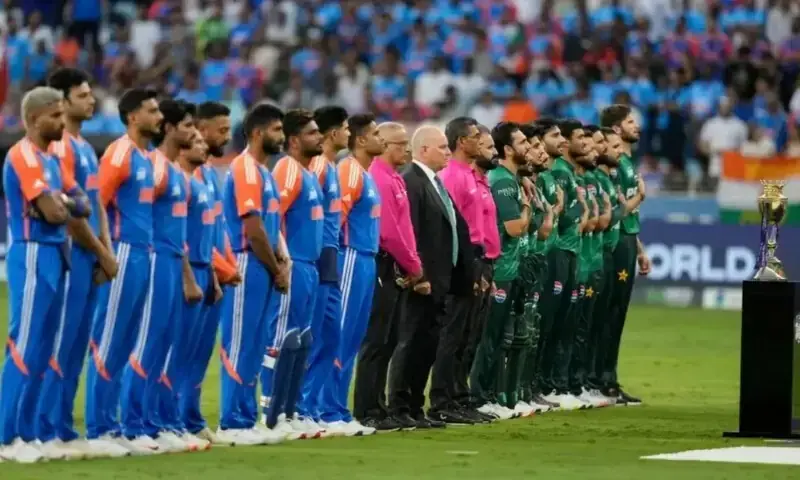
As the T20 World Cup opens tomorrow in a blaze of floodlights and fanfare, the shadow of a missing blockbuster looms large. The India-Pakistan encounter, set for 15 February in Colombo, is cricket’s equivalent of a heavyweight title fight – a clash that pulls in viewers by the hundreds of millions and swells the coffers of broadcasters and the International Cricket Council (ICC) alike. But Pakistan’s refusal to take the field, a bold act of solidarity with ousted Bangladesh, has thrust the sport’s governance into crisis. This isn’t just about one no-show; it’s a stark reminder of how India’s financial muscle has warped the game’s level playing field, leaving smaller boards to scrape for fairness in a system rigged against them.
India’s grip on cricket has tightened over the past two decades, powered by a massive fanbase and a market that treats the sport like a religion. The Indian Premier League, born in 2008, turned the Board of Control for Cricket in India (BCCI) into a behemoth, commanding revenues that eclipse those of other nations combined. As reports this week have noted, “India’s dominance over world cricket has been evident for nearly two decades, underpinned by its vast population and the commercial power of its domestic market.” Yet this clout has bred resentment, with the ICC often appearing as little more than a rubber stamp for BCCI preferences. The current standoff lays that bare: when India baulked at touring Pakistan for last year’s Champions Trophy over security fears, the ICC obliged with neutral venues in Dubai. Bangladesh’s parallel request to shift games from India to Sri Lanka? Flatly denied as “not feasible” days before the tournament’s kickoff on 7 February.
The fallout was swift and severe. Bangladesh ousted, Scotland drafted in, and a “sad moment for the game,” as World Cricketers’ Association chief executive Tom Moffat put it in a statement that pulled no punches. Moffat decried the exclusion as a failure to “unite the sport, not divide it” and flagged deeper woes in cricket’s “existing operating model at [the] global level,” warning that ignoring them “will weaken trust, unity, and ultimately the health and future of the game we love.”
This double standard has galvanised support for Pakistan’s selective boycott, a move that targets the tournament’s golden goose: the India-Pakistan clash, cricket’s most lucrative spectacle. Former England captain Nasser Hussain, on the Sky Cricket Podcast with Michael Atherton, framed it as a pushback against “selective enforcement of ICC rules.” “At some stage, someone has got to say enough is enough — can we just get back to playing cricket?” Hussain urged, insisting the core problem was “consistency rather than politics.” He lauded Bangladesh for standing firm and Pakistan for its “necessary stand against a system increasingly shaped by financial and political power.” Atherton, ever the measured analyst, concurred, recalling how India had been granted neutral grounds in the past. “If allowances have been made before, you can’t suddenly decide not to make them now,” he said, warning that such rigidity “risked undermining the credibility of international cricket’s governance.”
Even sharper was former England batter Mark Butcher, who dubbed Pakistan’s tactic a “masterstroke” that unmasks the event’s vulnerability. “The whole thing rests on that game,” Butcher observed, underscoring how broadcasters, the ICC, and India hinge on this one fixture for revenue. Indeed, with India claiming 38.5% of ICC income compared to Pakistan’s paltry 5.75%, the financial asymmetries are stark.
Voices from Pakistan remain defiant. Prime Minister Shehbaz Sharif, addressing his cabinet, defended the boycott as solidarity with Bangladesh, insisting that while “sport should remain free of politics, principles of fairness could not be ignored.” PCB chair Mohsin Naqvi, also interior minister, blasted the ICC’s “injustice” and “double standards”. “You can’t say for one country [India] they can do whatever they want and for the others to have to do the complete opposite.” Shahid Afridi decried the decision as leaving him “deeply disappointed,” tweeting that “Bangladesh’s players and millions of its fans deserve respect – not mixed standards.” Mohammad Yousuf lamented fans being “deprived of cricket,” insisting the ICC to uphold “fairness and consistency” as “the foundation of global cricket.” Kamran Akmal, on his YouTube channel, eviscerated the ICC for amnesia over hybrid models in the Asia Cup and Champions Trophy. “Was the ICC sleeping when India said it would not play the Champions Trophy in Pakistan and would only play at a neutral venue?”
Not everyone concurs. Former Australia quick Brett Lee, on the Mr Cricket UAE podcast, pleaded for the match to proceed. “Let’s get the politics out of it. I really hope the match happens. The whole world watches when India and Pakistan play one another.” Sri Lanka Cricket, as co-hosts, has urged Pakistan to rethink, warning of “wide-ranging implications” for finances and the event’s integrity. Ticket sales for the match are on hold, per reports, as the ICC awaits clarity. Back-channel talks, led by ICC deputy chair Imran Khawaja and UAE’s Mubashir Usmani, have shifted from threats of sanctions – including withheld funds and broadcaster lawsuits – to addressing PCB grievances.
Former ICC president Ihsan Mani, a veteran of these power plays, argued that if Pakistan’s case reaches arbitration, it could prevail, especially given precedents like the 2018 ruling that favoured India. But Mani went further, urging current ICC chair Jay Shah – who also heads the BCCI – to intervene personally. “He should go to Pakistan to convince the government to end the boycott and also listen to their grievances.” Mani dismissed deputy chair Imran Khawaja as ill-suited for the task.
But this episode demands more than a quick fix. Cricket’s governance is fracturing under the weight of India’s influence, where commercial imperatives trump sporting equity. The BCCI’s sway, evident in everything from scheduling to revenue shares, has turned the ICC into a facilitator rather than a regulator.
If Pakistan forfeits, scenarios may unfold grimly, but more profoundly, this will expose cricket’s rot – a sport where India’s veto power trumps all. Recall the Asia Cup handshake snub or trophy refusal from PCB’s Naqvi; unpunished slights that fuel the fire, yet Bangladesh pays dearly for analogous concerns. As Mani put it, “This is the time for Pakistan to fight for an end to politics in the ICC.” The ICC must seize this moment to reform, enforcing rules without favour. Otherwise, cricket risks becoming a two-tier affair: India and the rest. If cricket is to thrive as a truly global sport, the ICC must reclaim its independence, ensuring rules apply uniformly – not flexed for the powerful. Pakistan’s stand, principled yet perilous, demands a response that rebuilds trust. Fail, and the game’s global appeal crumbles under the weight of its own inequities.
Copyright © 2021 Independent Pakistan | All rights reserved