By Staff Reporter
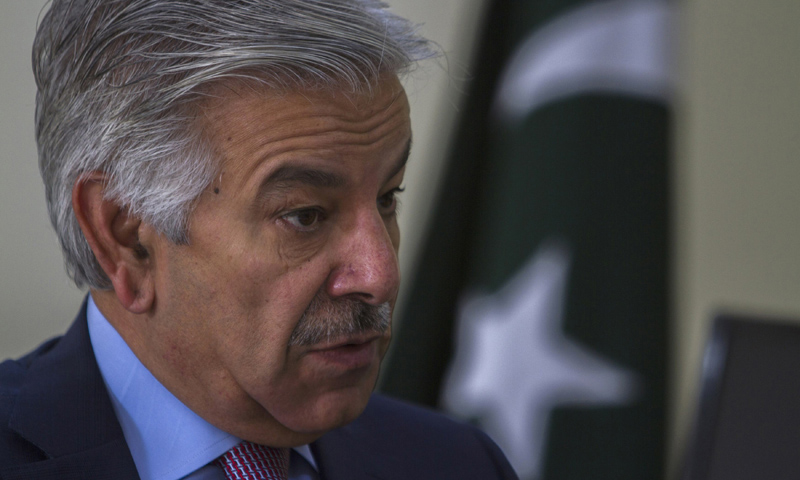
ISLAMABAD: Defence minister, Khawaja Asif, pressed anew on Wednesday for a sweeping overhaul of the country’s governance structure, arguing that empowering local governments would bring authority directly to the people and multiply the nation’s collective strength rather than dilute it.
“Dispersal of power actually multiplies power,” Mr. Asif wrote in a post on X, the platform formerly known as Twitter. “Concentration of power diminishes it.” His comments built on a pointed critique he delivered a day earlier in the National Assembly, where he described the 18th Amendment to the Constitution as a “farce” that had funneled authority into provincial capitals while leaving local bodies toothless or nonexistent.
The discussion erupted during a debate over a devastating fire at Gul Plaza in Karachi, when Farooq Sattar, a lawmaker from the Muttahida Qaumi Movement-Pakistan, urged the creation of additional administrative units in the sprawling port city and a bolstering of local governance to prevent such tragedies.
Asif endorsed Sattar’s position, saying Karachi’s vast scale made it impossible to manage effectively under the current setup. “If we want to empower the people of Pakistan in a true sense, a local government system would have to be introduced,” he said in his assembly speech. For years, the MQM-P, which draws much of its support from urban Sindh Province, has championed stronger local institutions. The party pushed to include such provisions in the 27th Constitutional Amendment, passed last year, but blamed the rival Pakistan Peoples Party for blocking them, leading to their withdrawal. Party leaders have vowed that the measure will resurface in the next round of amendments.
Asif’s advocacy shows a persistent frustration in Pakistan’s federated system: the 18th Amendment, enacted in 2010, shifted dozens of ministries and departments from the federal government to the provinces, but it also mandated that provinces devolve powers further to local levels — a step that has largely gone unimplemented. As a result, Asif argued, ordinary Pakistanis remain beholden to distant bureaucracies. An empowered local system, he said, would change that by allowing citizens to elect representatives directly responsible for their communities and hold them accountable. “People will not be dependent on bureaucracy and will be able to elect empowered representatives and institutions through their vote,” he said on X. “And the common man would be able to hold them accountable if they don’t deliver.”
In practical terms, he envisioned local governments overseeing essential services like water supply, sanitation, education and health care, financed through their own taxation mechanisms. Cities like Karachi, Lahore, Quetta and Peshawar could serve as hubs accessible to Pakistan’s 250 million people, bringing governance “to the common man’s doorstep,” as he put it.
Drawing on global precedents, Asif noted that in many countries, even elements of the judiciary and police fall under elected local oversight. “There are countless examples of this in the world,” he said, warning that “weak and local bodies do not deliver” and instead inflict “political damage.” Strengthening these institutions, he added, would foster a deeper connection between rulers and the ruled. “Empower the people through local institutions,” Asif urged. “Do not keep these institutions subordinate to the bureaucracy.”
Asif also lamented the failure to adopt other reforms floated in the 27th Amendment, including a uniform national curriculum, which he said was dropped amid “political wrangling” and a lack of consensus. Without such changes, he warned in the assembly, the democratic process risks becoming hollow. “This House will be meaningless unless the people are empowered,” he said, calling for “meaningful” constitutional amendments to introduce robust local governments and standardised education nationwide.
The push comes at a time when Pakistan grapples with chronic governance challenges, from urban decay in megacities like Karachi to unequal access to basic services in rural areas. For many citizens, the debate resonates as a question of dignity and self-determination — whether power remains locked in elite corridors or filters down to the streets where daily life unfolds.
Copyright © 2021 Independent Pakistan | All rights reserved