By Staff Reporter
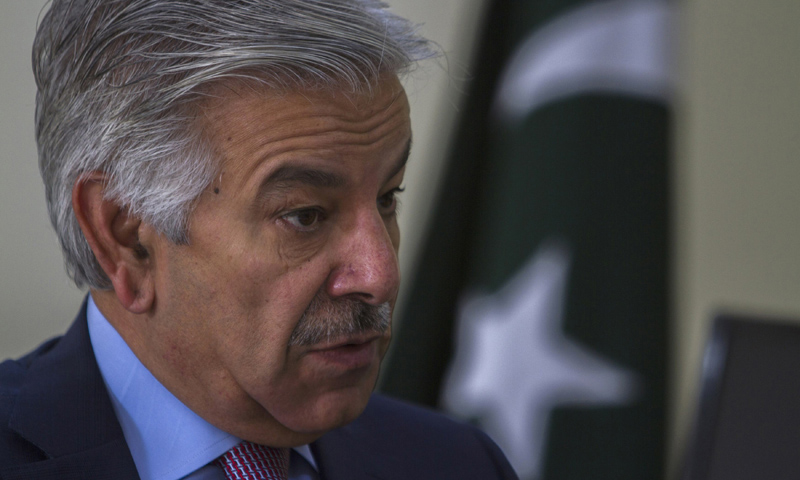
ISLAMABAD: Defence minister Khawaja Asif said on Tuesday that a surge in orders for the country’s fighter jets, spurred by its military performance in a brief but intense conflict with India last year, could soon make international bailouts unnecessary, potentially allowing Islamabad to break free from its longstanding dependence on the International Monetary Fund.
The remarks by the minister came during an appearance on private television channel, where he highlighted how the four-day standoff in May 2025 had showcased Pakistan’s air power and drawn interest from foreign militaries. Hours earlier, a high-level delegation from Bangladesh had met with Pakistan’s air force chief, Marshal Zaheer Ahmed Baber Sidhu, to discuss a possible purchase of the JF-17 Thunder, a multirole fighter developed jointly with China that has become central to Pakistan’s air fleet over the last decade.
“Right now, the number of orders we are receiving after reaching this point is significant because our aircraft have been tested,” Asif said. “We are receiving those orders, and it is possible that after six months we may not even need the IMF.” “I am saying this to you with full confidence. If, after six months, all these orders materialize, we will not need the IMF.”
Pakistan has positioned the JF-17 as an affordable alternative to Western fighters, complete with training and maintenance support independent of traditional supply chains. The aircraft gained global attention during the May conflict, when Pakistan downed six Indian jets, including three French-made Rafales, along with dozens of drones. India confirmed losses in the aerial clashes but declined to specify how many.
The skirmish began on May 7, after an attack on tourists in occupied Kashmir that killed 26 people. New Delhi accused Pakistan of involvement, a charge Islamabad rejected while calling for a neutral investigation. India responded with airstrikes in Punjab and Azad Kashmir, prompting Pakistan to retaliate with guided weapons and drones targeting Indian air bases, positions along the Line of Control and S-400 missile systems. The 87-hour exchange ended on May 10 with a US-brokered ceasefire.
“The confrontation severely damaged Indian Prime Minister Narendra Modi’s credibility both domestically and internationally,” Asif said. He described how India, reeling from the response, sought help from the United States to arrange the truce and even reached out to China. “You can determine from that how badly they were shattered — to the point that they had to call China.”
The minister asserted that Pakistan’s forces had delivered a “crushing response” that shattered India’s confidence. “The way we gave them a crushing response is the strongest evidence that we were prepared and responded in time,” he said. “If India acts aggressively again, we will respond in the same manner.”
Many nations have since expressed interest in Pakistan’s multi-domain air warfare tactics, particularly how Chinese technology fared against Western equipment. This has bolstered Pakistan’s defence export ambitions, built on decades of counterinsurgency experience and a homegrown industry producing aircraft, armored vehicles and munitions. Last month, Pakistan sealed a $4 billion deal — one of its largest weapons sales ever — to supply military gear to the Libyan National Army, including 16 JF-17 jets and 12 Super Mushshak trainers for pilot instruction, according to a Reuters report.
The influx of orders, Asif said, could transform Pakistan’s economy, which has relied heavily on IMF aid. In September 2024, the fund approved a $7 billion bailout under its Extended Fund Facility, followed by a $1.4 billion loan in May 2025 to bolster economic and climate resilience. Such packages often require painful reforms, like subsidy reductions and revenue boosts.
Copyright © 2021 Independent Pakistan | All rights reserved