By Staff Reporter
ISLAMABAD: The government on Thursday denounced as “fake and fabricated” a New York Times report that Pakistan Air Force fighter jets were being used against Yemen’s Houthi movement in Saudi Arabia’s escalating war.
The information ministry posted a screenshot of the newspaper’s story on X, saying the claim that PAF aircraft had been used against the Houthis had no basis. The Times article, published on Wednesday, relied on a single unnamed source.
The ministry asked “international media houses” to avoid “speculative reporting” on the use of Pakistan’s armed forces under the Makkah pact, the three-nation defence agreement with Saudi Arabia and Turkiye. It said any details of a deployment, “if necessary”, would come from “the authorities concerned”.
Its intervention follows two days of public statements from Islamabad that have raised as many questions as they have answered.
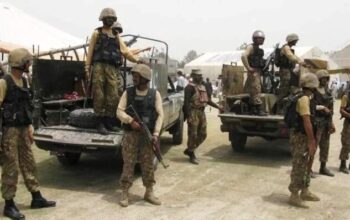
On Wednesday, Lieutenant General Ahmed Sharif Chaudhry, director general of Inter-Services Public Relations, told CNN that Pakistani forces were already in Saudi Arabia. “I do confirm that the forces of Pakistan are already there,” he said, adding that troops had been in the kingdom “for decades in multiple capabilities”.
The day before, the ministry had dismissed as “speculative” a Reuters report of 2 October that put the number of Pakistani troops sent to Saudi Arabia at between 30,000 and 40,000. Reuters, citing a Pakistani official, said they were helping to defend the kingdom’s land borders and assisting with drone and missile interception. It also reported that Islamabad had not decided to send troops into Yemen in a fighting role. The ministry said operational details of the pact’s collective deterrence mechanism were confidential.
Defence Minister Khawaja Asif offered a narrower account in a telephone interview with a local television channel on Monday. Pakistan and Turkiye both had a “presence in theatre”, he said, but only Saudi troops were involved in combat. He added that Saudi forces had made gains and recovered some areas in Yemen.
Asif was part of Pakistan’s delegation to an emergency meeting in Riyadh that day of the alliance’s Strategic-Political and Defence Committee. A joint statement issued afterwards said the three states had decided to move “immediately” to put their collective defence commitments into practice. That meant providing the agreed forces and capabilities and ensuring their rapid deployment in the kingdom, in line with approved arrangements and each country’s national law.
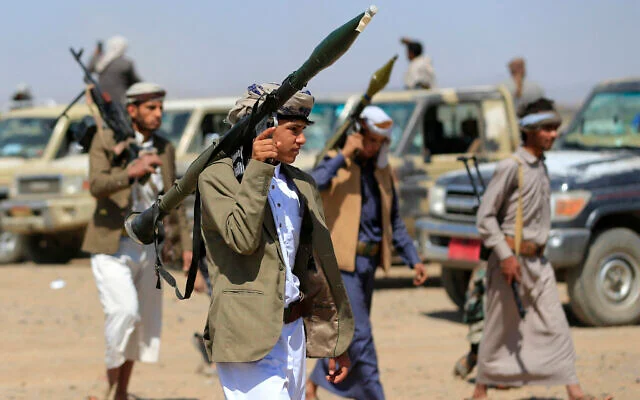
The diplomacy is unfolding as fighting intensifies. The Houthis, who hold most of northwest Yemen, have declared a maritime blockade of Saudi Arabia and say they are targeting its ships in the Red Sea. The civil war reignited this summer and the group has captured swathes of coastal land. Yemen’s internationally recognised government declared a major counter-offensive this week, saying Houthi fighters had been pushed out of strategic areas on the Red Sea coast and from the port city of Mocha. The Houthis say they are holding their ground, and military sources on both sides who spoke to AFP reported no major changes on the front lines. Claims from both camps are difficult to verify because access for journalists is limited.
Saudi territory has increasingly been hit. Saudi Arabia’s civil aviation authority said two people died in an attack on Abha airport and one in an attack on King Khalid International Airport in Riyadh, with 36 injured. The Riyadh victim was a Sudanese national; the dead at Abha were a Moroccan woman and an Algerian woman. Airports at Jazan and Najran were also damaged earlier in the week.
On Thursday the Houthis said they had struck Riyadh’s main airport again with a ballistic missile. The group claimed two missiles were fired overnight, and flight tracking service Flightradar24 reported the airport had closed again. Witnesses reported several explosions across the Saudi capital. A Houthi spokesman warned airlines “for the last time” to stop flying in Saudi airspace.
The Saudi-led coalition said it had destroyed the ballistic missile launch platform used in the Riyadh attack. Its spokesman, Turki al-Maliki, said preparations were under way for “another imminent attack”. The coalition has said it destroyed 82 Houthi military sites in Saada, Hodeidah, Jawf and Marib, and the International Organization for Migration says more than 200,000 people have been displaced since the latest fighting began.
The Houthis have fired missiles and drones at Saudi Arabia repeatedly since the Yemen war escalated in 2015, hitting military bases, airports and oil facilities. In September 2019 the group claimed drone attacks on Saudi Aramco’s Abqaiq processing plant and the Khurais oil field, which temporarily knocked out more than half of the kingdom’s crude output. Further strikes on Saudi energy infrastructure followed in March 2022. In September this year the group claimed missile and drone attacks on a Saudi military base and other targets, and on 25 September senior military leaders of Pakistan, Saudi Arabia and Turkiye condemned attacks on the holy city of Makkah.
The Makkah pact was signed on 7 August after nearly a year of negotiation. It describes an armed attack on any of the three countries as an attack on all of them and provides for wider defence cooperation. It builds on the Strategic Mutual Defence Agreement that Pakistan and Saudi Arabia signed in September 2025, which declared that “any aggression against either country shall be considered an aggression against both”.
Pakistani officials have pledged firm support for Riyadh. On 18 September Lt Gen Chaudhry said Pakistan would go to “any extent” to defend the kingdom and that its commitment was “unconditional”. Mr Asif has said Pakistan will stand by Saudi Arabia “practically and diplomatically” if the situation worsens. Islamabad has also insisted that the alliance is defensive and intended for collective deterrence.
Copyright © 2021 Independent Pakistan | All rights reserved