By Staff Reporter
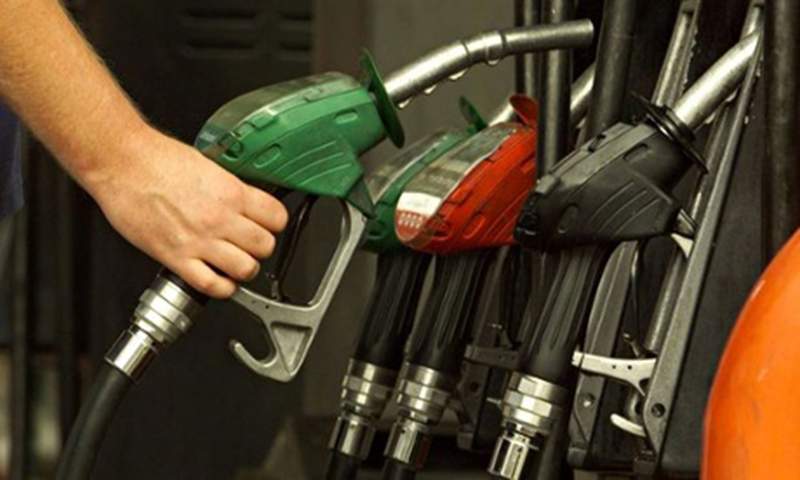
ISLAMABAD: The government on Thursday raised petrol prices for a fourth straight day this week, pushing the rate to 398.96 rupees a liter in the latest pass-through of oil-market swings from the US-Iran war.
The Petroleum Division said petrol will rise by 2.31 rupees and high-speed diesel by 78 paisas for Friday, Oct. 9. Diesel will retail at 395.72 rupees a liter, below petrol for the first time in several weeks. Working back from the changes, petrol was previously 396.65 rupees and diesel 394.94 rupees. On Wednesday, the government lifted petrol by 1.82 rupees and cut diesel by 91 paisas for Oct. 8.
Taxes and duties account for 114 rupees of each liter of petrol and 100 rupees of each liter of diesel.
Prices remain far above where they stood before the war began on Feb. 28, though well off their spring highs. Diesel peaked at 520.35 rupees on April 3, and has since fallen about 24%. It had started that climb from 281 rupees. Petrol peaked at 458.41 rupees the same day, after rising from about 266 rupees in the first week of March. It is now down roughly 13% from that high, and still about 50% above its pre-surge level.
Global crude gave the government little relief on Thursday. Oil jumped more than 5% at one point on reports the White House was weighing strikes on Iran before the Nov. 3 midterm elections. Prices pared gains after President Donald Trump said the US would not attack Iran before the vote. Brent futures were up $3.48, or 3.5%, at $103.73 a barrel in New York, and West Texas Intermediate gained about 3%. At its session high Brent reached its highest level since Sept. 29, helped by a supply loss in the US Gulf of Mexico from Hurricane Isaias.
Trump said in a Truth Social post that Washington is holding “productive discussions” with Tehran, that the blockade of Iranian ports remains in place and that oil is flowing through the Strait of Hormuz. The two sides have exchanged proposals in recent weeks to end the war and reopen the strait, though Trump rejected Iran’s latest offer.
Policy responses from consuming nations also failed to reassure traders. The Group of Seven agreed on Oct. 2 to release up to 100 million barrels of emergency oil and diesel stocks over four months, with a focus on diesel. The International Energy Agency’s board is expected to settle the details at an Oct. 14-15 meeting, and market confusion has grown over how many barrels will actually reach the market. Staunovo, an oil analyst, said the further details disappointed the market because the barrels appear to come from the 400 million-barrel release announced earlier, which has not yet been fully marketed.
Pakistan, which imports most of its petroleum, has little insulation from those moves. The government moved to daily pricing on July 17, replacing a weekly system it had used since early March. The government had given the Oil and Gas Regulatory Authority responsibility for setting prices each day, based on international trends.
Islamabad has layered on other measures. In April it announced targeted relief to provide subsidized fuel. On Sept. 13, Prime Minister Shehbaz Sharif announced a scheme offering 100 rupees a liter off petrol for motorcycles, three-wheeler rickshaws and cars of up to 800cc. About 10 million two-wheeler users and 800,000 three-wheeler users would receive relief on 20 liters a month, for a maximum benefit of 2,000 rupees each. Another 1 million owners of small cars would get relief on 30 liters, worth up to 3,000 rupees. In total the plan would cover an estimated 11.8 million people.
On Sept. 17, the Cabinet Division reintroduced austerity and fuel-conservation rules with immediate effect. Shops, markets, malls, bazaars and grocery stores must close by 9 p.m. every day. Marriage halls and similar venues must close by 10 p.m., while restaurants and cafes may stay open until 11 p.m. Takeaway and home delivery are exempt. Fuel allocations for official vehicles were cut by 50% for three months.
The fuel levy has drawn scrutiny in parliament. Petroleum Minister Ali Pervaiz Malik told the National Assembly Standing Committee on Petroleum that the levy targets are set in the budget and cannot be changed without consulting multilateral partners. Committee member Saif-ul-Mulook Khokhar called the levy a “very heavy burden” on the public and an easy means of collecting tax. Naveed Qamar of the Pakistan Peoples Party said lawmakers do not vote on the levy because it sits with the executive. He also questioned why the government is involved in pricing at all, noting the shift from a 30-day formula to a 15-day one and then to daily pricing. Malik replied that OGRA sets the prices.
Malik described the disruption to supplies from regional tensions as a major crisis, saying “the world has never seen diesel this expensive.” He argued the government had improved the supply chain and ended profiteering, and said prices would have caused an uproar had diesel reached 600 rupees a liter. He said about 70% of diesel is refined locally. PARCO is running at full capacity, Pakistan Refinery at 84% and National Refinery at 85%. Four refineries have signed agreements to produce Euro V-compliant fuel, with talks continuing with a fifth, and the fuel supply chain is being digitalized. Committee chairman Mustafa Mahmood said diesel availability matters more than petrol because agriculture and freight depend on it.
The two fuels carry different political weight. Petrol is used mainly by private motorists, rickshaws and two-wheelers, so its price hits the middle and lower-middle classes. Diesel powers heavy transport, power plants and large generators, so its price reaches the wider economy. Together they generate most of the sector’s revenue, with monthly sales of roughly 700,000 to 800,000 tons, against about 10,000 tons for kerosene.
Copyright © 2021 Independent Pakistan | All rights reserved