By Staff Reporter
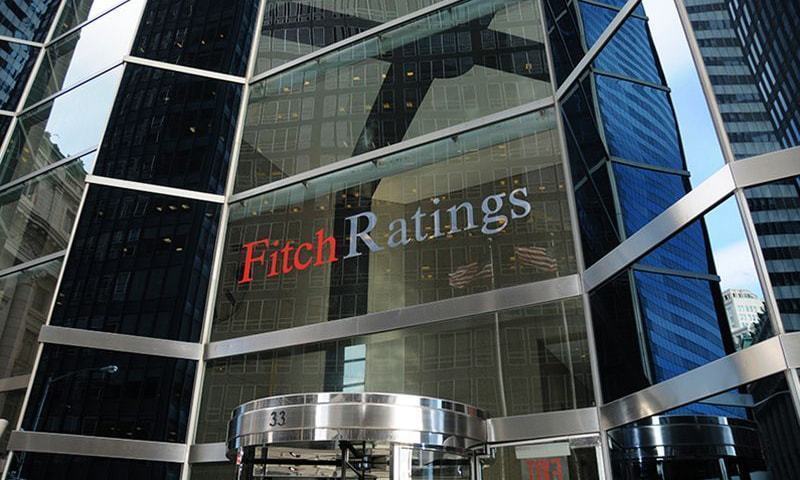
ISLAMABAD: Global ratings agency Fitch on Tuesday upgraded Pakistan’s foreign currency credit rating to ‘B-’ from ‘CCC+’, a move signaling growing economic stability as the country slashes budget deficits and implementing structural reforms under a IMF bailout programme. The outlook is stable.
“The upgrade also reflects confidence that the country would implement structural reforms, supporting its International Monetary Fund (IMF) programme performance and funding availability,” Fitch said in a statement.
The agency highlighted Pakistan’s efforts under its $7 billion IMF bailout programme, which has provided some respite to an economy that had been teetering on the brink of default since inflation hit a record high in May 2023 and reserves began shrinking.
Fitch noted potential external pressures but remained optimistic about Pakistan’s resilience. “Though ongoing global trade tensions could create external pressure, its low dependence on exports and market financing should mitigate risks,” the agency said.
Prime Minister Shehbaz Sharif hailed the upgrade as a sign of progress. “Fitch has declared Pakistan’s economy as stable. The improvement of economic rating by international institutions reflects economic progress and the global community’s confidence in the country’s economy,” Sharif said.
He added that the government is “working tirelessly to bring further improvement to the national economy.”
Finance Minister Muhammad Aurangzeb called the upgrade a “strong expression of confidence in the country’s economic reforms and policies.” “After this announcement, more investment, trade, increased employment opportunities, industrial development and additional resources will be available to the country,” the minister said
Aurangzeb pledged that “the government will continue the journey of economic reforms and economic stability.”
Fitch’s report detailed Pakistan’s economic outlook, noting strong performance under the IMF program. “Pakistan performed well on quantitative performance criteria, particularly on reserve accumulation and the primary surplus, although tax revenue growth fell short of its indicative target,” the agency said. It also pointed to structural advances, stating, “Provincial governments have also legislated increases in agricultural income tax, a key structural benchmark.”
The agency forecasted that the government budget deficit would narrow to 6% of GDP in the fiscal year ending June, down from nearly 7% in FY24, with a medium-term target of around 5%. “Our FY25 forecast is conservative. We expect the primary surplus to more than double to over 2% of GDP in FY25,” Fitch said, adding, “Shortfalls in tax revenue, in part due to lower-than-expected inflation and imports, will be offset by lower spending and wider provincial surpluses.”
On inflation, Fitch predicted a sharp decline. “We expect CPI inflation to average 5% year on year in FY25, from over 20% in FY23-FY24, on fading base effects from several rounds of energy price reforms, before picking up again to 8% in FY26,” it said. The State Bank of Pakistan held its policy rate steady at 12% in March after 1,000 basis points of cuts between May 2024 and January 2025.
Fitch also projected modest economic growth. “We expect GDP growth to edge up to 3% in FY25.” On the external front, “Pakistan posted a current surplus of $700 million in 8MFY25 on surging remittances and favourable import prices,” though it cautioned that “external deficits [are expected] to widen from our forecast of a broadly balanced position for FY25 on stronger domestic demand,” remaining below 1% of GDP.
The agency reported an uptick in reserves, which reached “under $18bn in March, from about $15bn at FYE24,” and expected further growth. However, challenges loom, with “about $9bn in external debt maturities in FY26 after over $8bn in FY25.” The government has secured $4 billion in financing in the first half of FY25 and anticipates $10 billion more in the second half, largely from multilateral and commercial sources.
Fitch acknowledged Pakistan’s uneven history with IMF programs. “Governments from across the political spectrum have had a mixed record of IMF programme performance, often failing to implement or reversing the required reforms.” Still, it observed a “current apparent consensus within Pakistan on the need for reform,” though this “could weaken over time.”
The upgrade follows a new IMF deal in March that could unlock $1.3 billion, bolstering Pakistan’s stabilization efforts.
Copyright © 2021 Independent Pakistan | All rights reserved