By Staff Reporter
ISLAMABAD: A group of former leaders from the opposition Pakistan Tehreek-e-Insaf party announced plans to convene a multi-party conference in the capital next week, aiming to foster dialogue among rival factions and chart a path out of the country’s deepening political divisions.
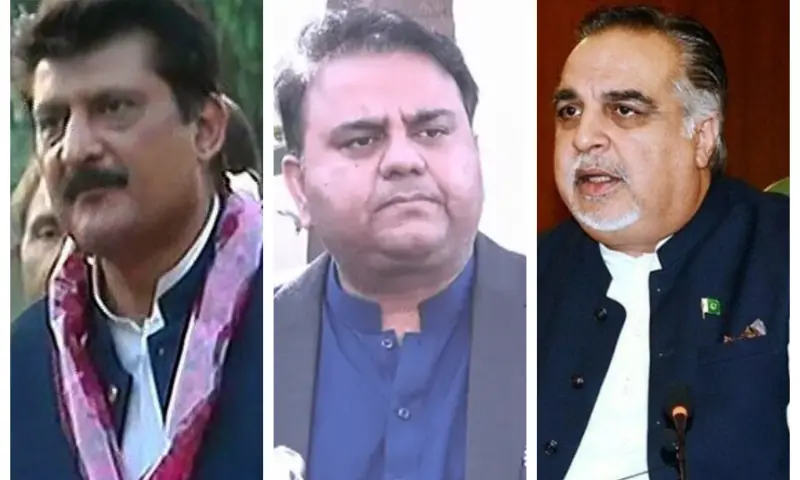
The initiative, organised under the auspices of the newly formed National Dialogue Committee, comes amid heightened tensions between the government and opposition, including the imprisonment of several prominent PTI figures. The committee, established by ex-PTI stalwarts including Fawad Chaudhry, Dr. Shahzad Waseem and the former Sindh governor Imran Ismail, seeks to assemble a broad coalition of political leaders, lawyers, intellectuals and technocrats from across the nation.
Invitations are set to be extended to major parties such as the ruling Pakistan Muslim League-Nawaz, the Pakistan Peoples Party, PTI itself, Jamiat Ulema-e-Islam-Fazl and Jamaat-e-Islami. Smaller groups, including the Muttahida Qaumi Movement-Pakistan, Pakistan Muslim League-Quaid, Balochistan Awami Party and Awami National Party, will also receive calls to participate, according to organisers cited in a report by the newspaper Dawn.
A special outreach is planned for the Tehreek Tahaffuz Ayeen-e-Pakistan, a movement focused on constitutional protections. Chaudhry, Ismail and Mahmood Moulvi, who spearheaded the committee’s formation, have already begun reaching out to political figures to secure their attendance. The conference’s stated goal is to “explore a way out of the political crisis and build harmony among national political parties,” the organizers said.
Chaudhry emphasised the urgency, declaring that bringing together “all schools of thought on national matters” was “the need of the hour” and that the objective was to forge consensus on pressing political issues. The move builds on earlier efforts by the group to jump-start negotiations. Last month, the committee formally petitioned Prime Minister Shehbaz Sharif, urging the parole release of several senior PTI leaders detained in Kot Lakhpat Jail in Lahore.
In a letter dated Dec. 23, the group hailed Sharif’s recent overture for talks with the opposition, particularly PTI, as a “golden opportunity” to stabilise Pakistan in the face of mounting political, economic and institutional challenges.
Notably, the correspondence avoided any reference to PTI’s founder, Imran Khan, who remains incarcerated in Adiala Jail following his ouster as prime minister in 2022 and subsequent convictions on charges his supporters claim are politically motivated. Instead, it zeroed in on facilitating the involvement of other key PTI figures held outside Adiala to kick off and maintain a credible dialogue.
The letter specifically requested parole for Shah Mahmood Qureshi, the party’s vice chairman and former foreign minister; Dr. Yasmin Rashid, a veteran politician and physician; Omar Sarfraz Cheema, a former Punjab governor; Mian Mehmoodur Rasheed, a senior party leader; and Ejaz Chaudhry, a former senator. Their participation, the committee argued, was vital to lend legitimacy and productivity to any talks. “Talks could only succeed if they began with tangible confidence-building measures,” the committee wrote, underscoring the need for concrete steps to bridge the trust gap that has widened since Khan’s removal and the ensuing crackdown on PTI.
Pakistan’s political landscape has been roiled by instability since the no-confidence vote that toppled Khan’s government nearly four years ago, leading to mass protests, arrests and a polarised electorate. The current coalition administration, led by Sharif’s PML-N, has faced accusations of suppressing dissent, while PTI has boycotted formal institutions and demanded fresh elections.
It remains unclear how the government or other invited parties will respond to the conference proposal. PTI’s internal fractures, including differences over talks with the government, add another layer of complexity to the effort. Still, the organisers expressed optimism that the gathering could serve as a step, potentially paving the way for broader reconciliation in a nation grappling with economic woes, including massive debt burdens, alongside security threats from militant groups.
Copyright © 2021 Independent Pakistan | All rights reserved