By Staff Reporter
ISLAMABAD: Pakistan’s most far-reaching reorganisation of its higher defence apparatus in nearly half a century took effect at midnight Thursday with the formal abolition of the chairman of the Joint Chiefs of Staff Committee, a position that had provided the navy and air force with institutional representation at the pinnacle of military decision-making since 1976.
The change, enacted through the 27th Amendment to the Constitution, came as the government had yet to formally notify the appointment of the country’s first chief of defence forces, the new apex position that will be held concurrently by the chief of army staff.
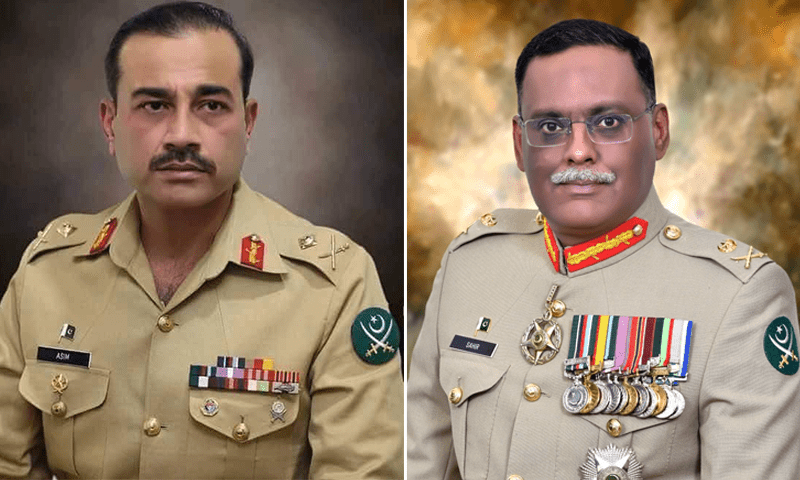
The timing coincided with the retirement of Gen. Sahir Shamshad Mirza, the 18th and final chairman of the Joint Chiefs of Staff Committee. With his departure, the coordinating post, long criticised for lacking genuine operational authority, was dissolved. Under the restructured framework, authority over joint operations, multi-domain planning and inter-service integration has been consolidated in the chief of defence forces, who will wear two hats as army chief. The arrangement effectively merges operational, administrative and strategic command in a single office.
Although no notification had been issued by Thursday evening, the incumbent army chief, Field Marshal Asim Munir, is certain to assume the new role. The appointment would reset his tenure to a fresh five-year term, with the possibility of an additional five-year extension, potentially keeping him in command until 2035.
The delay in the formal announcement was related to final administrative details. The overhaul also creates a new four-star billet, Commander of National Strategic Command, who will oversee unified strategic forces currently distributed across the three services. Appointments, reappointments and extensions for the strategic commander are tied exclusively to the recommendation of the chief of defence forces and are shielded from judicial oversight by a clause that legal experts have called extraordinary.
Parallel amendments to the Army Act, Navy Act and Air Force Act have eliminated references to the Joint Chiefs chairman, redefined internal hierarchies and expanded the army chief’s remit across joint and strategic domains. The National Command Authority Act, however, has not yet been updated to reflect the new structure. The future shape of the Joint Staff Headquarters, previously headed by the Joint Chiefs chairman, remains under discussion.
Speaking at a farewell ceremony at Joint Staff Headquarters on Nov. 26, General Mirza offered measured endorsement of the changes while bidding goodbye to the institution he led. “I extend my best wishes and prayers for all three services and in particular the tri-services headquarters, whatever form and demeanour it takes, for fulfilling the renewed responsibilities with dedication and commitment,” he said. “I see tri-services synergy, jointness and coordination as a compulsion rather than a choice, with much-needed organisational reform to meet these futuristic challenges.”
Proponents of the restructuring argue that the previous higher defence organisation had become anachronistic in an era of warfare that spans cyber, space, information operations and unmanned systems. They contend that removing overlapping layers and empowering a single strategic integrator will improve efficiency and responsiveness. Critics, among them retired service chiefs and defence analysts, counter that the new model concentrates unprecedented power in one office at the precise moment when maritime competition in the Indian Ocean, evolving airspace threats and rapid technological change demand greater, not lesser, prominence for the navy and air force.
The amendments to Article 243, which governs the command of the armed forces, were passed by both houses of Parliament on Nov. 13 and signed into law by President Asif Ali Zardari the same day. With General Mirza’s retirement and the midnight activation of the constitutional changes, Pakistan has entered a new chapter in civil-military relations and military command — one that places the army chief, already the country’s most powerful unelected figure, at the undisputed apex of defence decision-making.
Copyright © 2021 Independent Pakistan | All rights reserved