They clocked faster economic growth in the past and achieved a higher level of development, but their development cost the planet dearly in terms of pollution and environmental degradation.
By Naveed Naqvi.
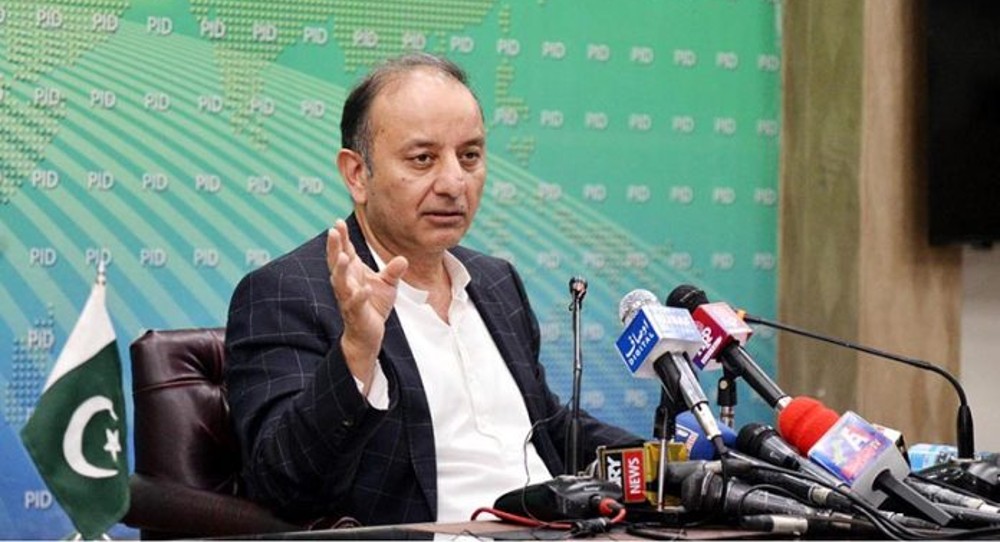
ISLAMABAD: The less-developed economies contributed little to the planetary pollution, but they are being made to pay for the worsening climate and left to fend for themselves, Pakistan’s energy minister Dr Musadik Malik said Monday.
He was delivering his keynote address at the launch of the fourth Asian Infrastructure Investment (AIIF) Report, “Moonshot s for the Emerging World: Transforming State Capacity and Mobilizing Private Sector Toward Net Zero” by the Asian Infrastructure Investment Bank (AIIB) in collaboration with the Pakistan Institute of Development Economics (PIDE).
Malik said we cannot simply start counting carbon emissions from today and start asking every economy to decarbonise at the same rate, irrespective of its level of development.
“We understand that the contributions toward net-zero transition have to come from each and every economy, since we are in it together, but there should also be a realisation that this transition [has to] be just”, he said.
A leader of Prime Minister Shehbaz Sharif’s Pakistan Muslim League – Nawaz (PML-N), Malik said some economies in the world achieved faster economic growth in the past and achieved higher level of development, but it came at a higher cost, in terms of polluting the world and environmental degradation.
“As a result of higher economic growth, the benefits were mostly reaped by the developed economies today”, he said. “But the costs, in terms of environmental degradation and climate change, was borne by the whole planet.
“The economies left behind did not add much to the pollution, but they have been adversely affected by the worsening climate and left on their own to fend for themselves.”
Earlier, in his opening address, PIDE Vice Chancellor Dr Nadeem ul Haque welcomed the chief guest, before the AIIB’s Chief Economist Erik Berglöfshared delivered a presentation on the key findings of the report.
The report cogently argues for the acceleration and scaling up of the state capacity and the collective global effort needed to accelerate the net zero transition. Its key findings and points of the are substantiated through insight and data.
It shows how, through innovative and technology adoption frameworks, public-private partnerships (PPPs) can work together with state-owned enterprises and financial institutions (SOEs and SOFIs) to bring about moonshots – inspirational, once-in-a-generation breakthrough projects – that can decarbonise emerging world economies, giving renewed momentum to their development and growth.
And it underlines why global MDBs – through a combination of capital, convening power and investment in green innovation – are so vital to enabling wider institutional reform.
Copyright © 2021 Independent Pakistan | All rights reserved