By Staff Reporter
PESHAWAR: Armed assailants kidnapped three anti-polio vaccinators in a restive district of northwestern Pakistan on Monday, the latest violent blow to the country’s beleaguered efforts to eradicate the paralyzing disease, even as officials reported two new cases that pushed the national total for the year to 26.
The abduction unfolded in the jurisdiction of the Mulazai police station in Tank district, a volatile area in Khyber Pakhtunkhwa province bordering Afghanistan, where unidentified gunmen intercepted a health team and dragged the workers into nearby hills, police said. The incident came hours after provincial authorities kicked off a fresh vaccination drive targeting high-risk zones, underscoring the perilous conditions facing those on the front lines of Pakistan’s long war against polio.
Muhammad Ibrahim, a district police spokesman, identified the abducted officials as Abdullah Kundi, Hikmatullah and District Surveillance Officer Dr. Ihsan. “A heavy police contingent has been dispatched to the area to launch a search and strike operation to recover kidnapped officials,” Ibrahim told reporters.
Amjad Ali, a provincial spokesman for the polio eradication program, confirmed the snatch, saying district authorities had informed his office that the three employees, who were monitoring the ongoing campaign, had been taken. “We have been told by district authorities regarding the kidnapping of our employees who were monitoring the ongoing polio campaign,” Ali said.
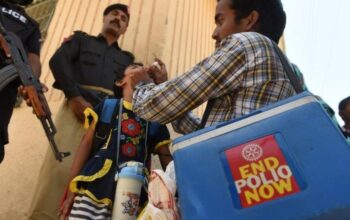
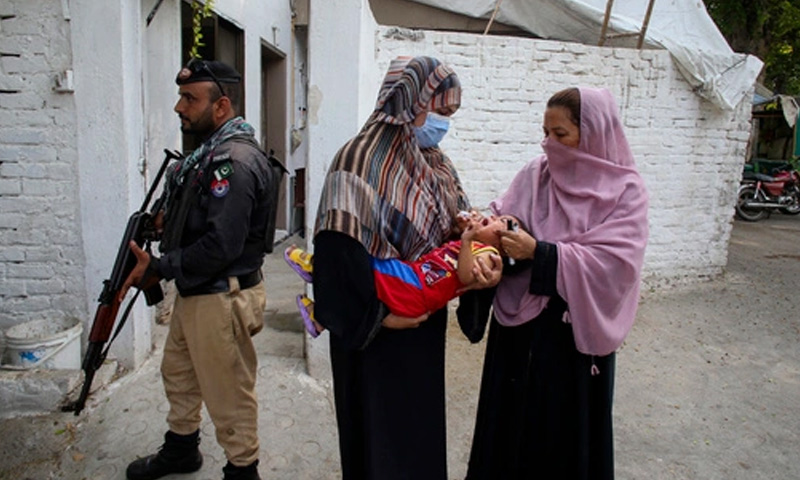
The attack highlights the deadly risks endured by vaccination teams in Pakistan, where militant groups have long targeted health workers, accusing them of espionage or spreading Western agendas. The country and neighboring Afghanistan are the world’s last polio-endemic nations, and Islamabad’s push to stamp out the virus has been repeatedly derailed by parental refusals, rampant misinformation and assaults on personnel. In remote, militant-plagued regions, teams often move under armed escort, yet even security forces have fallen victim to ambushes.
Pakistan’s polio program announced the new infections later on Monday, both in young girls from Khyber Pakhtunkhwa: one in North Waziristan district and the other in Lakki Marwat. “These new detections bring the total number of polio cases in Pakistan in 2025 to 26: 18 from Khyber Pakhtunkhwa, six from Sindh, and one each from Punjab and Gilgit-Baltistan,” the program said in a statement.
The tally marks a grim escalation from last year, when Pakistan logged 74 cases, a steep jump from just six in 2023 and one in 2021. Khyber Pakhtunkhwa, which shares a porous frontier with Afghanistan, has borne the brunt, with 18 infections this year alone. The province has also seen a surge in militant violence since late 2022, when a fragile truce with the Pakistani Taliban, or Tehreek-e-Taliban Pakistan (TTP), collapsed. The group has since unleashed some of the deadliest strikes against police and troops, particularly in districts such as Lakki Marwat, Bannu, the Waziristans and Dir — all now in the crosshairs of the current vaccination push.
That effort aims to reach about 1.29 million children in seven high-risk districts: Bannu, Lakki Marwat, Dera Ismail Khan, Tank, Lower South Waziristan, Upper South Waziristan and Upper Dir. It will extend through Sept. 18, with additional doses planned for select areas of Bajaur and Swat districts.
“For this phase of the campaign, 8,928 trained polio worker teams have been formed,” Ali said in a prior statement. He noted that nearly 11,000 security personnel had been deployed to safeguard the teams. “Polio drops will also be administered in selected areas of Bajaur and Swat districts.”
Such drives form the backbone of Pakistan’s strategy, which relies on repeated oral doses and routine shots to halt transmission of the wild poliovirus. Last week, the country reported vaccinating more than 19 million children in a nationwide push — part of a broader bid by Islamabad to contain an outbreak that threatens to reverse years of progress.
Yet challenges persist. In August, Pakistan’s surveillance network tested 126 environmental samples from 87 districts. Of those, 75 came back negative, while 51 showed traces of the virus. Sindh led with 24 positives, followed by Punjab with 14, Khyber Pakhtunkhwa with 10, and one apiece in Balochistan, Gilgit-Baltistan and the capital, Islamabad. On a brighter note, Balochistan’s positives plummeted from 19 in January to just one last month, according to the regional lab.
Copyright © 2021 Independent Pakistan | All rights reserved