By Staff Reporter
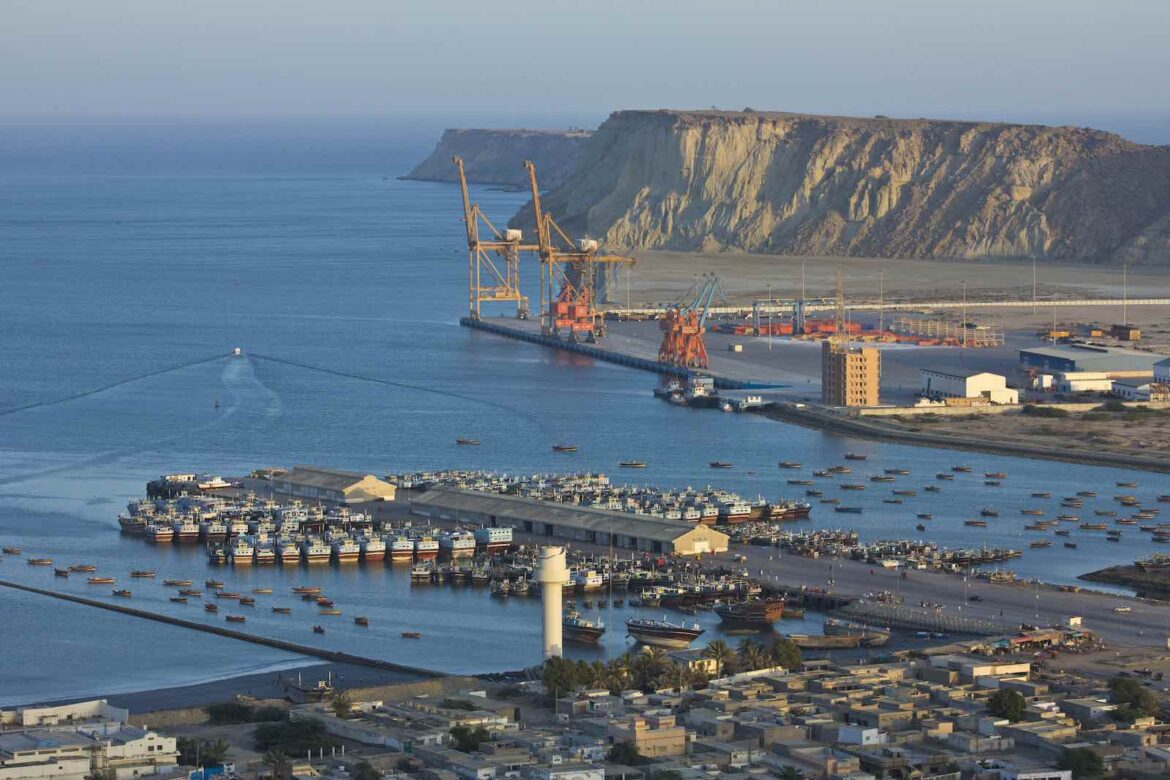
KARACHI: Gwadar Port, the Chinese-backed deep-water facility on Pakistan’s southwestern coast, carried out its first commercial ship refuelling operation this week, a step toward the kind of marine-services business that port operators use to draw revenue beyond cargo handling.
The three-day operation, conducted July 9 to 11, supplied 2,500 metric tons of very low sulphur fuel oil to the liquefied natural gas carrier Enugu, a 285.4-meter vessel jointly owned by QatarEnergy, Abu Dhabi National Oil Co. and commodity trader Vitol. The fuel was delivered by the bunker barge Marine Ista.
The Gwadar Port Authority coordinated the operation with Pakistan’s National Logistics Cell, Gwadar International Terminals Ltd. and Vitol Asia, the trading house’s regional arm. Pakistan Customs and local shipping agent Pak Traders Gwadar also took part, overseeing the regulatory and logistical steps needed to clear the fuel transfer.
Bunkering — the marine-industry term for refuelling ships, typically while they’re berthed or at anchor — has become a target market for ports seeking to capture more of the revenue generated by vessels passing through their waters, rather than relying solely on fees for loading and unloading cargo. Establishing that capability requires fuel supply, storage and coordination among port, customs and logistics operators, along with the marine expertise to carry out a transfer without disrupting other port activity.
For Gwadar, the operation marks a shift from a facility built primarily to handle cargo into a broader entrant into the marine-fuel market. It gives the port a service to offer vessels transiting the Arabian Sea, a route that carries substantial global oil-tanker traffic given the region’s proximity to Gulf energy exporters.
The port sits near some of the world’s busiest oil-shipping lanes, roughly 380 kilometers from Oman and close to routes linking Gulf producers to Asian markets. That geography has underpinned the port’s role in the China-Pakistan Economic Corridor, the roughly $62 billion infrastructure and energy program that has anchored Beijing’s investment in Pakistan since 2013.
Port authorities said the operation formally launches commercial bunkering services at Gwadar and that they expect additional international vessels to use the facility for refuelling. Officials have pointed to the potential for the service to generate foreign-exchange earnings and support local employment, though the port has yet to disclose projected volumes or a timeline for scaling up the offering.
Gwadar became operational in November 2016 under a 40-year concession agreement with Singapore’s PSA International, which took over the port after China Overseas Port Holding Co. had earlier led its development. The facility has since expanded gradually, including the launch of Afghan transit trade in 2020, but has fallen short of the throughput levels initially envisioned when CPEC was launched, weighed down by security concerns in Balochistan province and delays in completing supporting infrastructure.
The refueling operation adds a new revenue line to a port that Pakistani and Chinese officials have long promoted as a future hub linking western China and Central Asia to Indian Ocean shipping routes. Whether Gwadar can attract sustained bunkering demand will likely depend on pricing, fuel availability and how it competes with established regional refueling ports such as Fujairah in the United Arab Emirates and Salalah in Oman, which are far larger and already handle high volumes of comparable traffic.
Copyright © 2021 Independent Pakistan | All rights reserved