By Staff Reporter
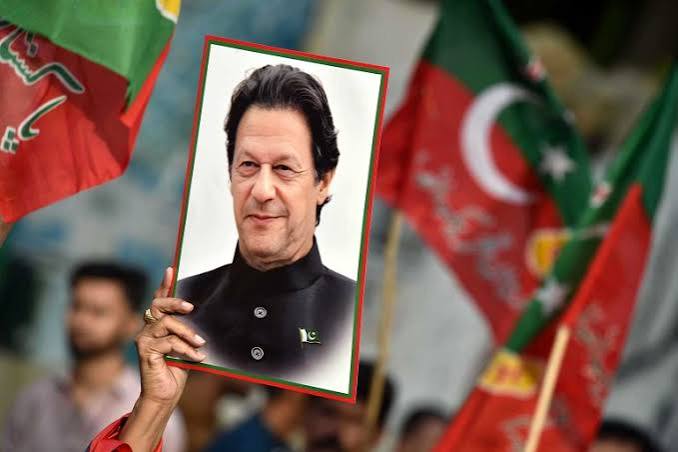
ISLAMABAD: Imran Khan’s Pakistan Tehreek-e-Insaf (PTI) has denied that it is divided and warned that it will take action against any member who breaches party discipline.
The warning came in a statement on Monday from the party’s political committee, which met to discuss the imprisonment of Khan and his family, the arrest of party leaders and workers, and the position of senior figures in Khyber Pakhtunkhwa (KP).
“There is no grouping or division in the party,” the committee said in a statement posted on X. “The entire party is united with Imran Khan’s leadership, his ideology and his mission. Putting aside political differences, all party leaders and workers will continue to struggle for common goals.”
Calling it “extremely essential” to maintain discipline in a “difficult political situation”, the committee said action would be taken “under uniform principles” against anyone who violated the party’s established policy. It added that “irresponsible statements” departing from the PTI’s platform would not be overlooked.
The committee also said parliamentarians and the party’s parliamentary group should be fully involved in consultations, and that their suggestions and reservations would be “given special importance”. It said the party’s future strategy would be finalised “at the earliest” and presented to workers and the public.
The statement follows reports of disagreement within the party over how to handle its current troubles. There were also rumours that a group of KP provincial lawmakers had endorsed Ali Amin Gandapur as acting provincial president in the absence of Junaid Akbar. The PTI later said Akbar remained its KP president and named Senator Noorul Haq Qadri to carry out his duties.
Last week, several party leaders questioned its decisions and its heavy reliance on Sohail Afridi, the KP chief minister, whose role has been non-functional since governor’s rule was imposed in the province.
The federal government imposed the emergency and governor’s rule on 11 October, citing the PTI-led provincial government’s “deliberate disengagement” from the fight against terrorism. Federal ministers went further and accused the party of supporting terrorists, a charge the PTI strongly denies. The law minister said the arrangement would initially last six months, and it followed the collapse of talks between the government and the PTI over a planned march on Islamabad to demand Khan’s release.
The infighting spilled into public view on Monday. PTI chairman Barrister Gohar Ali Khan, speaking to reporters in Peshawar, rejected claims by party leader Barrister Muhammad Ali Saif that PTI leaders had failed to meet Khan despite being offered the chance.
“We made every possible effort to meet the PTI founder through the courts and negotiations, but despite all our efforts, we were not allowed even a single meeting,” Gohar said, adding that access to Khan had been one of the party’s conditions in negotiations. “All of Barrister Saif’s claims are false. I reject them.”
Saif, in an interview on a local television channel, had said that Allama Raja Nasir Abbas was in direct contact with important figures in the establishment, although he maintained that those contacts were not aimed at securing Khan’s release.
Separately, PTI secretary general Salman Akram Raja said the party would take no decision on the proposed 28th Constitutional Amendment without a meeting with Khan. He also said he could not exercise control over the party’s social media. That stance sits uneasily with reports last week, attributed to sources, that the party’s parliamentary group had agreed to support the amendment conditionally if Khan was released, and had formed a six-member committee, headed by Mahmood Khan Achakzai and Mr Abbas, to negotiate over access to him and his medical care.
On the detentions in KP, the political committee demanded the release of Mr Afridi, provincial assembly speaker Babar Saleem Swati and other lawmakers held since the emergency was imposed. Governor Faisal Karim Kundi has said Afridi and Swati were placed under house arrest.
“Keeping elected public representatives in custody is an insult to democratic values and the public mandate,” the committee said.
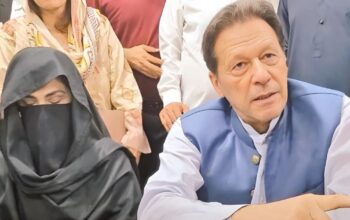
It also voiced concern over reports that Khan and his wife, Bushra Bibi, had been moved to hospital without the family being “taken into confidence”. “Not informing [their] families in a timely manner is contrary to fundamental human rights and legal requirements,” the statement said. The committee demanded that the Supreme Court’s orders on Khan’s medical treatment be implemented “immediately and fully”, that his family be regularly informed about his health, and that meetings be arranged. It sought similar medical facilities and family access for Ms Bibi.
Khan was taken from Adiala jail to Shifa International Hospital in Islamabad in August under a Supreme Court order, and was back in his cell within hours.
The committee further demanded the immediate release of Khan’s three sisters, Aleema Khan, Noreen Niazi and Uzma Khan, who have been held since late September under the Maintenance of Public Order Ordinance (MPO), and said they should be allowed to visit their brother. “Depriving the family of their basic right to inquire about their loved one’s well-being and to meet them is unacceptable,” it said.
It also expressed “serious” reservations over the arrests of party leaders and workers, including MNA Adil Bazai, particularly under the MPO, and urged that no one be “targeted for revenge on the basis of political differences”. It condemned as “reprehensible” alleged raids on the homes of former opposition leader Omar Ayub Khan, Sher Ali Arbab, Shah Ahad and other party figures.
On security, the committee called terrorism a “national scourge” requiring “effective and serious measures”, and said protecting lives and property was the state’s primary responsibility. But it insisted that “actions against terrorism should not be used for political vendettas”.
The committee turned to the economy, voicing concern over rising inflation, petroleum prices and “heavy” electricity bills. Short-term inflation rose to 11.32 per cent year on year in the week ending 29 October, while consumer price inflation eased to 9.6 per cent in October from 10.3 per cent in September. Higher fuel prices, driven by tensions in the Middle East, have added to the pressure.
“Government policies have made the life of the common man unbearable,” the statement said. It also highlighted the market price of liquefied petroleum gas, which it said was selling at up to Rs700 per kilogramme against an official price of Rs238, and called on the authorities to act against profiteering, calling the gap a “grave injustice”.
“It is the government’s responsibility to free the people from inflation, not to make it difficult for them even to secure two meals a day,” the statement said.
Copyright © 2021 Independent Pakistan | All rights reserved