By Staff Reporter
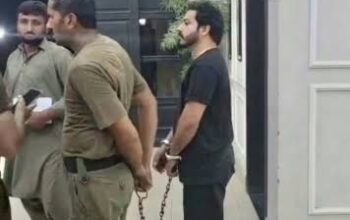
ISLAMABAD: Pakistani security officials said on Monday that Indian authorities are preparing a false-flag operation against Pakistan that would press innocent Pakistani detainees held in Indian prisons — including Kashmiris who crossed the border inadvertently — into service as unwitting participants in a staged border provocation.
The officials described a plan in which hundreds of Pakistanis now in Indian custody would be removed from jails, assembled by the Indian army and deployed along the border in an incident designed to be blamed on Islamabad. Indian prisoners held in the same facilities might be enlisted alongside the Pakistanis to make the operation appear more authentic, the officials said.
The detainees are civilians who crossed the Line of Control, the defector border between the disputed Himalayan region, by mistake rather than as militants. They are expected to be used “soon” in “this outdated and worn-out drama,” the officials added.
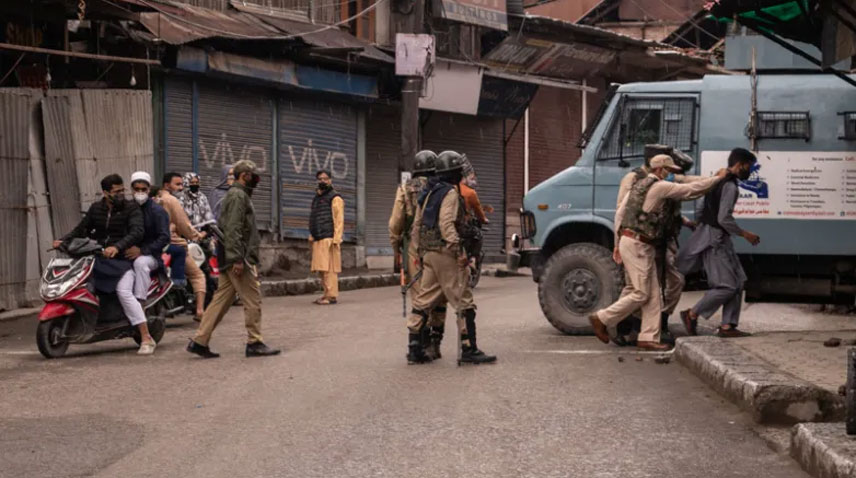
The revelations emerged after Pakistani intelligence agencies had decoded Indian communications outlining plans to free the Pakistani prisoners and move them toward border areas in Indian Illegally Occupied Jammu and Kashmir. There, the officials said, the detainees would be used to stage an incident that could be attributed to Pakistan and used to justify military escalation along the frontier, potentially drawing Pakistani forces into engagement on the eastern border.
The goal, they said, would be to generate headlines that India’s pro-government news outlets and External Affairs Minister Subrahmanyam Jaishankar could then use to pressure Pakistan and divert attention from New Delhi’s recent diplomatic setbacks, including Pakistan’s expanding role in regional mediation efforts.
The officials pointed specifically to India’s intelligence agency, RAW, and a “deeply frustrated” Jaishankar as the alleged architects of the scheme. “The operation is an attempt to mask setbacks, including Pakistan’s growing role in regional mediation efforts, and to revive a narrative that has lost credibility abroad.”
Pakistan has long maintained that India has yet to produce publicly convincing evidence tying Islamabad to earlier incidents, including the February 2019 Pulwama attack that killed more than 40 Indian paramilitary police and a more recent episode in Pahalgam. Even a year after the Pahalgam violence, New Delhi has failed to identify perpetrators or demonstrate any Pakistani link. The latest alleged plot, officials said, represented yet another iteration of a tactic the world has grown weary of seeing.
The officials warned that any attempt to parade the detainees before cameras or stage a media-friendly “encounter” would collapse under international scrutiny, just as previous efforts had. They described the entire approach as repetitive and lacking fresh credibility.
Tensions between the nuclear-armed neighbours have flared repeatedly in recent years. On Feb. 14, 2019, the Pulwama attack triggered a cycle of airstrikes and aerial combat. India launched what it described as strikes on a militant camp in Balakot, inside Pakistan; Pakistan responded by downing an Indian aircraft and capturing pilot Abhinandan Varthaman, who was later returned to India. A similar sequence unfolded last May following an attack on tourists in Pahalgam in occupied Kashmir. India, without presenting evidence, blamed Pakistan for the assault that killed 26 tourists and responded with missile strikes inside Pakistan, which Islamabad said caused civilian and military casualties. Pakistan denied any role and called for a neutral investigation. The ensuing four-day escalation included tit-for-tat strikes on airbases and other military sites before the United States brokered a ceasefire on May 10.
In recent weeks, Islamabad has positioned itself as a key mediator in the ongoing crisis between the United States, Israel and Iran. Chief of Army Staff and Chief of Defence Forces Field Marshal Asim Munir held a telephonic conversation with President Donald Trump, a contact confirmed by the White House. Senior Pakistani officials have reportedly facilitated back-channel communications between Tehran and key U.S. interlocutors, including Steve Witkoff and Jared Kushner. Reports have also suggested Islamabad could host a high-level meeting between the United States and Iran later this week, potentially with Vice President JD Vance in attendance.
Jaishankar came under criticism in India after remarks at an all-party meeting convened to discuss the West Asia crisis. He dismissed Pakistan’s mediation efforts, saying there was “nothing new” in them because Pakistan had been “used” by the United States since 1981 and that India did not view itself as a “dalaal,” or broker, like Pakistan. Defence Minister Khawaja Asif castigated the Indian foreign minister, saying Jaishankar thought of himself as “a hi-fi dalal” and that the remarks “reflect personal frustration.”
The Pakistani security officials cautioned that India’s latest alleged manoeuvre fit a pattern of behaviour that has repeatedly failed to persuade international audiences. They noted that even after the 2019 and 2025 episodes, New Delhi had not produced evidence sufficient to sustain its accusations. Any new provocation staged with the detainees, they warned, would meet the same fate once subjected to outside examination.
Copyright © 2021 Independent Pakistan | All rights reserved