By Staff Reporter
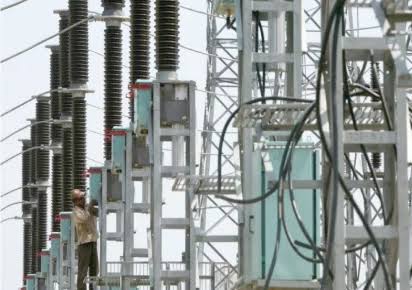
ISLAMABAD: Industrial consumers objected at a public hearing in Islamabad on Tuesday to a request by the country’s 11 state-owned power distributors to recover about Rs23.3 billion through a quarterly tariff adjustment, which the government estimates would add around Rs1.30 a unit to bills for three months.
The distribution companies, known as Discos, say higher capacity payments, variable operation and maintenance costs and the effect of system losses pushed up their costs in July-September. The Power Division asked the National Electric Power Regulatory Authority to apply the charge from December 1 billing through February 2027. Naveed Qaisar, chief financial officer of the Power Planning and Monitoring Company, made the request. Nepra has reserved its decision.
The panel was led by Nepra members Amina Ahmed, Maqsood Anwar Khan and Ghulamullah Shaikh. Under a federal policy of uniform quarterly adjustments, whatever Nepra approves will also be charged to K-Electric Ltd. customers in Karachi.
Two industrial representatives, Amir Shaikh of Lahore and Rehan Javed of Karachi, took issue with the petition’s building blocks. They questioned Rs39 billion in extra capacity-payment claims for the quarter against references already built into the base tariff, along with Rs5.6 billion for variable O&M and Rs7.8 billion for system losses in monthly fuel charges.
At the center of the dispute is the incremental consumption package, a discounted-rate scheme for industrial and agricultural users who buy more power than a benchmark period. The package, approved for three years, offers power at Rs22.98 a unit, roughly Rs11 below the standard rate, to revive flagging demand. Under the rules Nepra set, quarterly adjustments are not supposed to be charged on units billed under the scheme, and the government has said other consumers would not bear its cost.
Shaikh said the quarterly adjustment normally turns negative when fuel-cost adjustments run above what consumers are charged in the relevant months. This time, he said, industry is facing positive fuel adjustments through the quarter followed by a positive quarterly adjustment, even though factories had planned around a lower one.
He attributed the increase largely to incremental units sold at a price Rs10 below regular tariffs, a cost he said ends up in the adjustment paid by all consumers. “This is like rubbing salt into our wounds. It is shocking that the QTA has gone up,” he said.
Javed went after the Discos’ accounting. The companies claimed a negative impact of Rs29.25 billion from the package on industrial consumers, a figure netted against their other claims. He said that is not relief but a cost shifted onto other users. “The ‘relief’ shown (the ICP of Rs29.25bn) is not relief received; it hides a cost other consumers pay,” he said. He argued that no Nepra decision covers this, and that all consumers are being made to cover a gap of Rs15 a unit.
Javed also alleged that the Discos counted the wrong units and measured sales against fiscal 2023-24 rather than the references set for this year under the notified tariff. He noted that every Disco was claiming sales above the reference, which should have lowered capacity costs per unit. “Why, then, is the capacity claim going up? Is the benefit of the higher sales being lost because of ICP units?” he asked.
A series of questions he raised about the Discos’ data went unanswered, and Nepra did not press for responses. Javed asked that the incremental-units amount be deferred until the Discos file the full data requested in March and September 2026.
Across the 11 companies, capacity charges for July-September rose by Rs39 billion, a figure that also includes the impact of system losses on monthly fuel costs and variable O&M. Seven Discos sought about Rs37 billion in additional recovery. Four others reported negative adjustments totaling Rs13 billion, which offset part of the claims.
Islamabad Electric made the largest claim at Rs10.833 billion, followed by Faisalabad at Rs10.46 billion and Peshawar Electric at Rs7 billion. Tribal Electric posted the biggest negative adjustment at Rs5.8 billion, ahead of Quetta at Rs4.1 billion and Hyderabad Electric at Rs1.95 billion.
Under the tariff mechanism, fuel-cost changes pass to consumers monthly through an automatic adjustment. Quarterly adjustments cover variations in power purchase price, capacity charges, variable O&M, use-of-system charges and the impact of transmission and distribution losses.
Consumers are already paying more. Nepra notified a positive quarterly adjustment of Rs0.5194 a unit for April-June, adding about Rs12.7 billion and billed from September through November. The July fuel adjustment of Rs2.0581 a unit appeared on September bills. In that decision Nepra also directed the Discos to file adjustment requests immediately after each quarter closes, so the July-September claim, heard in mid-November, is arriving later than the regulator wants.
Copyright © 2021 Independent Pakistan | All rights reserved