By Staff Reporter
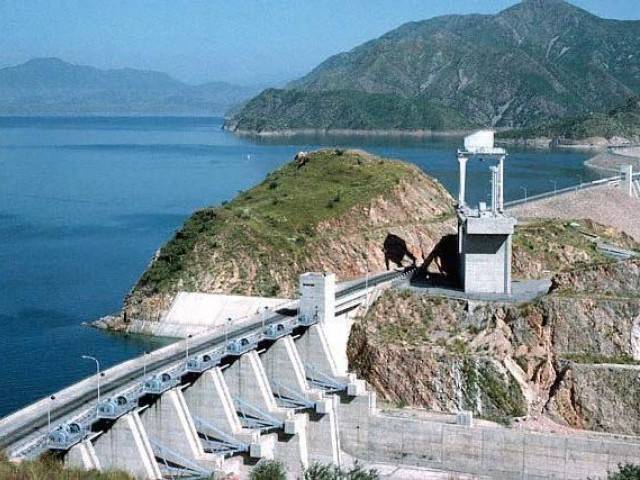
ISLAMABAD: A government-appointed inquiry has concluded that a contractor, its consultant, and the state authority overseeing a major Pakistani hydropower project all bear responsibility for the collapse of a cofferdam last year, an incident that has added more than two years to the project’s timeline and driven its cost up by nearly 285 percent, according to a report published by Dawn newspaper on Monday.
The three-member panel found that the failure at the 1,530-megawatt Tarbela-5 Extension Hydropower Project traced back to a design change the contractor proposed after the contract was already signed — a change that was neither permitted under the terms of the agreement nor properly vetted by the engineering firm responsible for reviewing it, and that the dam authority ultimately approved without questioning whether it was allowed in the first place.
The project’s cost has climbed from an original estimate of 82 billion Pakistani rupees, roughly $290 million, to 317 billion rupees, or about $1.1 billion, since it was approved in 2017. Pakistan’s Planning Commission has warned that the increase could push the price of electricity generated by the plant to as much as 27 to 28 rupees per unit over a 30-year period — the highest levelized cost of any renewable energy project in the country’s history, and one that planners say could render the facility economically unworkable.
The project is financed in part by $700 million in loans from the World Bank and the Asian Infrastructure Investment Bank. It had been scheduled for completion in 2026. It is now targeted for June 2028.
A chain of unchallenged decisions
The inquiry, led by Ather Hameed, chairman of the Federal Flood Commission and the Pakistani government’s chief engineering adviser, examined the collapse of the cofferdam — a temporary barrier built to keep water out of a construction site — in August 2025. Hameed was joined on the panel by a director of monitoring and a contract management specialist from the Ministry of Water Resources.
Their 15-page report, reviewed by Dawn, described a breakdown that implicated all three parties responsible for the project’s execution.
The panel’s central finding was unambiguous: the collapse was not a product of flooding, as some had initially suggested, but the direct result of switching the cofferdam’s design from reinforced, roller-compacted concrete to a weaker rock-fill structure, compounded by lax supervision and administrative delays that together produced a structural failure, months of lost construction time, and mounting financial losses.
The contractor — a joint venture that included Power Construction Corporation of China, along with the firms HEI and HEM — put forward the design change even though the contract did not permit it. The consultant, a joint venture involving the British firm Mott MacDonald and MM Pakistan-BIDR China, accepted the altered design on a conditional basis without confirming that it met technical requirements. And Wapda, the Water and Power Development Authority, signed off on the change as construction was nearing completion, without examining whether it was contractually valid or technically sound.
The report was blunt in assigning blame. It found that the parties involved had overlooked and ignored the obligations laid out in their own contracts — both for the civil works and for the consultancy services — and that the result was a cofferdam vulnerable to failure. When it gave way, the collapse triggered flooding, construction delays, and financial losses across the project.
Investigators also pushed back on early explanations for the disaster. Wapda had pointed to flooding as a cause, but the inquiry team found that water flows at the time were within Tarbela’s typical annual range and were not unusual enough to explain the failure. The original design, they concluded, should have accounted for those conditions. Instead, the panel pointed to inadequate protective layers and filter systems in the rebuilt structure.
How the design was changed
According to the report, the redesign originated with the contractor, which proposed replacing the original structure with a rock-filled cofferdam — a weaker configuration — across the entire project area, including the channel that ultimately failed.
Wapda’s approval of that change came without any apparent scrutiny of whether it was permitted under the contract, the inquiry found.
The report also raises questions about oversight after the fact. Wapda requested a performance report on the cofferdam from its consultant in July 2023. Rather than conducting an independent assessment, the consultant forwarded that request to the contractor. The contractor did not respond for more than a year, ultimately submitting a monitoring report in October 2024.
Separately, the inquiry identified irregular payments made for temporary construction work rather than permanent work, a distinction the report says compromised the government’s ability to seek compensation from the contractor once the collapse occurred.
Fallout for the project
The consequences have rippled through the project’s management as well as its budget. Wapda has since terminated its consultancy contract with the Mott MacDonald-led joint venture, citing the firm’s failure to provide a qualified project manager and persistent staffing problems throughout its tenure on the project.
The consultant, for its part, issued its own termination notice in May 2025 and withdrew its staff from the site — a move the inquiry noted came without the 30 days’ notice required under the consultancy contract.
Taken together, the findings offer a rare, detailed look inside how one of Pakistan’s largest infrastructure projects — backed by hundreds of millions of dollars in foreign financing — was designed, contracted, and overseen, and how a single unauthorized change was able to move through three layers of review without being stopped.
Copyright © 2021 Independent Pakistan | All rights reserved