By Staff Reporter
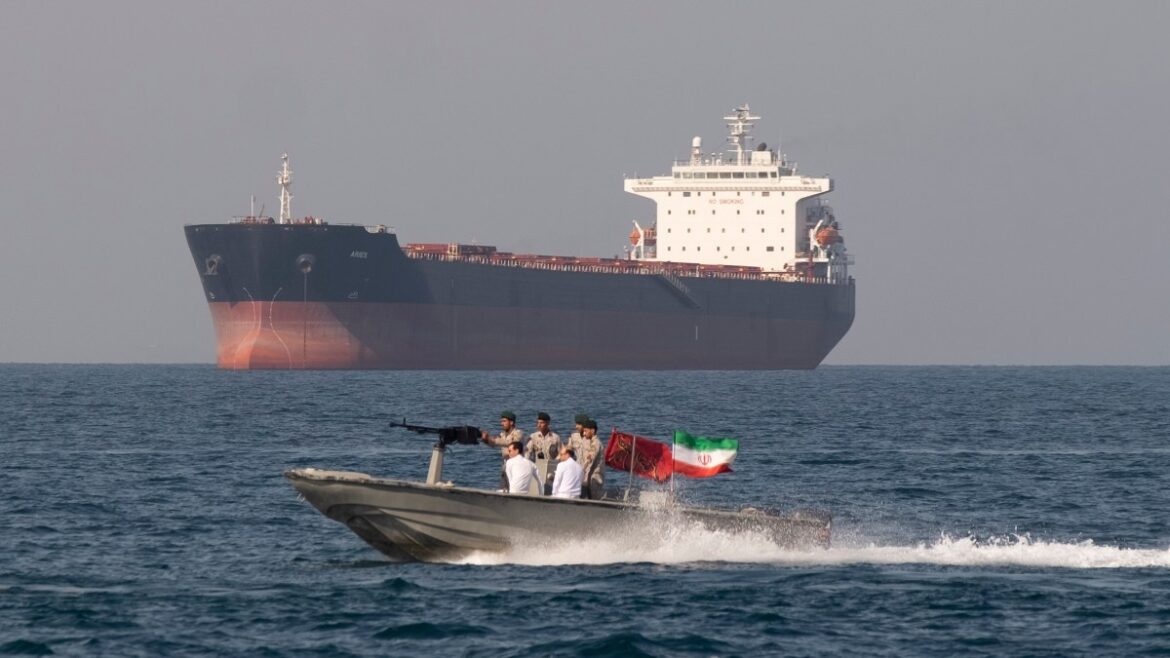
ISLAMABAD: Iran announced on Saturday that it was once again closing the Strait of Hormuz to maritime traffic, citing Israel’s relentless bombardment of southern Lebanon as a violation of the memorandum of understanding signed with the United States only days ago.
The move, which threatens to unravel the most significant diplomatic accommodation reached in the region in years, came as the death toll from Israeli strikes across Lebanon climbed to at least 32 people killed since dawn — including a family struck inside their home while sheltering in the Bekaa Valley, and at least seven people killed in a single strike in the Sidon district.
Iran’s central military command announced that the Strait of Hormuz would be closed to vessel traffic, describing the decision as a “first step” in response to the enemy’s breach of promise, and warning that “if the aggression continues, further steps will be planned and taken to force the enemy to comply with its obligations.”
The IRGC’s Khatam al-Anbiya Central Headquarters, which controls the waterway, framed the closure explicitly as a consequence of Israel’s continued military operations in Lebanon — operations that Tehran insists the United States is obligated, under the terms of the MOU, to bring to an end.
Iran’s foreign ministry made the same argument in sharper terms. Spokesperson Esmaeil Baghaei said Iran was sending its delegation to Switzerland not to negotiate but to demand. “In Switzerland, we intend to press for the fulfilment of the other side’s commitments and clarify how they plan to act on their obligations,” he was quoted as saying by the semi-official Fars news agency. He added that Iran had adhered to its side of the agreement and that the United States was “obligated to compel the Zionist regime to cease its attacks on Lebanon.” His warning was unambiguous: “If part of the counterpart’s commitments is not implemented, the entirety of the agreement will be jeopardised. The counterpart must take the necessary measures as soon as possible; otherwise, the entirety of the agreement will be jeopardised.”
The White House pushed back. US Vice President JD Vance told Fox News on Saturday that there was “no evidence” that Iran was closing the Strait of Hormuz, despite the statements from Iranian state media and the IRGC. Vance added that he expected to reschedule his trip to Switzerland “within the next couple of days,” describing the diplomatic coordination as “always a delicate dance,” and noting that envoys Steve Witkoff and Jared Kushner, the president’s son-in-law, were already in place there.
The divergence between Washington and Tehran over the very meaning and status of their own agreement — signed at the Palace of Versailles just days ago — underscored the fragility of an arrangement that many had already regarded with deep scepticism.
The killing goes on
Israeli strikes have killed at least 32 people in Lebanon since dawn, threatening to derail talks between the United States and Iran aimed at cementing the fragile peace deal.
In Sohmor in the western Bekaa Valley, the NNA reported that an Israeli strike hit a house with a family inside, killing four people and injuring one. A child remained under the rubble as rescue teams worked to extract him. In the Sidon district, an Israeli strike on Qanarit killed at least seven people and wounded 13 others, according to Lebanon’s Health Emergency Operations Centre.
These strikes followed a night of bombardment that was already among the deadliest of the conflict’s Lebanese chapter. Lebanon’s civil defence agency had earlier reported transporting 16 dead and 12 wounded to hospital, working since the early morning hours across the Nabatieh district. In the Tyre district, a strike on a residential building in the village of Barish killed an entire family — a father, mother and their two children. A Lebanese soldier was also killed near the village of Kfar Reman.
Israeli warplanes and drones struck Nabatieh and its outskirts before dawn, destroying residential buildings. Artillery shelled the city centre. The towns of Upper Nabatieh, Nmeiriyeh, Choukin, Habboosh, Kfarjouz, Zibdin, Sajd and Mahmoudiyeh were all hit. In Arabsalim, at least one person was killed and seven remained missing under the rubble after a two-wave airstrike. A separate strike on a motorcycle at the eastern entrance to Deir al-Zahrani killed another person.
The Israeli military said overnight it had struck more than 80 Hezbollah command centres, launch positions and infrastructure sites, calling the assault a response to “repeated, ongoing, and blatant violations of the ceasefire” by Hezbollah. Hezbollah acknowledged targeting Israeli tanks, saying its strikes came after Israeli forces attempted to advance on the northern side of the Ali al-Taher hilltop, a strategic point overlooking Nabatieh.
The Lebanese army said in a statement that the continuation of Israeli attacks aimed to obstruct efforts to restore stability in the country. Lebanese President Joseph Aoun condemned the strikes but said the escalation would not, in his view, prevent efforts toward a comprehensive ceasefire.
The exact status of that ceasefire remains, at best, contested. A renewed truce was reported to have come into effect on Friday afternoon following mediation by the United States and Qatar, with Iran’s involvement. Two Lebanese security sources said Israel had carried out a dozen airstrikes in the first hour after the truce was announced, though no strikes were recorded after 5pm. By Saturday, the bombardment had resumed on a scale that made talk of a ceasefire feel almost academic.
The agreement under challenge
Article 1 of the MOU explicitly states that ending the war in Lebanon is an integral part of the broader ceasefire arrangement across all fronts. Israel, which was not party to the MOU and has said it does not consider itself bound by it, has continued to insist its forces will remain in southern Lebanon for as long as is necessary. Netanyahu has vowed to keep troops in the buffer zones Israel has carved out, regardless of what Washington or Tehran have agreed.
The IRGC-affiliated Tasnim news agency went further, stating that until Israel halts its actions and fully withdraws from Lebanon, the Strait of Hormuz must remain closed and “all future negotiations must be canceled.” Its statement read: “The continuation of Israeli crimes and the occupation of Lebanese land signify the death of the agreement, and this must not be tolerated or overlooked.”
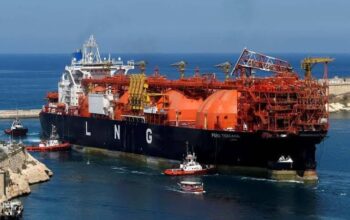
That hardline position creates an almost impossible bind for Washington: unable to compel Israel to withdraw, yet facing the collapse of an agreement that was supposed to reopen the waterway through which roughly a fifth of the world’s oil and liquefied natural gas supplies flow. The strait, through which 20 million barrels of oil are shipped each day under normal circumstances, had sent oil prices soaring well above $100 per barrel when it was first closed after US and Israeli strikes on Iran began on 28 February. Brent crude had fallen around 8 per cent over the week following the MOU, offering some relief to global markets; Saturday’s announcement threatened to reverse that entirely.
Mindful of the gathering crisis, Trump’s special envoy Steve Witkoff boarded a flight to Switzerland on Saturday, where Jared Kushner, the president’s son-in-law and co-negotiator, was already waiting. Araghchi was also expected to travel to Switzerland on Saturday, though a source cautioned that those plans could still change. Switzerland confirmed it was continuing to provide what it described as “a discreet and reliable setting” at Bürgenstock to facilitate discussions on implementing the MOU, declining to identify participants or disclose the content of any conversations, citing confidentiality.
Sixty days, and counting down
The interval between the MOU’s signing and its potential disintegration has been measured in hours rather than days. Araghchi had told several of his counterparts on Friday that the ceasefire in Lebanon was “make or break” for the US-Iran negotiations. Tehran’s decision to close the strait — while simultaneously sending a delegation to Switzerland to “demand” compliance — represents a calibrated escalation: pressure, but not yet a complete walkout.
Whether that distinction survives the day is another matter. The MOU gives negotiators 60 days to convert an interim understanding into a comprehensive agreement on Iran’s nuclear programme and allied questions. Many diplomats and analysts have warned privately that this timeline was always unrealistic: the 2015 nuclear deal that Trump himself scrapped during his first term took more than 18 months to negotiate. Trump, defending the deal against Republican critics in Congress who questioned whether he had conceded too much, posted on social media: “The War has diminished Iran! We didn’t meet out of desperation; Iran did. They are FINISHED! We’ll play out the 60 days. They get no money, not 10 cents!”
From Moscow, Dmitry Medvedev — Russia’s former president and current deputy chair of the Security Council — offered a characteristically colourful verdict on the situation. Israel, he argued, had been left “aggrieved” by the US-Iran deal, having expected the complete collapse of the Iranian political regime and not achieved it. “No Trump can order it otherwise,” he wrote on the Russian social media platform Max, suggesting that Netanyahu’s cabinet — which “clings to power through war” — had every incentive to undermine any fragile accommodation.
“This fragile agreement is easily blown apart by new strikes on Lebanon or other provocations,” Medvedev wrote. “And that is precisely what Netanyahu’s Cabinet, which clings to power through war, needs.”
The war has killed at least 7,000 people since US and Israeli strikes on Iran began on 28 February, the majority in Iran and Lebanon, and sent energy prices and inflation soaring across the globe. Many diplomats and analysts have warned privately that converting this week’s interim understanding into a comprehensive agreement — one that covers Iran’s nuclear programme in full and draws a line under Lebanon — will be far harder than reaching the initial accord. The 2015 nuclear deal that Trump scrapped during his first term took more than 18 months to negotiate. Sixty days, most observers agree, will not be enough.
Copyright © 2021 Independent Pakistan | All rights reserved