By Staff Reporter
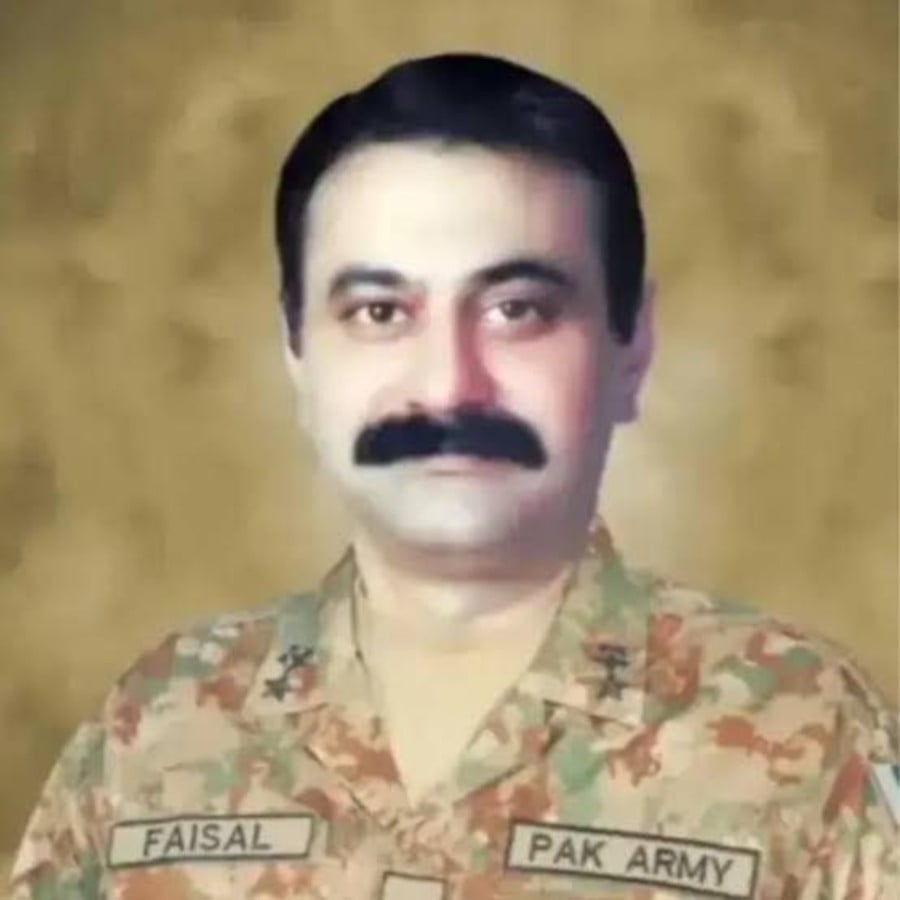
ISLAMABAD: The government on Friday abruptly moved one of the Inter-Services Intelligence agency’s most senior officers, Major General Faisal Naseer, out of his post overseeing the spy service’s internal wing and into the top civilian job at the National Counter-Terrorism Authority, a body that has spent more than a decade struggling to fulfill the mandate lawmakers gave it after some of the country’s darkest days of militant violence.
The reassignment, confirmed in a notification from the Establishment Division, installs Maj. Gen. Naseer as Nacta’s national coordinator for a three-year term under Section 9(1) of the NACTA Act of 2013. He arrives at an agency created with sweeping authority on paper but a persistently uncertain footing in practice — a mismatch that has defined Nacta since its founding and that officials and independent observers alike have questioned for years.
Government officials offered no public explanation on Friday for why Maj. Gen. Naseer, who had built a reputation across a demanding four-year tenure at one of the ISI’s most sensitive posts, was chosen for the assignment, or why now.
Inside the ISI, the position Maj. Gen. Naseer is vacating — director general (C) — ranks just below the agency’s director general in institutional weight, according to those familiar with the service’s internal structure. Though often described in shorthand as a counterintelligence role, the post actually runs the ISI’s Internal Wing, the division responsible for domestic security matters, and by design keeps its occupant in frequent contact with the country’s most powerful institutions.
Maj. Gen. Naseer, an officer from the Corps of Military Intelligence, took up that post in 2022, not long after his promotion to major general, and held it through a stretch of political upheaval that tested the agency’s internal operations in ways few other periods have. He had been regarded as a serious contender for promotion to lieutenant general in the army’s upcoming round of senior appointments — a fact that has made his transfer all the more striking to those who track military affairs closely.
Postings outside the armed forces have not always derailed an officer’s rise, but they carry that risk often enough that Friday’s announcement caught many by surprise, coming as it did just ahead of decisions on the army’s next tier of leadership.
A Mandate Without Muscle
Nacta’s story begins in 2008, when it was formed as an administrative unit inside the Ministry of Interior. Statutory legislation five years later gave it independent legal standing as a body corporate, governed by a Board of Governors and charged with a mission that sounded, at the time, transformative: unify the country’s fragmented counterterrorism efforts under one civilian roof.
The law tasked Nacta with gathering and synthesizing intelligence, drafting national strategy against terrorism and extremism, building out action plans and tracking their execution, conducting research, reviewing security-related legislation, and serving as the government’s liaison to international counterterrorism bodies. It is, on paper, one of the most consequential mandates given to any civilian security institution in the country’s modern history.
The authority’s standing rose further after gunmen stormed the Army Public School in Peshawar in December 2014, killing more than 140 people, most of them children, in an attack that reshaped the national conversation on militancy. Nacta helped draft the 20-point National Action Plan that emerged from that reckoning and was handed responsibility for monitoring the plan’s rollout.
Yet the institutional muscle to match that mandate never fully materialized. Nacta has continued to lean heavily on officers deputed from other branches of government rather than a dedicated cadre of its own, a structural dependency that has left it functioning, in the assessment of many who watch the security apparatus, more as a policy secretariat than as the command-and-coordination hub its founding law envisioned. The authority still advertises for administrative and coordination roles filled on deputation from federal and provincial governments — postings tied to carrying out the decisions of its Board of Governors and Executive Committee rather than driving them.
Attempts to make the authority more attractive to career officials have come and gone. In the aftermath of the National Action Plan, the government moved to bolster Nacta’s standing and sweetened the terms of service there, adding a risk allowance for its employees among other incentives.
An Unusual Choice
Nacta has cycled through more than a dozen national coordinators since its founding, the position filled overwhelmingly by officers drawn from the police service. Maj. Gen. Naseer’s appointment breaks with that pattern, and the shift has not gone unnoticed among those who follow the country’s security institutions — many of whom see it as a possible signal that the government intends to elevate Nacta’s standing by placing a senior military intelligence figure at its helm rather than continuing the authority’s long-standing reliance on police leadership.
Whether that reading holds will depend on what follows. A government source, speaking about the appointment, said Maj. Gen. Naseer’s three-year term could give Nacta a genuine opening to strengthen its role — but cautioned that realizing it will hinge on the authority, resources, and institutional backing the new coordinator is actually given, rather than on the appointment alone.
That is, in essence, the question Nacta has faced since its inception. The authority was conceived to sit at the center of the country’s counterterrorism architecture, but its influence has always been a function of whether other institutions — the intelligence services, law enforcement, the provinces — treat its assessments and coordination efforts as indispensable rather than advisory. Nothing in Friday’s notification answers that question. It only reopens it, with a new and unexpected name attached.
Copyright © 2021 Independent Pakistan | All rights reserved