By Staff Reporter
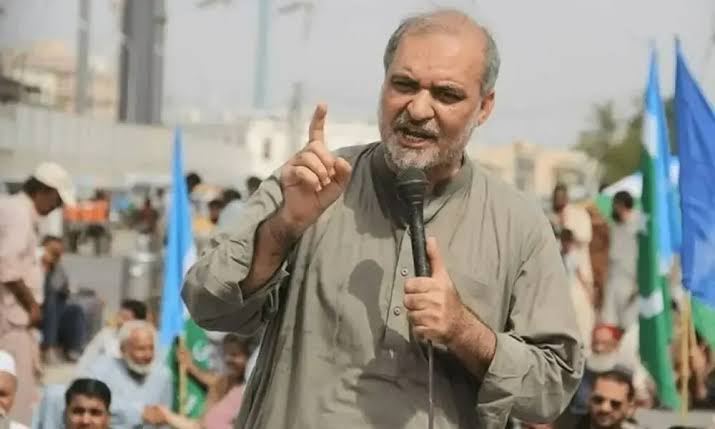
LAHORE: The head of Pakistan’s Jamaat-e-Islami party said on Sunday that his organisation would call for a nationwide shutter-down strike once a major Islamic religious observance concludes this week, sharpening a confrontation with the federal government over fuel prices that has kept protesters camped outside government buildings in four provincial capitals for more than a week.
Hafiz Naeemur Rehman, the party’s emir, told reporters at a press conference here that the strike would begin after Eid Milad un Nabi, the holiday marking the birth of the Prophet Muhammad that falls this year on Aug. 26. He said the shutdown would be followed by the establishment of protest camps in cities across the country and, eventually, a long march toward the capital, Islamabad.
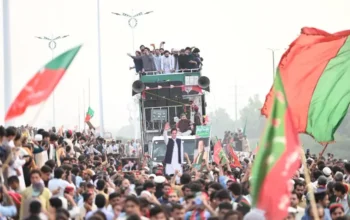
The announcement came on the eighth day of sit-ins that Jamaat-e-Islami supporters have staged outside the Punjab chief minister’s residence in Lahore and outside governor’s houses in Karachi, Quetta and Peshawar. The demonstrations began Aug. 16 and represent one of the more sustained displays of organized political pressure the government has faced since fuel prices began climbing sharply this summer.
Rehman said the campaign had entered what he called a decisive phase, and that the party had no intention of ending it in exchange for assurances alone.
“The sit-in will end only when the government implements our demands in practical terms,” he said, adding that negotiations would no longer proceed on the basis of protesters standing down first in return for promises.
At the center of the party’s grievance is the petroleum levy, a tax the government has used to help stabilize its finances amid a broader economic crisis. Rehman insisted the sit-ins would not lift until the levy is withdrawn entirely, and he pushed back on suggestions from government officials that the protests themselves had contributed to price increases.
“Had there been no sit-ins, prices would have been increased several times more,” he said.
Rehman also made a more specific allegation about the domestic fuel market, saying diesel refined within Pakistan was being sold at prices pegged to imported diesel, which he said allowed refineries to collect outsized profits. He said both the government and the country’s bureaucracy were aware the practice was taking place.
“Even during the war, people are being made to pay more for petroleum products while only a few are benefiting,” Rehman said, an apparent reference to the renewed hostilities in the Middle East that have rattled global oil markets in recent months. He said the resulting financial strain was falling hardest on students, young people and farmers.
The Jamaat-e-Islami leader extended his criticism beyond fuel policy, faulting the government’s handling of the broader cost of living. He said the country’s economy could not move forward while what he described as flour and sugar cartels continued to operate largely unchecked, and while farmers struggled to afford fertilizer. He said the government had imported 765,000 tonnes of sugar in response to a domestic shortage, and he accused sugar mill owners, along with government officials, of profiting from that shortfall.
He also took aim at the trappings of government itself. “Government officials are driving expensive vehicles with our money,” he said, criticizing what he characterized as wasteful state spending at a time when ordinary Pakistanis are absorbing the cost of higher fuel and electricity bills.
Despite the confrontational tone, Rehman described Jamaat-e-Islami as a peaceful political party with no interest in inflicting hardship on the public. He argued that demonstrations conducted peacefully on the streets put meaningful pressure on the government, while violent unrest tended only to produce arrests and losses before political leaders returned to the negotiating table regardless.
He said the party remained open to talks if the government approached them in good faith, but reiterated that the sit-ins would continue in the meantime.
As part of the escalating campaign, Rehman said Mehfil-e-Milad and Seerat gatherings — religious commemorations tied to the Prophet’s birth — would be held at the protest sites on the night between the 11th and 12th of Rabi ul Awal, the Islamic calendar month in which the holiday falls. He said a large public gathering was planned at the Lahore sit-in site Sunday night and appealed to residents of the city to attend, adding that delegations representing various segments of society were expected to visit the protest camp as well.
Asked about a recent medical examination undergone by former prime minister Imran Khan, Rehman said the government should have fully complied with the court order that mandated it.
The fuel price dispute has emerged as one of several flashpoints for the government this month. Authorities recently moved from reviewing fuel prices every 15 days to adjusting them daily, a shift officials attributed to volatility in global oil markets tied to the escalation in the Middle East. The change has made price increases more frequent and, critics say, harder for consumers to anticipate.
The pressure has drawn in other segments of the transport and energy sectors. The All Pakistan Goods Transport Alliance suspended a nine-day nationwide strike earlier this week after securing assurances from the federal government and the government of Sindh province on several demands, including changes to petroleum pricing. Separately, the Pakistan Petroleum Dealers Association issued a 72-hour ultimatum to the government earlier this month, demanding resolution of a set of unresolved issues and follow-through on commitments it said the petroleum minister had previously made.
Copyright © 2021 Independent Pakistan | All rights reserved