By Staff Reporter
ISLAMABAD: The Islamabad High Court on Thursday ordered the immediate removal of one of its own judges, Tariq Mehmood Jahangiri, declaring that his law degree was invalid at the time of his appointment and confirmation.
The ruling, delivered by a two-judge panel led by Chief Justice Sardar Muhammad Sarfraz Dogar and including Justice Muhammad Azam Khan, directed the law ministry to formally denotify Justice Jahangiri and instructed him to cease his duties forthwith.
The decision capped a months-long controversy that has roiled Pakistan’s legal community, raising questions about accountability among the judiciary and exposing deep rifts within the court.
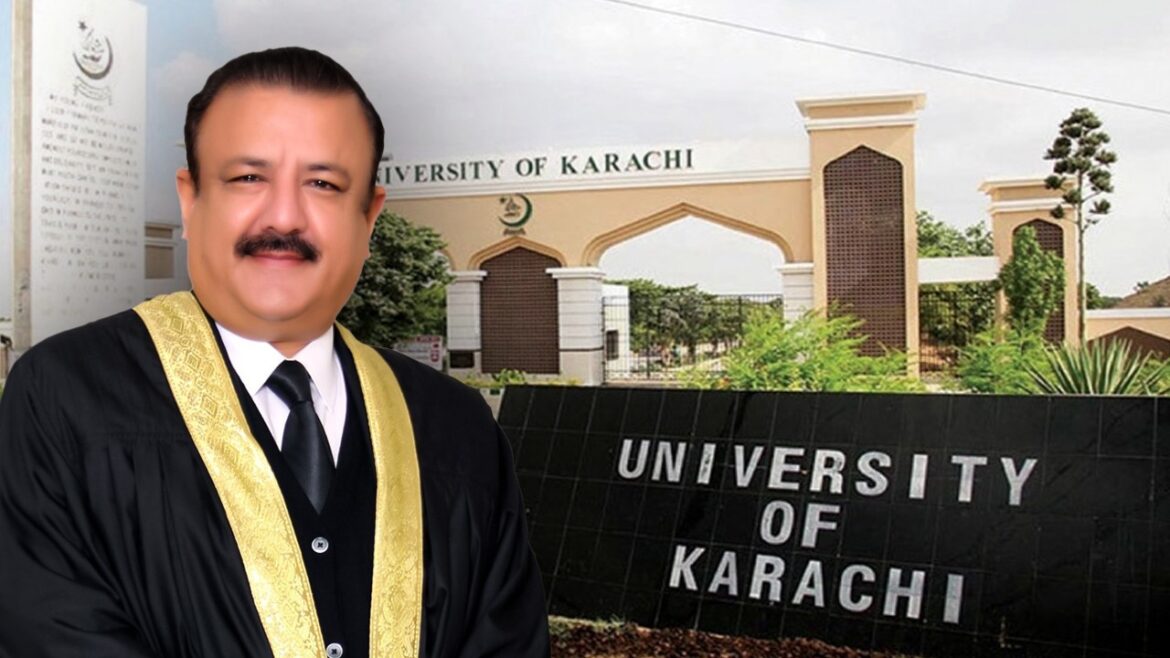
The case stemmed from allegations that Justice Jahangiri’s law degree from the University of Karachi was obtained through unfair means. A petition challenging his credentials was filed earlier this year by lawyer Mian Dawood, following a complaint to the Supreme Judicial Council in July 2024 and the circulation of a purported letter from the university’s examinations controller on social media last year.
During Thursday’s hearing, the university’s registrar, Imran Ahmed Siddiqui, presented records showing that the institution’s syndicate had canceled the degree. He told the court that Justice Jahangiri “was found cheating and creating disturbance in an examination hall in 1988,” leading to a debarment from exams until 1992. Yet, the registrar alleged, the judge appeared for an exam in 1989 under a changed name. Siddiqui also submitted logs of marksheets and results to support the syndicate’s action.
The Higher Education Commission had earlier endorsed these findings in a report submitted to the court on Dec. 8, stating that it had never verified the degree and that Justice Jahangiri had not approached it for such verification.
Defending himself, Justice Jahangiri was represented by advocates Muhammad Akram Sheikh and Barrister Salahuddin Ahmad. Sheikh objected to the bench hearing the case, arguing that a judge facing legal proceedings could not preside over a matter involving a colleague who had challenged his posting. This appeared to reference an intra-court appeal filed in July by Justice Jahangiri and four other judges against a Supreme Court decision upholding the seniority that elevated Justice Dogar to chief justice. In that appeal, the judges urged the Supreme Court not to recognise Justices Dogar, Khadim Hussain Soomro and Mohammad Asif as Islamabad High Court members until they took fresh oaths under Article 194. The appeal was later dismissed for non-prosecution by the Federal Constitutional Court.
Sheikh also cited a stay order from the Sindh High Court suspending the university’s cancellation of the degree, contending that it barred the Islamabad bench from proceeding. Ahmad requested additional time to submit a reply. Dawood, the petitioner, countered that Justice Jahangiri had “misused” the Sindh court’s order. “Instead of clearing his name […] the judge has been filing petitions and scandalising his chief justice,” he said.
After arguments, the bench reserved judgment and later issued the removal order. The controversy had unfolded amid escalating tensions. On Sept. 16, the same division bench took up Dawood’s petition and issued an interim order restraining Justice Jahangiri from judicial functions without prior notice, prompting debate over a high court’s authority to suspend a sitting judge.
The Supreme Court intervened on Sept. 29, with a five-member constitutional bench led by Justice Aminuddin Khan setting aside the order. The ruling emphasised that it addressed only the interim measure’s legality, not the allegations’ merits, and directed the Islamabad court to resolve preliminary objections and proceed lawfully. Proceedings resumed, and on Dec. 9, the court declared the petition maintainable. On Dec. 15, Justice Jahangiri appeared personally, defending himself and objecting to the bench’s composition due to his prior challenge against Justice Dogar’s elevation. He expressed a lack of confidence, citing the “haste” in hearings and criticising the earlier restraint on his work. The court dismissed these objections.
The day before Thursday’s ruling, Justice Jahangiri escalated matters by petitioning the Federal Constitutional Court through counsel Uzair Karamat Bhandari to set aside the Dec. 9 maintainability order. He accused Chief Justice Dogar of bias, noting his challenges to Dogar’s transfer and elevation, and argued that judicial propriety demanded recusal.
Separately, Justice Jahangiri filed a complaint against Dogar with the Supreme Judicial Council under Article 209, alleging misconduct, bias and violations of the judicial code. The complaint claimed that while the case was pending, Dogar discussed it with him and advised resignation, both directly and indirectly. It further alleged that Dogar acknowledged “tremendous pressure” to decide against him swiftly and suggested submitting a post-dated resignation for “safe-keeping” to delay proceedings and appease those exerting influence.
Justice Jahangiri has been a vocal figure in broader judicial disputes. He was among six Islamabad High Court judges who wrote to the Supreme Judicial Council last year alleging interference by intelligence agencies, igniting national debate on judicial independence. He also joined four colleagues in September petitions to the Supreme Court addressing issues like bench composition, rosters and case transfers. Thursday’s decision marks a rare instance of a Pakistani high court removing a sitting judge over credential concerns, potentially setting precedents for judicial scrutiny amid ongoing calls for reform.
Copyright © 2021 Independent Pakistan | All rights reserved