By Staff Reporter
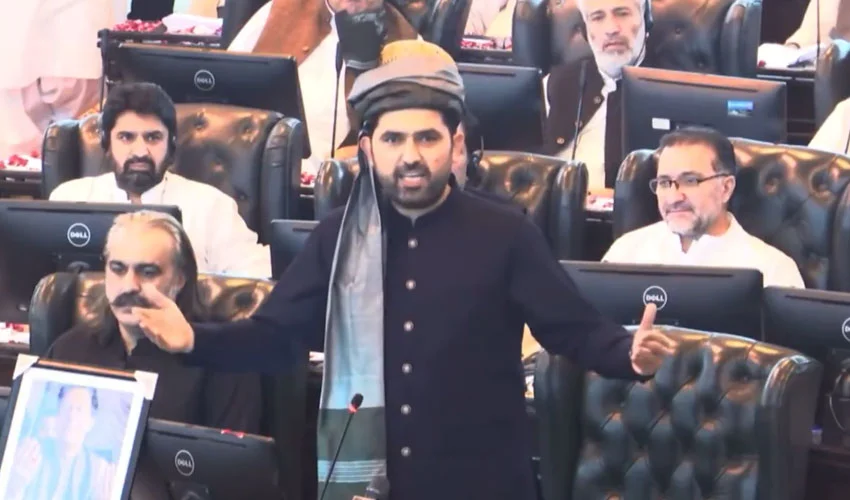
ISLAMABAD: Authorities filed a criminal complaint on Sunday against Sohail Afridi, the chief minister of Khyber Pakhtunkhwa Province, accusing him of making profane and misleading remarks about state institutions that were disseminated through social media and could undermine national security.
The case, registered with the National Cyber Crime Investigation Agency in Islamabad, stems from comments Afridi made last Wednesday during an interaction with reporters outside Adiala jail. He had been denied permission to meet with Imran Khan, the founder of his political party, Pakistan Tehreek-e-Insaf, who is imprisoned there.
In his remarks, Afridi alleged that security forces in Khyber Pakhtunkhwa would bring dogs into mosques and tie them down, violating the sanctity of the holy places. “When we would go and tell them that they are violating the sanctity of the mosque, they would tell us ‘you and these dogs are no different,’” Afridi said. “Despite this, we still support them … but do they know the pain of my people?”
The statement quickly drew widespread condemnation, prompting an official response. The first information report was filed on behalf of the state under Sections 11, 20 and 26-A of the Prevention of Electronic Crimes Act of 2016. It followed an inquiry dated Nov. 8, which concluded that Afridi and others had “knowingly and deliberately, with mala fide intentions and ulterior motives, uttered false, misleading, derogatory and intimidating words against state institutions, which were recorded [and] disseminated and propagated” through social media platforms.
The complaint specifically cited a video uploaded to the PTI’s YouTube channel, in which Afridi made a statement “containing offensive, profane, false, misleading and unfounded allegations, with the intent to malign, defame and cause harm to the reputation and integrity of the state institutions of Pakistan.” According to the FIR, the “false, fake and ill-will content, publicly and intentionally uttered and promoted by the accused and others through social media is an organised attempt to undermine public trust on state institutions, including racial hatred, create unrest in the country and destablise national security.”
Afridi was further accused in the report of being involved in “preparing, publishing, sharing and circulating fake and misleading contents publicly on social media with the intention to incite violence, create racial hatred, panic, fear, disorder and unrest among the general public alongwith promoting anti-state sentiments, which is detrimental to the security, integrity and stability of Pakistan.”
The case adds to the mounting legal pressures on PTI leaders and allies of Khan, who has faced numerous charges since his ouster as prime minister in 2022. Khyber Pakhtunkhwa, a northwestern province bordering Afghanistan, has been a stronghold for the party, but it has also been a focal point for tensions between provincial authorities and federal security forces amid ongoing insurgent threats and political unrest.
The Prevention of Electronic Crimes Act has been criticized by rights groups for its broad provisions, which they say can be used to stifle dissent. But government supporters argue it is necessary to combat misinformation and threats to state stability in a country grappling with economic challenges and security issues.
Copyright © 2021 Independent Pakistan | All rights reserved