By Staff Reporter
ISLAMABAD: Pakistan’s information minister has accused social media platforms of rewarding terrorism, harassment of women and child abuse through payments for viral content, even while urging the companies behind them to open offices in the country.
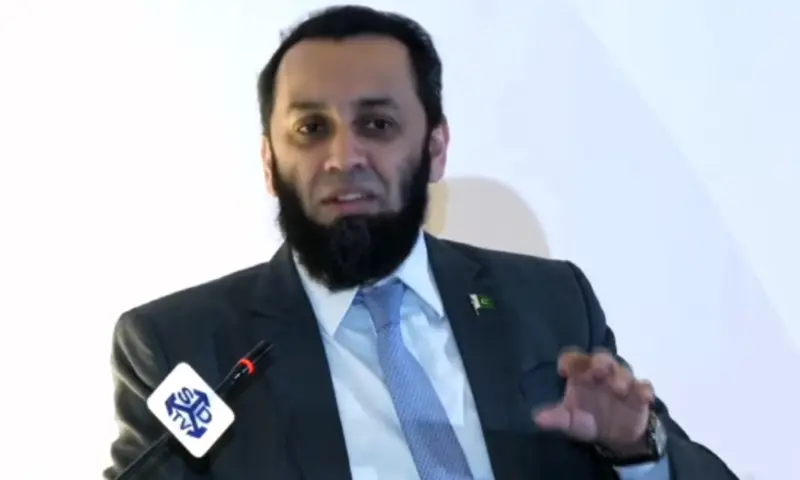
Attaullah Tarar told a Sustainable Development Policy Institute (SDPI) seminar in Islamabad on Wednesday that the pursuit of online popularity now carried a direct financial reward.
“We are financially incentivising terrorism, harassment against women and child abuse,” he said. “Anything that goes viral is directly linked to financial incentives. Social media platforms are paying you according to your views. There is an algorithmic injustice.”
The companies, he argued, had fallen short on one of their most basic obligations. “Social media has failed to protect the dignity and privacy of citizens.”
Tarar cited a recent video from the Balochistan Liberation Army, a group banned by Pakistan and listed by the US State Department. Authorities had asked certain platforms to take down the material, he said, but it was not removed.
Yet his criticism came with an open invitation. “Social media platforms are most welcome. We want their business to grow in Pakistan,” said the minister, who pointed to a vibrant young population creating “positive content”.
“We have the potential to create good and positive content and these social media companies can benefit from that content,” he added. “They should open their offices in Pakistan.”
Behind that appeal lies a problem of jurisdiction. Tarar acknowledged that Pakistan’s legislation applied only within its borders, admitting: “we cannot compel any social media platform to adhere to our laws”.
Companies had repeatedly told the government they were eager to open offices and expand, he said, but their own policy and legal teams worked to rules that did not appear compatible with Pakistani law.
His proposed answer is cooperation. “We are ready to work with all social media platforms to help them formulate their policy according to local peculiarities,” Tarar said, insisting that every country had its own dynamics and issues and that a one-size-fits-all approach would not work.
He called for the conference to issue an Islamabad Declaration drawing platforms into a working group on regulation, and backed a national task force bringing together federal and provincial authorities and other stakeholders.
The scale of the challenge is considerable. Pakistan has almost 100 million social media users and 160 million smartphone users, according to figures cited by the minister, who argued that anyone holding a phone was now a broadcaster, making information far harder to verify.
He also described misinformation and disinformation as the gravest threat of the age, citing the World Economic Forum. The forum’s 2026 risk report ranked them second over a two-year horizon, behind geoeconomic confrontation.
Tarar’s intervention came a day after interior minister Mohsin Naqvi set out four “non-negotiable” red lines for the state: terrorism, hate speech, incitement to violence and the sexual exploitation of children.
“This is not about technology; this is about people. We are not saying that free speech must be curtailed. Journalists must report, citizens must question and dissent must be heard, including criticism of the government. But freedom of speech can never become a shield for those who cross these red lines,” Naqvi said.
The interior minister claimed that platforms acted on only 47 percent of requests from Pakistan’s counterterrorism departments. He also highlighted stretched enforcement, saying Punjab, home to about 140 million people, had just 61 staff in the national cybercrime agency, including drivers and clerks.
Under a proposed framework, platforms, streaming services and major content creators would have to register with the Social Media Protection and Regulatory Authority. Mr Naqvi also wants each platform to appoint a representative in Pakistan empowered to make decisions and answer complaints.
“Registration is not a licence to silence anyone,” he said. Blocking an entire platform would be a last resort, following engagement, notices and penalties.
The government’s push for greater oversight has already proved contentious. Journalists and rights groups criticised last year’s tightening of cybercrime laws, warning that the measures could be used to suppress dissent and restrict free expression.
Copyright © 2021 Independent Pakistan | All rights reserved