By Staff Reporter
ISLAMABAD: Pakistan and the United States said negotiations over a reciprocal trade framework have advanced substantially, with officials from both governments pledging to wrap up the agreement soon following a virtual meeting between Islamabad’s finance minister and Washington’s top trade negotiator.
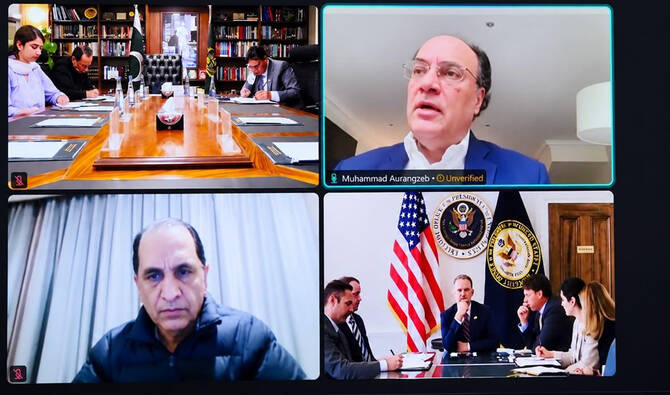
Finance Minister Muhammad Aurangzeb and US Trade Representative Jamieson Greer held talks aimed at deepening commercial ties between the two countries, Pakistan’s finance ministry said in a statement. Both sides described the negotiations as having moved into their final stages and reaffirmed a shared goal of concluding the deal at the earliest possible date.
The talks are the latest step in an on-and-off effort to formalize trade relations between the two countries that has been reshaped repeatedly by shifts in US tariff policy over the past year. Pakistan and the US struck an initial trade agreement in July 2025, just ahead of an August 1 deadline set by President Donald Trump that triggered higher reciprocal tariffs on a range of trading partners. Under that arrangement, Washington agreed to cut its proposed reciprocal tariff on Pakistani goods to 19% from an initially threatened 29%.
That deal was upended in February, when the US Supreme Court ruled 6-3 that the White House had exceeded its constitutional authority in imposing sweeping tariffs under the International Emergency Economic Powers Act, effectively voiding the policy. The Trump administration subsequently turned to Section 122 of the Trade Act of 1974 to install a temporary global tariff of 10% for a period of up to 150 days, resetting the terms under which the two countries have been negotiating since.
Against that backdrop, Aurangzeb told Greer during Wednesday’s call that he welcomed what the ministry described as steady progress by the two negotiating teams, according to the statement, and pointed to the importance of sustaining momentum in the talks given Pakistan’s broader economic priorities. He said a deeper trade and investment partnership with Washington would reinforce Pakistan’s export-led growth strategy, bolster economic resilience and open up greater commercial opportunities for companies on both sides. Aurangzeb also flagged continued cooperation with the US Export-Import Bank as a priority for facilitating bilateral trade and investment.
Greer, for his part, acknowledged Pakistan’s sustained engagement throughout the negotiations and credited progress made on labor and regulatory reforms, including steps tied to forced-labor compliance, the ministry said. He reaffirmed Washington’s commitment to keeping the talks on track and said he was confident the remaining sticking points could be worked out through continued technical-level engagement.
Both sides agreed to keep close coordination and speed up technical discussions to build on the ground already covered, with plans for regular engagement to close out the remaining elements of the framework. Federal Secretary for Commerce Jawad Paul and senior officials from the Office of the US Trade Representative also took part in the meeting.
The US is Pakistan’s largest single export market, and textiles and apparel account for the bulk of Pakistani shipments to the country. Bilateral goods trade between the two countries totaled an estimated $8.7 billion in 2025, according to the Office of the US Trade Representative, made up of $5.4 billion in Pakistani exports to the US and $3.3 billion in American exports to Pakistan.
Islamabad has been working to widen its economic relationship with Washington and draw in more foreign investment as its economy steadies following an overhaul tied to an International Monetary Fund support program. Deputy Prime Minister Ishaq Dar said last month that Pakistan is targeting a doubling of bilateral trade with the US, to $20 billion over the next five years, with plans to expand cooperation in energy, technology and critical minerals.
Copyright © 2021 Independent Pakistan | All rights reserved