By Staff Reporter
KARACHI: Pakistan’s economy will expand more slowly than the government’s own target for a second consecutive year, the Asian Development Bank said, as fallout from the Middle East conflict keeps energy costs elevated and complicates the country’s push to lock in a fragile recovery.
Gross domestic product will grow 3.7% in the fiscal year through June 2027, the Manila-based lender said Wednesday in its Asian Development Outlook, unchanged from its July estimate and a full percentage point below the 4.7% it had penciled in as recently as April. The figure falls short of Islamabad’s 4% budget target and underscores how a war thousands of miles away is still weighing on South Asia’s second-largest economy.
Inflation will prove even harder to tame. The ADB now expects consumer prices to average 8.3% this fiscal year, above the 7% the government had penciled into its budget and well outside the State Bank of Pakistan’s 5%-to-7% target band. Inflation is forecast to accelerate from 7.1% in the fiscal year just ended to 8.3% in the current one, a trajectory the ADB says leaves the central bank threading a needle between nursing along growth and reining in prices.
“Pakistan’s economy has made progress in strengthening macroeconomic stability over the past two years, with stronger growth, improved external buffers, restored market confidence, and sovereign credit rating upgrades reflecting the benefits of sustained reforms,” said Emma Fan, the ADB’s country director for Pakistan. Sustaining that momentum, she said, will be critical to unlocking more private investment and broadening the recovery.
A War’s Long Shadow
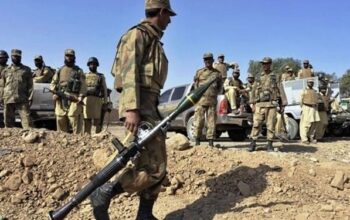
The conflict in the Middle East sits at the center of the ADB’s caution. The fighting has kept freight and insurance costs elevated on routes that funnel crude and refined fuel toward South Asia, and the bank flagged the risk of a fresh escalation as the single biggest threat to Pakistan’s outlook. A wider war could push up energy import bills, deepen inflation and choke off labor demand in the Gulf — a scenario that would hit Pakistan on two fronts at once, given its reliance on imported petroleum and on remittances from Gulf-based workers, the largest source of the country’s foreign exchange.
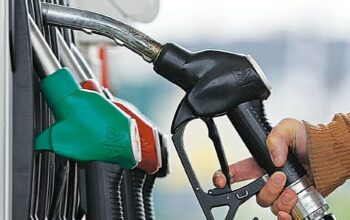
The bank’s regional report, published the same day, showed the strain extending well beyond crude prices. Disruption in global energy markets has spread beyond crude oil to refined products and major shipping routes, with diesel, gasoline and jet-fuel markets tightening sharply enough to keep transport, industrial and agricultural costs elevated even if crude prices ease. For an economy like Pakistan’s, that combination — costly fuel layered on top of Gulf shipping disruptions — leaves little room to absorb further shocks.
Islamabad’s own budget tightening adds another layer of risk. The ADB warned that a renewed round of austerity, particularly if spending restraint proves sharper than currently expected, could sap domestic demand just as the recovery tries to gain traction. Weaker-than-targeted tax collection, tighter global financing conditions, weather-related damage to crops and delays in overhauling the energy sector and state-owned enterprises round out the bank’s list of downside risks.
Momentum From a Low Base
The forecast follows a year in which Pakistan’s economy clawed back some ground. Growth accelerated to 3.7% in the fiscal year ended June 30, up from 3.2% the year before, powered by a rebound in manufacturing, resilient services and a recovery in agriculture despite flood damage to major crops. Manufacturing expanded 6.6%, services grew 4.1% and information-and-communications output rose 7.5% on stronger service exports, according to the bank’s data. Private investment climbed 8.6% in real terms as borrowing costs fell and business confidence firmed.
Consumers felt little of that recovery. Household spending rose just 0.8% in the year, down from 2.1% the year before, as higher global energy prices ate into real incomes — a divergence between investment-led growth and squeezed household budgets that the ADB expects to persist into the current year. Government consumption, by contrast, jumped 11.2%.
The expansion also lost steam late in the year. Growth had been running near 4% through the first three quarters, aided by the lagged effects of monetary easing, before slowing sharply in the April-to-June quarter as the government’s response to the Middle East conflict curbed spending, the bank said.
Price pressures told a similar story of a strong first half giving way to a rougher second. Headline inflation spiked to 11.7% in May after a record fuel-price increase in April, before easing to 11.1% in June and 9.2% in July as global energy pressures moderated. The ADB’s forecast assumes that moderation continues, with inflation gradually returning to the central bank’s target range only in the second half of the current fiscal year.
Credit Upgrades, Capital Market Return
Pakistan has notched a string of wins on the credibility front. S&P Global Ratings upgraded the sovereign in July and Moody’s followed in August, both citing improved macroeconomic stability and reform continuity. The country also returned to international capital markets for the first time in years, raising $750 million through a Eurobond and $250 million via a Panda bond issuance in April and May.
Those moves, combined with steady performance under the International Monetary Fund’s Extended Fund Facility program, have helped lower Pakistan’s borrowing costs from their 2024 peak and rebuild reserves. Gross international reserves rose to $18.5 billion at the end of June from $14.5 billion a year earlier, lifting import cover to 2.9 months. The ADB projects reserves will climb further, to more than $21 billion by June 2027 — equivalent to roughly 3.3 months of imports — providing a buffer, if a thin one, against external shocks.
Fiscal metrics improved as well, though the ADB was careful to note the source of that improvement. The consolidated budget deficit narrowed to 2.6% of GDP in the last fiscal year from 5.4% previously, while the primary balance posted a 2.9%-of-GDP surplus, beating the IMF program’s 2.6% target. “The improvement came mainly from interest savings rather than a broadening of the revenue base,” the bank said — a distinction that matters because it means the gains may not be durable. Federal Board of Revenue collections rose 10.8% year-over-year but still missed the IMF’s benchmark by roughly 969 billion rupees. For the current fiscal year, the government is targeting 17.6% growth in FBR collections, which the ADB called an ambitious goal that will require tighter compliance and enforcement to hit.
External Accounts Under Pressure
The current account stayed close to balanced last fiscal year, posting a deficit of just $304 million, or 0.1% of GDP, compared with a $1.8 billion surplus the year before. But that headline number masked a widening merchandise trade gap: exports fell 4.7% to $30.8 billion while imports rose 9% to $64.5 billion, pushing the trade deficit to $33.7 billion from $26.8 billion. Workers’ remittances provided the offset, rising 8.6% to $41.6 billion, while a 18.6% jump in service exports — led by information technology, business services and travel — narrowed the services deficit to $2 billion.
The ADB expects that current-account cushion to erode this year. A recovering manufacturing sector will pull in more imports even as elevated freight and insurance costs linked to the Middle East conflict keep pressure on the trade balance, the bank said, even as global petroleum prices ease from their highs.
Private investment is expected to remain the main engine of growth in the current fiscal year, building on last year’s expansion and helped along by lower tariffs on industrial inputs under the 2025-2030 National Tariff Policy and a reduced corporate tax burden following a cut to the so-called super tax. Services should stay resilient, with technology exports providing ballast, while manufacturing faces a tougher stretch as higher energy costs squeeze production. Construction is poised to benefit from budget incentives, including lower property-transaction taxes and a richer interest subsidy under the prime minister’s housing program.
The bank’s message for the medium term was consistent with the one it has delivered in prior reports: reform fatigue is the risk to watch. Continued progress on taxation, energy pricing, privatization of state enterprises and expansion of the IT and digital-services sector — an export category the ADB called less exposed to commodity swings than Pakistan’s traditional goods trade — represents the clearest path to durable growth. “Sustained performance under the EFF provides a credible macroeconomic anchor,” the bank said, “but realizing medium-term potential growth will depend on the consistent implementation of structural reforms.”
Pakistan’s downgrade to below-target growth arrives as the ADB trims its outlook for the broader region. Growth across developing Asia and the Pacific is projected to slow to 5% this year from 5.5% in 2025, before edging back up to 5.1% in 2027 — a modest upward revision from the bank’s July call, driven in part by resilient technology exports tied to the artificial-intelligence investment boom. The bank warned that a “likely very strong” El Niño could pose serious risks to agricultural production across the region this year, a threat distinct from, but compounding, the energy-market disruption tied to the Middle East war.
Pakistan’s 3.7% growth rate leaves it trailing regional peers by a wide margin. India is expected to expand 7%, Vietnam 7.8% and Bangladesh 3.7% — level with Pakistan — while Bangladesh, Indonesia at 5.2% and Kazakhstan at 4.8% all outpace Islamabad, according to the bank’s country-by-country breakdown. Only Türkiye, at 2.8%, trails Pakistan among the major economies the ADB tracks in the region.
Copyright © 2021 Independent Pakistan | All rights reserved