By Staff Reporter
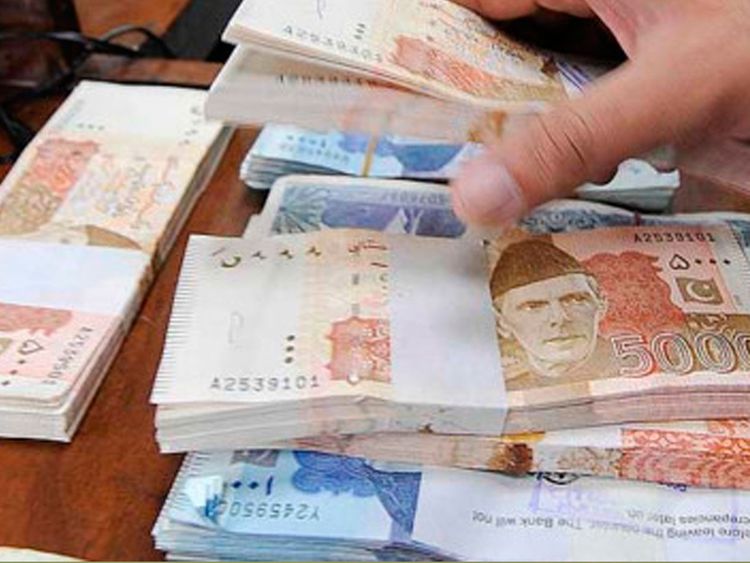
ISLAMABAD: The Federal Investigation Agency (FIA) has arrested at least eight suspects in a series of raids targeting illegal foreign exchange businesses across the country’s southern and southwestern regions, delivering a temporary lift to the beleaguered rupee.
The operations, conducted last week in Karachi, Quetta, Gwadar, and Chaman, cities near the borders with Iran and Afghanistan, focused on dismantling informal money transfer systems like hundi and hawala, which authorities say are often exploited for money laundering and terror financing.
The crackdown followed a July 22 meeting in Islamabad between a senior official from the military-run Inter-Services Intelligence (ISI) and representatives of the Exchange Companies Association of Pakistan (ECAP), amid growing alarm over the rupee’s slide to a 22-month low of Rs284.97 against the US dollar last week.
The FIA, however, denied the raids were directly triggered by the ISI, insisting they were based on “credible source reports.” “The FIA, acting on credible source reports, conducted raids targeting illegal foreign exchange traders and hundi-hawala operators,” the agency said.
The rupee, which had shed over 2% against the dollar since January despite a $2.1 billion current account surplus in the last fiscal year, showed signs of recovery post-crackdown. State Bank of Pakistan (SBP) data pegged the currency at Rs282.72 in the interbank market on August 1, while it traded between Rs284.62 and Rs285.30 in the open market, according to ECAP. The South Asian nation’s import bill, topping $58 billion, has kept the rupee vulnerable to global currency swings and illicit financial outflows.
The FIA’s broader campaign against illegal forex activities has been relentless. From January to July, the agency conducted “hundreds of intelligence-based operations across the country,” arresting at least 290 suspects and seizing over Rs800 million in local and foreign currencies, including US dollars and Saudi riyals. Authorities have also filed 213 police reports tied to black market dealings. “These operations aim to curb unlawful financial practices and ensure compliance with relevant laws,” the FIA said. “Upon identifying violations, the FIA initiates legal proceedings against those involved in accordance with applicable laws.”
Pakistan’s multi-tiered currency market, split between the official interbank rate, the open market, and an unregulated “grey market” dominated by hawala operators, has long complicated efforts to stabilize the rupee. Under its $7 billion bailout deal with the International Monetary Fund (IMF), the country must keep the gap between official and parallel market rates below 1.25%. The recent raids have narrowed that divide, a move hailed by market watchers.
“This initiative [of launching crackdowns] has also helped to close the gap between the official and black market exchange rates, which is a crucial requirement of Pakistan’s agreement with the IMF,” said Qazi Owais-ul-Haq, a currency trader at Karachi-based Arif Habib Ltd. Haq credited the clampdown with easing speculative pressure and curbing illegal currency outflows. “The pressure on the currency market has eased, and many exporters are now beginning to repatriate their earnings, which is further supporting the rupee’s position,” he added.
Financial data firm Tresmark noted the rupee held “relatively stable” this week between Rs282 and Rs283, defying earlier hopes it might climb to Rs278-280. “We expect currency rates to remain range-bound this month,” Tresmark said, though it warned of a potential retreat to Rs284 within three months. The short-term boost has offered breathing room, but analysts stress that lasting stability hinges on deeper reforms.
“The real challenge for authorities will be to implement sustainable economic policies that lessen the need for such interventions and ensure the currency’s long-term stability,” Haq said. With Pakistan under IMF scrutiny and its economy at a crossroads, the crackdown’s success in choking illegal financial flows will be a key barometer for both the rupee’s trajectory and broader fiscal health.
Copyright © 2021 Independent Pakistan | All rights reserved