By Staff Reporter
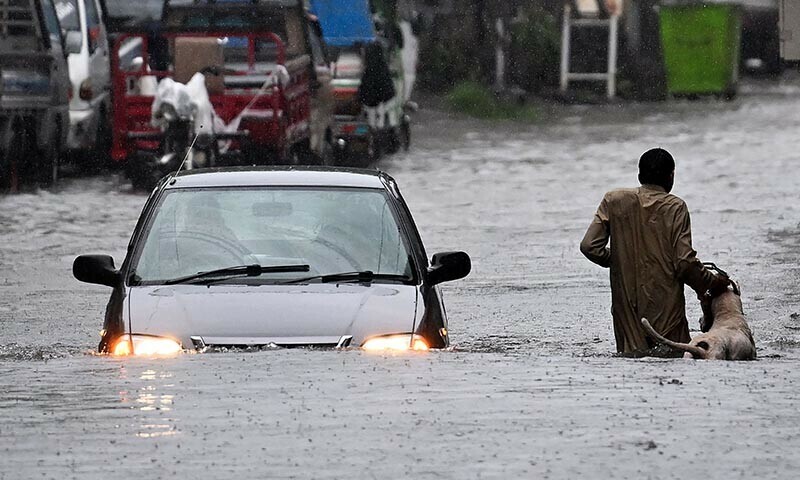
ISLAMABAD: The Pakistan Meteorological Department (PMD) warned on Sunday that monsoon currents, currently described as “weak” and penetrating the country, are expected to intensify next week, potentially triggering more rains and flash floods.
The National Disaster Management Authority (NDMA) said the death toll from rain-related incidents since late June has reached 299, with 715 injuries and widespread damage to homes and livestock as Pakistan, one of the world’s most climate-vulnerable nations, confronts the escalating impacts of extreme weather.
The PMD, in its latest alert, noted that weak monsoon currents are continuously affecting the upper and central regions of the country. These currents are projected to “intensify” starting August 4, with a westerly wave expected to strengthen from August 5.
“Heavy rains may generate flash floods in local nullahs/streams of Chitral, Dir, Swat, Shangla, Mansehra, Kohistan, Abbottabad, Buner, Charsadda, Nowshera, Swabi, Mardan, Murree, Galliyat, Islamabad/Rawalpindi, northeast Punjab and Kashmir from Aug. 5-7,” the PMD said. The agency also cautioned that urban flooding could inundate low-lying areas of major cities, including Islamabad, Rawalpindi, Gujranwala, Lahore, and Sialkot, during the same period.
In hilly regions, the risks are equally severe. “Landslides/mudslides may cause roads’ closure in the vulnerable hilly areas of Khyber Pakhtunkhwa, Gilgit-Baltistan, Murree, Galliyat and Kashmir during the forecast period,” the PMD added. Authorities have urged the public, travelers, and tourists to avoid unnecessary travel to these areas and to stay informed about weather updates.
Since June 26, monsoon rains have claimed 299 lives across Pakistan, with Punjab bearing the brunt of the casualties at 162 deaths. Khyber Pakhtunkhwa reported 69 fatalities, followed by Sindh with 28, Balochistan with 20, Gilgit-Baltistan with 10, Islamabad with 8, and Azad Kashmir with 2.
The NDMA’s latest situation report detailed the human toll: 715 people have been injured, including 239 children, 272 men, and 204 women. Property damage has been extensive, with 1,676 houses affected, 562 of which were completely destroyed. The rains have also killed approximately 428 livestock, compounding the economic strain on rural communities.
Pakistan’s susceptibility to climate change has amplified the destructiveness of this year’s monsoon. In May, severe storms killed at least 32 people, while in 2022, catastrophic floods submerged a third of the country, leaving more than 1,700 dead and causing an estimated $35 billion in damages. This year’s losses, while not yet on that scale, highlight a pattern of increasingly erratic and deadly weather events.
Monsoon rains, which span June to September, are vital for replenishing water supplies and easing summer heat. Yet, heavy downpours often overwhelm vulnerable regions, triggering floods, landslides, and displacement in poorly drained or densely populated areas.
Since the onset of the crisis on June 26, the NDMA has rescued and evacuated 2,880 people from affected regions. Relief operations are ongoing, with the agency distributing 13,466 essential items, including 1,999 tents, 958 blankets, 1,282 kitchen sets, 2,170 tarpaulins, and 146 de-watering pumps, alongside food packs, hygiene kits, and other supplies.
On Saturday, the PMD issued a forecast of continued rain, wind, and thundershowers in the country’s upper and central regions through the coming week, prompting provincial and district authorities to prepare for potential urban flooding. Rainfall, including isolated heavy falls, is expected in Khyber Pakhtunkhwa, Punjab, and Islamabad from August 4 to 7, with Gilgit-Baltistan set to see precipitation starting August 5. In contrast, Balochistan and Sindh will largely experience hot and humid conditions, though some rain is anticipated in specific areas.
Copyright © 2021 Independent Pakistan | All rights reserved