By Staff Reporter
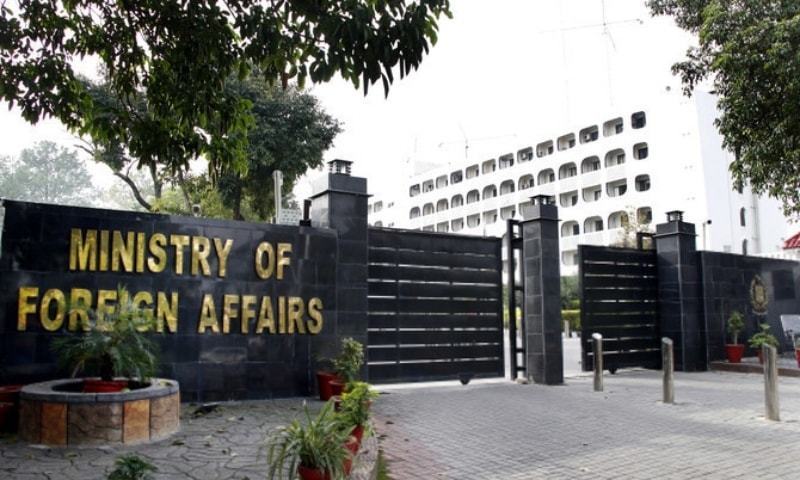
ISLAMABAD: As rivalries between Saudi Arabia and the United Arab Emirates intensified over Yemen, Pakistan’s deputy prime minister and foreign minister, Ishaq Dar, held a telephone conversation on Tuesday with his Saudi counterpart, Prince Faisal bin Farhan, to address the “current regional situation and recent developments,” the Foreign Office said.
Dar voiced satisfaction with the “positive trajectory of bilateral relations between Islamabad and Riyadh,” while Prince Faisal “reaffirmed his commitment to further strengthening and enhancing bilateral ties,” according to a Foreign Office statement on social media. The ministers exchanged season’s greetings and New Year’s wishes, which were “warmly reciprocated.”
The discussion highlighted Pakistan’s firm alignment with Saudi Arabia, even as Islamabad deepened economic links with the U.A.E., illustrating the coalition government’s careful navigation of Gulf dynamics. That same day, Prime Minister Shehbaz Sharif met UAE President Sheikh Mohamed bin Zayed Al Nahyan at Sheikh Zayed Palace in Rahim Yar Khan, pledging to “elevate” longstanding ties into a strategic economic partnership, a press release from the Prime Minister’s Office stated.
Joined by Dar, Information Minister Attaullah Tarar and other officials, Sharif built on “substantive talks” from Al Nahyan’s inaugural official visit to Pakistan last Friday. The leaders advanced discussions from the Dec. 26 meeting, stressing a “quantum jump” in trade to achieve targeted levels. They explored expanded collaboration in information technology, energy, minerals and defense.
Sharif praised the UAE’s “remarkable progress under His Highness’s dynamic and visionary leadership” and thanked Al Nahyan for his “patronage and commitment to foster stronger ties,” the statement said. He also commended the UAE for hosting 2.1 million Pakistanis, who “were playing an important role in strengthening ties between both countries.” The session concluded a year marked by high-level engagements.
Pakistan and the UAE maintain robust diplomatic, economic and cultural relations, reinforced by historical bonds and a substantial Pakistani diaspora. The UAE is among Pakistan’s top trading partners and a major remittance source, with Pakistanis contributing across industries. The countries partner on defence, energy and investments, and the UAE has extended financial and humanitarian support to Pakistan. In April, they inked several memorandums of understanding to enhance people-to-people connections, covering cultural cooperation, a joint consular committee and a UAE-Pakistan Joint Business Council between their commerce chambers.
These overtures unfolded amid a bitter dispute between Abu Dhabi and Riyadh, erstwhile partners in Yemen’s civil war since 2015, now divided by conflicting objectives. On Tuesday, the Saudi-led coalition struck what it termed a UAE arms delivery to southern separatists at Yemen’s Mukalla port. “Given the danger and escalation posed by these weapons,” the coalition announced via the Saudi state news agency, its air forces executed “a limited military operation this morning targeting weapons and combat vehicles that had been unloaded from the two ships at the port of Al-Mukalla.”
Images depicted charred military vehicles and pickups, with crews dousing embers. The coalition asserted the vessels hailed from the UAE’s Fujairah port and affirmed adherence to international humanitarian law, with no collateral harm. A port official noted a prior evacuation alert. Local resident Abdullah Bazuhair, whose home faces the port, detailed shattered windows and debris-strewn floors, AFP reported.
The UAE rebuffed the charges, asserting that “the shipment in question did not contain any weapons, and the vehicles unloaded were not intended for any Yemeni party.” It dismissed accusations of inciting actions against Saudi security. Saudi Arabia’s foreign ministry deemed the steps “highly dangerous,” proclaiming that “any threat to its national security is a red line, and the Kingdom will not hesitate to take all necessary steps and measures to confront and neutralise any such threat.”
It lamented the UAE’s actions, alleging pressure on the Southern Transitional Council to launch border operations, jeopardizing “the Kingdom’s national security, as well as to security and stability in the Republic of Yemen and the region.” The UAE-supported Southern Transitional Council, advocating South Yemen’s revival, has swiftly claimed territory in Hadramawt and Mahra.
Integrated into Yemen’s Presidential Leadership Council, a tenuous anti-Houthi alliance controlling the north, including Sana, the council’s gains led its chairman, Rashad al-Alimi, to impose a 90-day emergency, void a UAE security accord and mandate Emirati troop withdrawal within 24 hours. He demanded cessation of Abu Dhabi’s backing for Yemeni factions.
Separatist council factions spurned the edicts, cautioning of potential “new confrontations.” AFP, quoting a source near the Saudi coalition attributed the strikes to thwarted diplomacy. “The coalition was forced to do that. All diplomacy efforts met deaf ears,” though “diplomacy is still an option to stop any further escalation.” The action followed reported Saudi bombings of separatist outposts in Hadramawt last week, with a Yemeni official reporting 15,000 Saudi-aligned troops at the border, on standby.
Pakistan has endorsed Saudi Arabia’s Yemen stance. Last Saturday, its Foreign Office affirmed “full support for the diplomatic efforts being undertaken by the Kingdom of Saudi Arabia for ensuring peace and stability in the Republic of Yemen,” while acknowledging the UAE’s contributions. This mirrors Pakistan’s fortified security rapport with Riyadh, including a September mutual defence treaty equating an assault on one to both. In November, military chiefs reviewed the “evolving global and regional environment and avenues for enhancing bilateral defence cooperation,” vowing to “further deepen the strong brotherly ties and enduring defence partnership,” per Pakistan’s military.
Copyright © 2021 Independent Pakistan | All rights reserved